


KARACHI: Pakistan witnessed an “alarming rise” in anti-state violence in August that marked it as the deadliest month in the last six years, an Islamabad-based think tank said on Monday, with Balochistan reporting the highest number of fatalities.
At least 254 people, including 92 civilians, 54 security personnel and 108 militants, were killed across Pakistan in August, while another 150 individuals, including 88 civilians, 35 security personnel and 27 militants, were injured in incidents of violence, according to the Pakistan Institute for Conflict and Security Studies (PICSS).
Majority of these casualties resulted from 83 militant attacks in the country, which killed 175 people, including 92 civilians, 47 security personnel and 36 militants, and injured another 123, including 88 civilians and 35 security personnel, rendering August as the deadliest month since July 2018.
Security operations during the month led to 79 fatalities, including 72 militants and seven security personnel, and 27 militants were injured. Security forces also arrested 12 suspected militants, while militants kidnapped at least nine individuals, including a serving lt. colonel of Pakistan Army and an assistant commissioner.
“Balochistan experienced the most significant surge in violence, topping the list with the highest number of attacks and fatalities,” PICSS said in its report. “The province recorded 125 deaths, including 80 civilians, 22 security personnel, and 23 militants, due to militant attacks.”
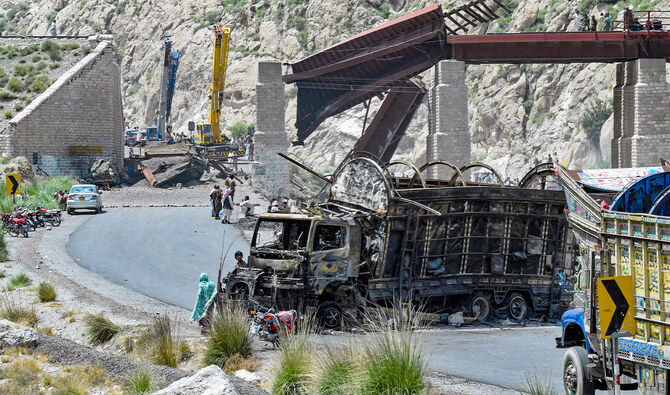
The report came a week after separatist militants launched on August 25 a string of coordinated attacks in several districts across Balochistan, killing more than 50 people. The outlawed Baloch Liberation Army (BLA), the most prominent of separatist groups operating in the province, claimed responsibility for the attacks.
Pakistan’s largest province of Balochistan, which borders Iran and Afghanistan and is home to major China-led projects such as a strategic port and a gold and copper mine, has been the site of a decades-long separatist insurgency by ethnic Baloch militants.
The separatists say they are fighting what they see as the unfair exploitation of the province’s mineral and gas wealth by the federation at the center. The state denies the allegations and says it is working for the uplift of the impoverished province through various development schemes.
“The rise in anti-state violence in Balochistan was stark, with a 277 percent increase in violent incidents, a 938 percent surge in deaths, and a 208 percent rise in injuries compared to July 2024,” the report read. “The province saw 49 violent incidents in August, up from just 13 in July.”
In contrast, the security situation improved in tribal districts of the northwestern Khyber Pakhtunkhwa, where violent incidents dropped by 25 percent, and civilian casualties decreased by 43 percent. However, militant casualties increased by 98 percent, with 65 militants killed in August compared to 20 in July, according to the report. Security forces’ losses in the region also rose by 54 percent, with 20 personnel killed in August compared to 13 in July 2024.
Mainland Khyber Pakhtunkhwa showed a positive trend, with 24 violent incidents reported in August, down from 42 in July. Sindh saw an improvement as well, with only two violent incidents reported in August compared to nine in July, while in Punjab, just one violent incident occurred, in which two militants were killed, and two security personnel were injured.
Militants carried out 640 attacks in Pakistan in the last eight months, resulting in 757 deaths and 733 injuries, according to PICSS. This marks a 51 percent increase in militant attacks and a 21 percent rise in deaths compared to the same period in 2023, although the number of injured dropped by 24 percent.


