Oil Updates – crude extends losses on weak China data, prospect of higher OPEC+ supply

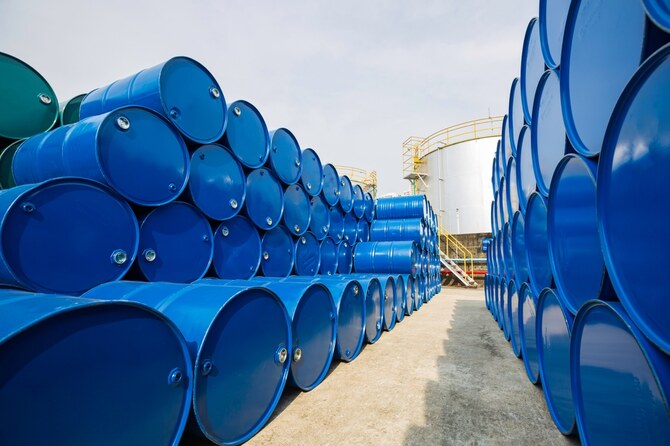
Both Brent and WTI have posted losses for two consecutive months as the US and Chinese demand concerns have outweighed recent disruptions in Libyan oil supply. Shutterstock
Short Url
Updated 01 October 2024
Follow

Oil Updates – crude extends losses on weak China data, prospect of higher OPEC+ supply

  • Brent crude futures fell 56 cents, or 0.7%, to $76.37 a barrel
  • US West Texas Intermediate crude slipped 45 cents, or 0.6%, to $73.10 a barrel

SINGAPORE: Oil prices extended losses on Monday on expectations for higher OPEC+ production starting in October and as signs of sluggish demand in China and the US, the world’s two largest oil consumers, raised concerns about future consumption growth.

Brent crude futures fell 56 cents, or 0.7 percent, to $76.37 a barrel by 9:46 a.m. Saudi time while US West Texas Intermediate crude slipped 45 cents, or 0.6 percent, to $73.10 a barrel.

The losses followed a 0.3 percent decline for Brent last week and a 1.7 percent drop for WTI.

OPEC and its allies, a group known as OPEC+, is set to proceed with a planned oil output hike from October, six sources from the producer group told Reuters.

Eight OPEC+ members are scheduled to boost output by 180,000 barrels per day in October, as part of a plan to begin unwinding their most recent layer of output cuts of 2.2 million bpd while keeping other cuts in place until end-2025.

“There are concerns that OPEC will go ahead and increase output from October,” IG market analyst Tony Sycamore said.

“However, I think that outcome is price dependent in that it happens if the WTI price is closer to $80 than $70.”

Both Brent and WTI have posted losses for two consecutive months as the US and Chinese demand concerns have outweighed recent disruptions in Libyan oil supply amid a dispute between government factions there and the tensions in the key Middle East producing region related to the Israel-Gaza conflict.

While Libyan exports remain halted, the Arabian Gulf Oil Company has resumed output at up to 120,000 bpd to meet domestic needs, engineers said on Sunday, after the standoff between the factions shut most of the country’s oilfields.

More pessimism about Chinese demand growth surfaced after an official survey showed on Saturday that manufacturing activity there sank to a six-month low in August as factory gate prices tumbled and owners struggled for orders, although a private survey on Monday which covers smaller, export-oriented companies showed signs of a tentative recovery in August.

“The softer-than-expected China PMI released over the weekend heightens concerns that the Chinese economy will miss growth targets,” Sycamore said.

In the US, oil consumption slowed in June to the lowest seasonal levels since the coronavirus pandemic of 2020, data from the Energy Information Administration showed on Friday.

“We see downside in growth in 2025, driven by economic headwinds in China and the US,” ANZ analysts said in a note.

“We believe OPEC will have no choice but to delay the phase out of voluntary production cuts if it wants higher prices.”

The number of operating US oil rigs were unchanged at 483 last week, Baker Hughes said in its weekly report.


KAIA records busiest week with new operational records

Updated 7 sec ago
Follow

KAIA records busiest week with new operational records

JEDDAH: King Abdulaziz International Airport started 2026 on a strong note, handling 5.45 million passengers in January, a 7.3 percent increase over the same month last year.

Flight movements reached 29,200, up 11 percent, while total baggage throughput rose 8 percent to 6.6 million items.

The airport recorded its busiest operational week from Jan. 11 to 17, serving 1.28 million travelers.

Passenger numbers peaked on Jan. 17, marking the airport’s busiest day ever with 195,300 travelers and 1,089 flights, underscoring the efficiency of its operations and the capacity of its infrastructure to accommodate growing travel demand.

These results reflect Jeddah Airports Co.’s ongoing efforts to enhance the passenger experience, expand travel options, and manage rising air traffic in line with the National Aviation Program and Saudi Vision 2030.

Since its establishment in 2022, the company, known as JEDCO, has overseen the management and operations of KAIA, driving the implementation of the Aviation Program under the National Transport and Logistics Strategy.

In 2025, the airport reached a historic milestone, welcoming 53.4 million passengers, the highest annual total ever recorded at a Saudi airport, placing it among the world’s mega airports in terms of traffic.

The airport handled a total of 310,000 flights and 60.4 million bags, representing a 12 percent increase compared to 2024. It also handled 9.57 million Zamzam water containers and 2,968 cargo flights.

This achievement reflects the airport’s qualitative transformation and its position as a regional hub and national gateway connecting the Kingdom to the world. It also highlights its role in facilitating the movement of visitors and pilgrims, promoting tourism in line with the goals of Vision 2030, diversifying the economy, and providing a distinguished travel experience.

The January milestone at KAIA is part of a broader success story for Saudi airports, with 2025 statistics showing unprecedented growth in the Kingdom’s air traffic, surpassing regional averages and cementing Saudi Arabia’s status as one of the world’s fastest-growing and most advanced aviation markets.

Passenger numbers rose 9.6 percent, fueled by tourism, international events, and expanding global connectivity.

This growth reflected both increased capacity and enhanced connectivity, with Saudi airports handling approximately 140.9 million passengers, 76 million international and 65 million domestic passengers. Flight movements rose 8.3 percent to around 980,400, highlighting the sector’s sustained recovery.

KAIA accounted for 38 percent of total passenger traffic, averaging 146,000 passengers daily and operating at 107 percent of capacity. King Khalid International Airport handled 29 percent of passengers, with a daily average of 112,000. Madinah and Dammam airports also recorded historic surges, operating at 137 percent and 112 percent of capacity, respectively.