

Saudi Arabia’s anime and manga boom is a cultural revolution

1 / 2
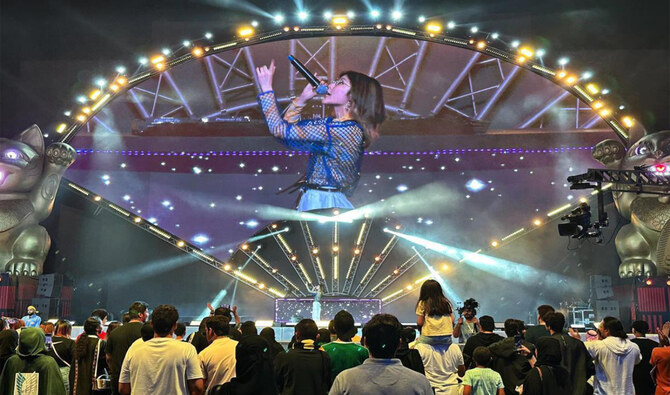
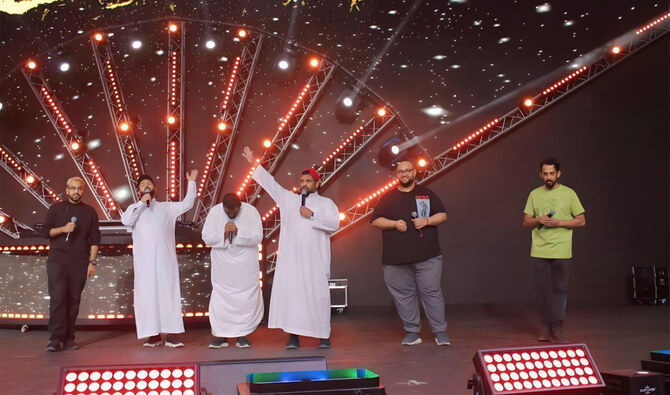
The General Entertainment Authority has been actively involved in organizing anime events and exhibitions, including the prominent Saudi Anime Expo. (SPA)
2 / 2
The General Entertainment Authority has been actively involved in organizing anime events and exhibitions, including the prominent Saudi Anime Expo. (SPA)
Short Url
Updated 29 August 2024
Follow

Saudi Arabia’s anime and manga boom is a cultural revolution

  • Industry can create jobs, says Manga Arabia editor Nouf Al-Hussein
  • Creation of Arab characters will help build national identity, she adds

RIYADH: Saudi Arabia’s burgeoning interest in manga and anime, a trend that can be traced to the 1970s, is helping to usher in a revolution in cultural production.

These Japanese art forms have captivated audiences of all ages, gaining significant popularity in recent years. Their ability to combine entertainment, culture and education has made them of great interest to Saudi Arabia society.

Manga, a form of Japanese graphic novels, differs from Western comics in several ways, including its reading direction which is from right to left.

To foster this growing culture, the General Entertainment Authority has been actively involved in organizing events and exhibitions. This includes the prominent Saudi Anime Expo, the largest of its kind in the Middle East, which has attracted visitors from around the world.

Furthermore, Riyadh’s “Anime Town” has solidified its position as the world’s largest anime city, featuring four distinct areas, and the Sakura Music Festival, held for the first time outside of Japan.

Jeddah also recently hosted the “Anime Village” event, which attracted many visitors and offered a variety of activities, including cosplay competitions, live shows, themed restaurants, and screenings of the latest films.

Manga Arabia magazine’s Editor-in-Chief Nouf Al-Hussein expressed optimism about the future of the local industry.

She said the growing interest in creative initiatives within the education and culture sectors would contribute to a more robust labor market and increased opportunities for growth in the industry.

Al-Hussein said: “Saudi society has become increasingly aware of the importance of nurturing diverse talents and skills, including those related to the Saudi manga and anime industry.”

She emphasized that achieving success in this field requires a strong foundation in drawing, writing and creative thinking.

Al-Hussein added that this trend would foster the development of local characters that embody authentic Arab values, the Saudi Arabia spirit, and a distinctive national identity.

She emphasized that such content could resonate with audiences on a global scale, contributing to the enhancement of Saudi Arabia culture.

Anime and manga critic and analyst Majed Al-Amer said the anime industry in the Kingdom has experienced remarkable growth.

Despite facing challenges due to the COVID-19 pandemic, the Saudi Arabia anime industry has surpassed many other countries that have been developing this culture for a longer period.

Al-Amer said the Kingdom has gained recognition as a producer on global entertainment platforms including Netflix, Shahid, StarzPlay and Crunchyroll. These platforms operate in Saudi Arabia and offer Arabic translations, demonstrating the industry’s significant potential.

He said manga rights are being acquired and distributed locally, with Arabic translations available in various outlets, including libraries and cinemas.

Regarding the most prominent challenges facing anime and manga creators in the Kingdom, Al-Amer said the biggest hurdle is social acceptance.

He emphasized the importance of society embracing the job opportunities available in this industry, including for manga writers and animators.

Al-Amer added that the anime industry would become a key component of the Kingdom’s economy within the next seven years.

He said the industry’s growth would drive the production of local content, leading to the creation of a new form of entertainment tourism in Saudi Arabia.

Al-Amer said content produced by domestic talent would authentically reflect local culture without external influences. This would contribute to spreading Saudi Arabia culture globally.

He expressed appreciation for the government’s support and promotion of the anime and manga industry.

Saudi Arabia’s commitment to fostering a vibrant manga and anime culture is evident in its recent initiatives.

The “Manga Education” program, launched by the ministries of culture and education, aims to develop students’ capabilities in this field. This program aligns with the broader strategy of incorporating culture and arts into public education.


Misk youth delegates take Saudi voices to the global stage at WEF in Davos

Updated 10 sec ago
Follow

Misk youth delegates take Saudi voices to the global stage at WEF in Davos

  • Three delegates from the foundation speak to Arab News about their journeys with Misk and how their trip to Davos has increased their passion for making a difference

DAVOS: Saudi youth delegates from the Misk Foundation have been taking part in this year’s World Economic Forum in Davos, positioning the Kingdom’s next generation of leaders at the heart of global discussions on economic transformation, innovation and future decision-making.

Three delegates from the foundation spoke to Arab News about their journeys with Misk and how their trip to Davos has increased their passion for making a difference.

Abdulaziz Al-Jaloud, a member of the Misk youth delegation, said his journey began through the foundation’s leadership programs, which focus on equipping young Saudis with the skills and confidence to represent the Kingdom internationally.

“Part of my journey through Misk was joining the United Voices and the Fellowship programs,” he said. “The fellowship helps equip you to become a future leader, and the United Voices program helps you be a representative for Saudi Arabia in global events.”

In Davos, Al-Jaloud said the experience has been defined by exposure and engagement rather than observation from the sidelines.

“Being part of the … change that’s happening in the global conversation, and giving back through amplifying the youth voice,” he said.

Asked about the broader climate for young people in Saudi Arabia, Al-Jaloud said empowerment had become a defining feature of the current moment.

“I would say we’re very passionate, we’re very driven,” he said. “The empowerment that exists currently for the youth in Saudi is helping us reach our full potential.”

For Haifa Al-Mofareh, who is also part of the delegation, her involvement with Misk grew out of a desire to support young Saudis working in the space sector and to represent them on global platforms.

“I’m very passionate about space, and I wanted to empower the youth that are working in space,” Al-Mofareh said.

In Davos, she has been participating in discussions focused on ensuring youth play an active role in shaping the future, rather than being limited to symbolic participation.

“I’ve been engaging in discussions about youth that are helping us be part of building the future, not just participating in it or just talking about it,” she said. “That has been a really mind-altering experience.”

She added that international perceptions of Saudi youth often underestimate the scale of opportunity available at home.

“It’s incredible,” Al-Mofareh said. “Everyone I talk to here, especially foreigners, they are baffled by it. Many youth from other countries can’t even fathom the experiences and the opportunities that we have as Saudi youth now, even though it’s super normalized back home. That’s something I’m incredibly proud to share with the world.”

Meshal Al-Shalan, who joined Misk while completing a master’s degree in chemical engineering at the Massachusetts Institute of Technology, said that the foundation opened the door for him to attend Davos as part of the youth delegation and that he was “excited and thankful” for the opportunity.

One of the standout themes for Al-Shalan has been the growing recognition that young people must be involved directly in economic design and decision-making.

“The biggest highlight is that youth are ready to be building the future economy,” he said. “I moderated a session about involving youth early on in system-making and decision-making, and that message is coming from speakers from very different backgrounds,” he added.

Reflecting on opportunities back home, Al-Shalan said Saudi Arabia has created an environment where ideas can move quickly from concept to execution.

“I feel like the door is open in Saudi Arabia for anyone,” he said.

“If you have an idea, the government, companies and investors are there. They’ve invested a lot in youth, and you can see that clearly.”

With more than half the Saudi population under the age of 35, he added, the youth are not a marginal group but the country’s majority, adding: “You can see the future is very bright.”