

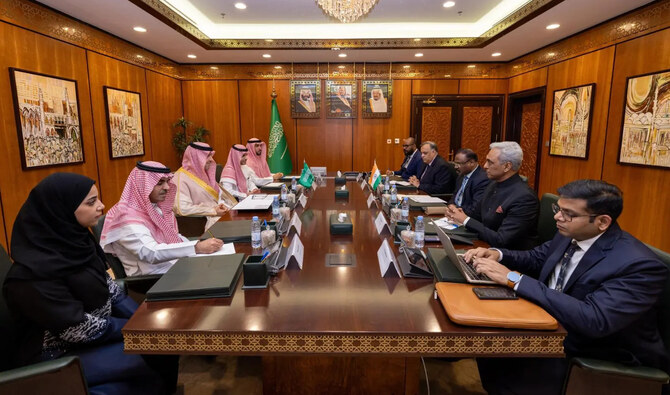
General Court of Audit chief meets Indian counterpart

1 / 2
During their meeting, both parties discussed many topics of common interest and ways of enhancing and activating them in all areas. (SPA)
2 / 2
During their meeting, both parties discussed many topics of common interest and ways of enhancing and activating them in all areas. (SPA)
Short Url
Updated 29 August 2024
Follow

General Court of Audit chief meets Indian counterpart

RIYADH: Hussam bin Abdul Mohsen Alangari, president of the General Court of Audit, met on Thursday with the Comptroller and Auditor General of India Girish Chandra Murmu, along with his accompanying delegation in Riyadh.

During their meeting, both parties discussed many topics of common interest and ways of enhancing and activating them in all areas.

The delegation was briefed on the GCA’s experiences in transitioning from cash to accrual basis of accounting in the Kingdom’s public sector. It was also briefed on professional capacity building areas.

Tariq bin Ahmed Al-Jarifani, director general of the Saudi Center for Financial and Performance Auditing and executive vice president for corporate services reviewed the court’s advanced methodologies in building professional capacities in intermediate accounting, international public sector accounting standards, and international standards on auditing.


Smart systems streamline crowds at Grand Mosque

Updated 9 sec ago
Follow

Smart systems streamline crowds at Grand Mosque

MAKKAH: Modern technologies have improved crowd management efficiency inside the Grand Mosque in Makkah through smart counting systems that use sensors and real-time monitoring of visitor movement at gates and corridors.

These systems accurately track entrants and exits, enhancing pilgrims’ safety and improving their worship experience, according to the Saudi Press Agency.

The General Authority for the Care of the Affairs of the Grand Mosque and the Prophet’s Mosque said the systems are a key technological pillar supporting crowd management.

It added that real-time data enables field teams to make faster, more accurate decisions to regulate movement and respond to changes in crowd density.

The authority noted that smart technologies help guide visitor movement smoothly, ensuring balanced distribution across levels, courtyards, and corridors.

They also help reduce congestion and enhance safety and comfort standards, it said.

The authority added that smart counting systems allow early detection of high-density areas, enabling proactive intervention and management of potential bottlenecks through an integrated operational system.

It stressed that adopting these technologies is part of ongoing efforts to improve services and enhance pilgrims’ experience in line with development objectives.