ISLAMABAD: Google on Wednesday launched two new programs to support Pakistan’s gaming and app industry by teaching local developers how to create high-quality games, Pakistani state-run media reported.
The two programs include Game Design Masterclass and Google Ads Academy, which have been introduced across major Pakistani cities to train the country’s talented game developers as part of a six-month initiative.
The programs were launched at a Google-hosted tech event, Think Apps 2024, in the eastern city of Lahore that brought together nearly 350 of Pakistan’s top developers alongside global industry leaders and experts.
The event focused on empowering developers to harness artificial intelligence (AI) to drive innovation, growth and sustainability in the expanding app industry in the South Asian country, the state-run APP news agency reported.
“Pakistan’s app and gaming industry has a high potential for long-term future growth,” Google Director for Pakistan Farhan Qureshi was quoted as saying. “Several Pakistani studios are leading the charge in mobile app development, such as Vyro.”
He said AI, Hazel Mobile, Games District, GeniTeam, and Finz Games were consistently generating millions of downloads daily, employing hundreds of Pakistanis, and garnering global attention.
Pakistan could achieve a $6.6 billion annual increase in revenue potential by 2030 by focusing on digital exports, with the gaming and app industry identified as one of the key growth opportunity areas, according to a recent report by Access Partnership, a global technology-focused public policy consultancy firm.
Pakistan’s gaming and app industry has demonstrated impressive growth, including a compound annual growth rate (CAGR) of 32 percent in global downloads of locally-made apps from 2018 to 2023, in recent years, the APP reported. The industry remained resilient as in-app purchase (IAP) revenue soared by 50 percent when overall app downloads dipped slightly in 2023, placing the country at number 17 globally.
Qureshi said Google aimed to help Pakistani developers create exceptional games and apps, drive profitability and build sustainable businesses by providing access to its AI-powered products and resources.
“This will subsequently unlock the opportunity to improve the country’s economy through digital export proceeds and provide high-value employment,” he said. “Google remains dedicated to investing in Pakistan’s developer ecosystem and supporting its journey to global success.”
Different Google programs like the Google Ads Academy and ‘Google App Academy’ have reached over 800 participants to date, apart from offering in-person offline hackathon workshops in Lahore and Islamabad, according to the APP.
Google is also deepening engagement at key events like the Google Developer Conference (US), CXO meetups in Asia Pacific Accreditation Cooperation (APAC), and APAC’s App Summit, connecting leaders of Pakistan’s top gaming and app studios’ talent with global peers, state media said.


Google launches two new programs to boost Pakistan’s gaming industry
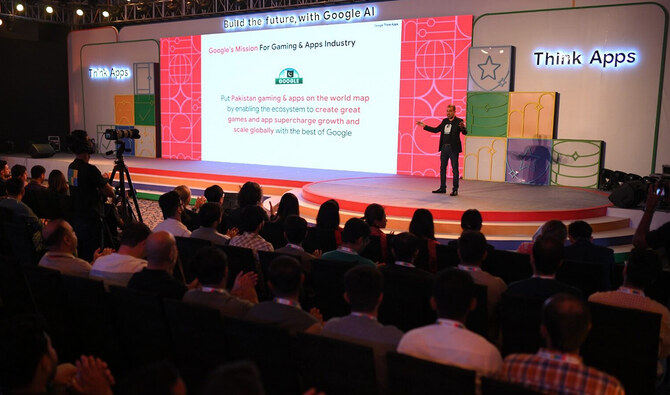
https://arab.news/rzfpv
Google launches two new programs to boost Pakistan’s gaming industry

- ‘Google Design Masterclass’ and ‘Google Ads Academy’ will help train Pakistani game developers as part of a six-month initiative
- The programs were launched at a Google-hosted event, ‘Think Apps 2024,’ bringing together Pakistani developers, global experts
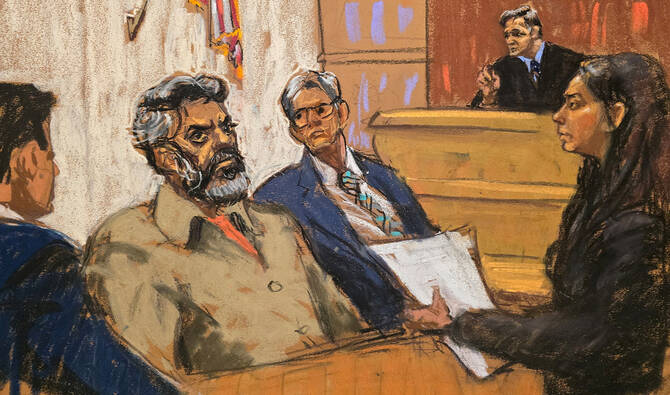
Pakistani man convicted in US in political assassination plot tied to Iranian paramilitary
- Asif Merchant, 47, worked for Pakistani banks for decades before going into clothing and other businesses
- He testified he met a Revolutionary Guard operative who gave him countersurveillance training, assignments
NEW YORK: A Pakistani business owner who tried to hire hit men to kill a US politician was convicted Friday in a trial that showcased allegations of Iran-backed plotting on American soil.
As the Iran war unfolded in the Mideast, Asif Merchant acknowledged in a US court that he sought to put an assassination in motion during the 2024 presidential campaign — a plot that was quickly disrupted by American investigators before it had a chance to proceed.
A jury in Brooklyn convicted Merchant on terrorism and murder for hire charges.
The verdict after only a couple hours of deliberations followed a weeklong trial that included remarkable testimony from Merchant himself.
Merchant told the jury he was carrying out instructions from a contact in the Islamic Republic’s powerful paramilitary Revolutionary Guard. According to Merchant, the handler never specified a target but broached names including then-candidate Donald Trump, then-President Joe Biden and Nikki Haley, the former UN ambassador who was also in the race for a time.
The Iranian government has denied trying to kill US officials.
The nascent plot fell apart after Merchant showed an acquaintance what he had in mind by using objects on a napkin to depict a shooting at a rally. He asked the man to help him hire assassins. Instead, he was introduced to undercover FBI agents who were secretly recording him, as had the acquaintance.
Merchant told the supposed hit men he needed services that could include killing “some political person” and paid them $5,000 in cash in a parked car in Manhattan.
“This man landed on American soil hoping to kill President Trump — instead, he was met with the might of American law enforcement,” US Attorney General Pam Bondi said in a statement released after the conviction.
Merchant’s attorney, Avraham Moskowitz, didn’t immediately reply to a message seeking comment.
Merchant, 47, worked for Pakistani banks for decades before going into clothing and other businesses. He has two families, in Pakistan and Iran, and he sometimes visited the US for his garment business.
Merchant testified that he met a Revolutionary Guard intelligence operative about three years ago. The contact gave him countersurveillance training and assignments including the assassination scheme, Merchant said.
He maintained that he had to do his handler’s bidding to protect loved ones in Iran. The defendant said he reluctantly went through the motions but thought he’d be arrested and explain his situation to authorities before anyone was killed.
“I was going along with it,” he said, speaking in Urdu through a court interpreter.
Prosecutors emphasized that Merchant admitted taking steps to enact the plan on behalf of the Revolutionary Guard, which the US considers a foreign terrorist organization, and he didn’t proactively go to authorities.
Instead, he was packing for a flight to Pakistan when he was arrested on July 12, 2024, a day before an unrelated attempt on Trump’s life in Butler, Pennsylvania. Officials said it appeared the Butler gunman acted alone but that they had been tracking a threat on Trump’s life from Iran, a claim that the Islamic Republic called “unsubstantiated and malicious.”
When Merchant subsequently spoke to FBI agents to explore the possibility of a cooperation agreement, he didn’t say he had acted out of fear for his family.
Prosecutors argued that he didn’t back up a defense of acting under duress. Merchant sought to persuade jurors he simply didn’t think the agents would believe him because they seemed to “think that I am some type of super-spy,” which he said he was “absolutely not.”


