Saudi e-commerce startups attract over $400m in venture funding in 2023: Monsha’at

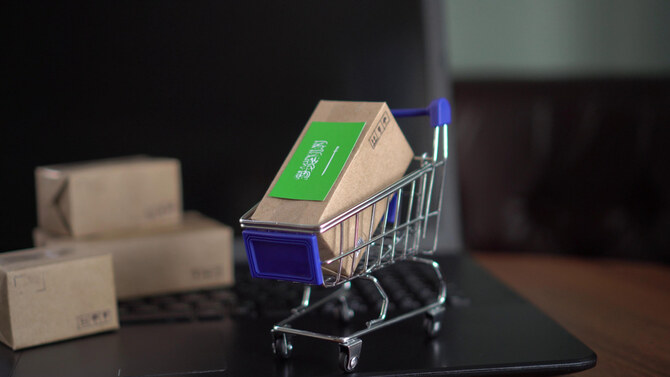
The Saudi digital marketplace transformation is part of a broader national initiative to foster innovation and stimulate economic growth. Shutterstock
Short Url
Updated 27 August 2024
Follow

Saudi e-commerce startups attract over $400m in venture funding in 2023: Monsha’at

  • By the end of this year, e-commerce revenues are expected to reach SR211 billion
  • E-commerce platform users in the Kingdom are projected to reach 34.5 million by 2025-commerce platform users in the Kingdom are projected to reach 34.5 million by 2025

RIYADH: Saudi Arabia’s e-commerce sector is witnessing robust expansion, with venture capital investments in startups hitting SR1.6 billion ($426.7 million) in 2023, official figures showed. 

According to a report from the Small and Medium Enterprises General Authority, or Monsha’at, e-commerce platform users in the Kingdom are projected to reach 34.5 million by 2025, reflecting a 42 percent increase from 2019 to 2024. 

This surge underscores the sector’s crucial role in the Kingdom’s economic diversification strategy. 

The Saudi digital marketplace transformation is part of a broader national initiative to foster innovation and stimulate economic growth. 

The establishment of the E-Commerce Council in 2018 was a key move to enhance the sector, focusing on advancements in financial technology, payment solutions, and logistics. 

These developments have positioned Saudi Arabia as one of the most dynamic e-commerce markets in the Middle East and North Africa. 

In 2020, the sector accounted for 4 percent of the Kingdom’s gross domestic product, with 8 percent of goods and 25 percent of services purchased online, according to Muhannad Al-Mulhim, a consultant at the Ministry of Commerce. 

Al-Mulhim said: “According to the E-Commerce Council, developments in several key sectors, including infrastructure and the legislative environment, have been driven by programs under Saudi Vision 2030, such as the e-commerce stimulus program. This led to the issuance of the e-commerce system by the Ministry of Commerce.” 

He added: “Additionally, the financial sector development program, in cooperation with the Saudi Central Bank, has resulted in a comprehensive development of the financial technology sector and prompted several transformations in the logistics services sector.” 

By the end of this year, e-commerce revenues are expected to reach SR211 billion, he added. 

Despite this rapid expansion, e-commerce sales currently make up only 18 percent of total retail sales in the Kingdom, suggesting substantial room for growth. 

By 2025, the sector’s contribution to GDP is projected to reach 12 percent, supported by a targeted 15 percent compound annual growth rate from 2020 to 2025. 

Looking further ahead, 80 percent of transactions in Saudi Arabia are expected to be conducted electronically by 2030, aligning with the broader objectives of Vision 2030. 

As the Kingdom continues to implement its ambitious agenda, the e-commerce sector is set to play a critical role in driving economic diversification, innovation, and new business opportunities. 


Saudi Arabia, Japan trade rises 38% between 2016 and 2024, minister says

Updated 11 January 2026
Follow

Saudi Arabia, Japan trade rises 38% between 2016 and 2024, minister says

RIYADH: Trade between Saudi Arabia and Japan has increased by 38 percent between 2016 and 2024 to reach SR138 billion ($36 billion), the Kingdom’s investment minister revealed.

Speaking at the Saudi-Japanese Ministerial Investment Forum 2026, Khalid Al-Falih explained that this makes the Asian country the Kingdom’s third-largest trading partner, according to Asharq Bloomberg.

This falls in line with the fact that Saudi Arabia has been a very important country for Japan from the viewpoint of its energy security, having been a stable supplier of crude oil for many years.

It also aligns well with how Japan is fully committed to supporting Vision 2030 by sharing its knowledge and advanced technologies.

“This trade is dominated by the Kingdom's exports of energy products, specifically oil, gas, and their derivatives. We certainly look forward to the Saudi private sector increasing trade with Japan, particularly in high-tech Japanese products,” Al-Falih said.

He added: “As for investment, Japanese investment in the Kingdom is good and strong, but we look forward to raising the level of Japanese investments in the Kingdom. Today, the Kingdom offers promising opportunities for Japanese companies in several fields, including the traditional sector that links the two economies: energy.”

The minister went on to note that additional sectors that both countries can also collaborate in include green and blue hydrogen, investments in advanced industries, health, food security, innovation, entrepreneurship, among others.

During his speech, Al-Falih shed light on how the Kingdom’s pavilion at Expo 2025 in Osaka achieved remarkable success, with the exhibition receiving more than 3 million visitors, reflecting the Japanese public’s interest in Saudi Arabia.

“The pavilion also organized approximately 700 new business events, several each day, including 88 major investment events led by the Ministry of Investment. Today, as we prepare for the upcoming Expo 2030, we look forward to building upon Japan’s achievements,” he said.

The minister added: “During our visit to Japan, we agreed to establish a partnership to transfer the remarkable Japanese experience from Expo Osaka 2025 to Expo Riyadh 2030. I am certain that the Japanese pavilion at Expo Riyadh will rival the Saudi pavilion at Expo Osaka in terms of organization, innovation, and visitor turnout.”

Al-Falih also shed light on how Saudi-Japanese relations celebrated their 70th anniversary last year, and today marks the 71st year of these relations as well as how they have flourished over the decades, moving from one strategic level to an even higher one.