

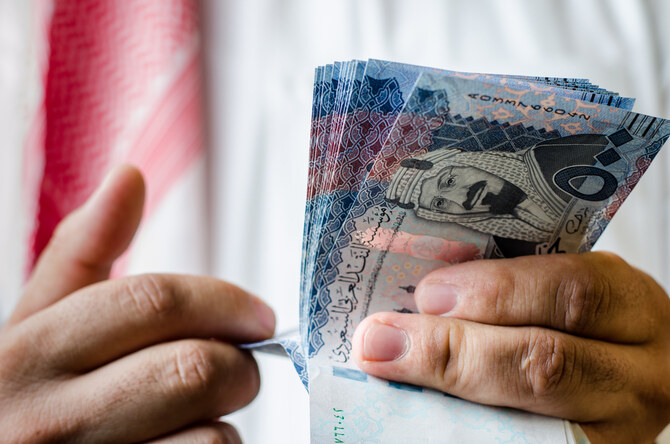

RIYADH: Saudi Arabia’s inflation is projected to drop to 1.7 percent in 2024, revised down from 2 percent, driven by robust non-oil sector growth and lower prices in key sectors, according to Jadwa Investment.
The Riyadh-based investment management and advisory company attributed this revision to stable consumer price growth, with inflation increasing by only 1.6 percent in the first half of the year.
Jadwa said that lower prices in clothing, footwear, and transportation have mitigated inflationary pressures from the housing market. This trend aligns with global patterns, where easing demand and improved supply chains are reducing price pressures.
Despite the overall moderation in inflation, housing costs remain a significant driver, particularly in the ‘rentals for housing’ segment. Prices in this category have stayed high due to elevated demand and a tight rental market, exacerbated by high interest rates prompting more Saudis to rent rather than buy homes.
The report said that this trend is expected to persist, maintaining pressure on prices within the housing and utilities segment, which constitutes 25 percent of the Consumer Price Index.
The sector’s performance is influenced by the government’s Vision 2030 initiatives aimed at increasing housing availability and improving quality of life.
Jadwa also anticipates a gradual rebound in food and beverage prices in the latter half of the year. The Food and Agriculture Organization’s food price index showed a 2.5 percent increase in the first half of 2024, suggesting potential upward pressure on local prices.
Rising shipping costs may also contribute marginally to future price increases. Nevertheless, overall inflation is expected to remain lower than initially forecasted, reflecting effective economic policy management.
In a broader economic context, Jadwa Investment observed robust growth in Saudi Arabia’s non-oil sectors, a key component of the Kingdom’s Vision 2030 diversification strategy.
The firm projects real non-oil gross domestic product to grow by 4.5 percent in 2024, slightly above the 4.4 percent growth recorded last year. This growth is driven by strong performances in domestic trade, transport, and construction, supported by significant public and private investment.
The second half of 2024, particularly the fourth quarter, is expected to see accelerated economic activity as Saudi Arabia continues efforts to reduce reliance on oil revenues.
These sectors are crucial to Vision 2030’s goal of creating a diversified and resilient economy through enhanced infrastructure and innovation.
The oil sector, however, presents a more challenging outlook. The Kingdom’s crude oil production is expected to average around 9 million barrels per day in 2024, following OPEC+’s decision to extend production cuts in June.
As a result, the hydrocarbons GDP is projected to contract by 6 percent, contributing to a modest overall economic growth of 1.5 percent for the year.
This contraction highlights the ongoing challenges faced by the oil sector, which has been under pressure due to global market conditions and production constraints.
The oil market’s volatility remains a key concern, especially given the global economic uncertainties that have led to fluctuations in demand.
Adding to this complex landscape, OPEC’s recent projections suggest global oil demand will grow by 2.1 million barrels per day in 2024, slightly down from the previous estimate of 2.2 million bpd.
The organization expects demand growth to slow further in 2025 to 1.8 million bpd, reflecting weaker global economic activity.
Meanwhile, non-OPEC+ supply is forecasted to increase by 1.2 million bpd in 2024, which is less than the expected demand, providing some justification for the partial unwinding of OPEC+ production cuts as outlined in their June agreement.
These dynamics are critical as they influence Saudi Arabia’s oil production strategy, which is carefully calibrated to maintain market stability while ensuring the Kingdom’s economic resilience.
On the fiscal front, Jadwa maintains a stable outlook, projecting that the budget deficit will remain at 2 percent of GDP in 2024, consistent with the previous year.
This projection is supported by higher non-oil revenues, driven by strong domestic demand and increased government spending.
The report also highlights the role of increased dividends from oil giant Aramco in maintaining hydrocarbon revenue levels, despite lower oil production volumes.
These dividends, particularly the performance-related payouts, have been crucial in stabilizing the Kingdom’s fiscal position.
Saudi Arabia’s fiscal strategy remains focused on balancing its budget while continuing to invest in key areas of the economy, aligning with Vision 2030’s goals of sustainable growth and diversification.
Looking ahead, the report forecasts Brent crude prices to average $84 per barrel in 2024, consistent with the average over the past 18 months.
However, for 2025, prices are expected to decrease slightly to $82 per barrel, influenced by a combination of challenges to global GDP growth and anticipated increases in OPEC+ supply.
Despite these challenges, OPEC+ is expected to maintain a flexible approach to ensuring global oil market stability, with Saudi production anticipated to rise to 9.5 million bpd in 2025.
This outlook, however, carries risks, including potential slowdowns in major economies like the US and China, which could impact demand, and geopolitical tensions that could lead to oil price volatility.
While Saudi Arabia faces challenges in the oil sector, the resilience and growth of its non-oil economy underscore the success of the Vision 2030 initiatives.
These efforts continue to drive economic diversification, ensuring that the Kingdom remains on a stable growth trajectory despite global economic uncertainties.
As the Kingdom navigates these complex dynamics, its focus on innovation, infrastructure, and strategic investments will be key to sustaining long-term growth.


