

Pakistan warns of ‘strong’ spell of monsoon rains from Aug. 26 to 30

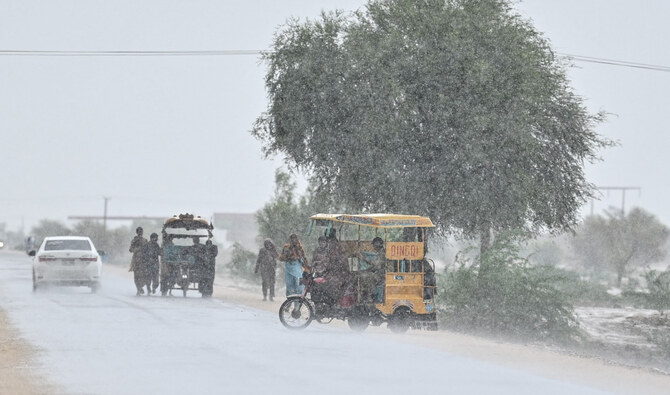
Commuters make their way along a street during rainfall on the outskirts Dadu on August 4, 2024. (AFP/File)
Short Url
Updated 23 August 2024
Follow

Pakistan warns of ‘strong’ spell of monsoon rains from Aug. 26 to 30

  • Heavy monsoon rains have triggered flash floods in several parts of the South Asian country since late June
  • Pakistan has reported 232 deaths in rain-related incidents since July 1, with Punjab reporting 91 of them

ISLAMABAD: The Pakistan Meteorological Department (PMD) on Friday warned of a “strong” spell of monsoon rains from August 26 till August 30, which would likely impact Balochistan, Sindh and southern parts of the Punjab province.

Heavy monsoon rains have triggered flash floods in several parts of Pakistan since late June, particularly in the northwestern Khyber Pakhtunkhwa and eastern Punjab provinces.

The South Asian nation has reported 232 deaths in rain-related incidents since July 1, with Punjab reporting the highest 91 deaths, according to the National Disaster Management Authority (NDMA).

In an interview with state-run PTV News channel, Pakistan’s Chief Meteorologist Sardar Sarfraz said the fresh monsoon spell would potentially disrupt public life in parts of the country.

“The expected monsoon spell is likely to bring heavy rainfall, thunderstorms, and strong winds, which may lead to flash flooding, landslides and power outages,” he said.

“By staying informed and taking proactive measures, citizens can minimize the risks associated with this weather event.”

The chief meteorologist highlighted the significance of preparedness and contingency plans by local authorities. “By working together, we can reduce the risks and ensure a safer, more resilient community,” he added.

To a question, Sarfraz replied the intensity of this monsoon season could gradually reduce after September 10-12, marking the end of the rainy season.

“This transition will bring a welcome relief to the people, as the suffocating humidity and rainfall will give way to a more pleasant weather pattern,” he said. “As the monsoon withdraws, the region can expect a decrease in temperature and humidity.”

Pakistan is recognized as one of the most vulnerable countries to climate change effects. This year, the South Asian country recorded its “wettest April since 1961,” with 59.3 millimeters of rainfall while some areas of the country faced a severe heat wave in May and June.

In 2022, unusually heavy rains triggered flash floods in many parts of Pakistan, killing over 1,700 people, inflicting losses of around $30 billion, and affecting at least 30 million people. Scientists have attributed Pakistan’s erratic weather patterns to climate change effects and called on countries around the world to take urgent steps to tackle the crisis.


Suicide bomber kills at least five at wedding in northwest Pakistan

Updated 23 January 2026
Follow

Suicide bomber kills at least five at wedding in northwest Pakistan

  • Attack took place in Dera Ismail Khan, targeting the home of a local peace committee member
  • Peace committees are community-based groups that report militant activity to security forces

PESHAWAR: A suicide bomber killed at least five people and wounded 10 others after detonating explosives at a wedding ceremony in northwestern Pakistan on Friday, officials said, in an attack that underscored persistent militant violence in the country’s restive Khyber Pakhtunkhwa province.

The blast took place at the home of a local peace committee member in Dera Ismail Khan district, where guests had gathered for a wedding, police and emergency officials said.

Peace committees in the region are informal, community-based groups that work with security forces to report militant activity and maintain order, making their members frequent targets of attacks.

“A blast occurred near Qureshi Moor in Dera Ismail Khan. Authorities have recovered five bodies and shifted 10 injured to hospital,” said Bilal Faizi, a spokesman for the provincial Rescue 1122 emergency service, adding that the rescue operation was ongoing.

Police said the attacker blew himself up inside the house during the ceremony and that the bomber’s head had been recovered, confirming it was a suicide attack.

Several members of the local peace committee were present at the time, raising fears the toll could rise.

District Police Officer Sajjad Ahmed Sahibzada said authorities had launched an investigation into the incident, while security forces sealed off the area.

Militant attacks have surged in parts of Khyber Pakhtunkhwa after the Taliban returned to power in neighboring

Afghanistan in 2021, with the administration in Islamabad blaming the Afghan government for “facilitating” cross-border attacks targeting Pakistani civilians and security forces. However, Kabul has repeatedly denied the allegation.

Khyber Pakhtunkhwa has also seen frequent intelligence-based operations by security forces targeting suspected militants.

No group has immediately claimed responsibility for Friday’s attack.