

Pakistan warns of ‘strong’ spell of monsoon rains from Aug. 26 to 30

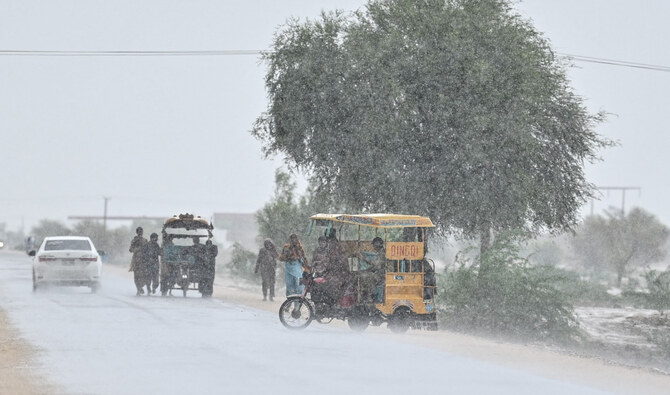
Commuters make their way along a street during rainfall on the outskirts Dadu on August 4, 2024. (AFP/File)
Short Url
Updated 23 August 2024
Follow

Pakistan warns of ‘strong’ spell of monsoon rains from Aug. 26 to 30

  • Heavy monsoon rains have triggered flash floods in several parts of the South Asian country since late June
  • Pakistan has reported 232 deaths in rain-related incidents since July 1, with Punjab reporting 91 of them

ISLAMABAD: The Pakistan Meteorological Department (PMD) on Friday warned of a “strong” spell of monsoon rains from August 26 till August 30, which would likely impact Balochistan, Sindh and southern parts of the Punjab province.

Heavy monsoon rains have triggered flash floods in several parts of Pakistan since late June, particularly in the northwestern Khyber Pakhtunkhwa and eastern Punjab provinces.

The South Asian nation has reported 232 deaths in rain-related incidents since July 1, with Punjab reporting the highest 91 deaths, according to the National Disaster Management Authority (NDMA).

In an interview with state-run PTV News channel, Pakistan’s Chief Meteorologist Sardar Sarfraz said the fresh monsoon spell would potentially disrupt public life in parts of the country.

“The expected monsoon spell is likely to bring heavy rainfall, thunderstorms, and strong winds, which may lead to flash flooding, landslides and power outages,” he said.

“By staying informed and taking proactive measures, citizens can minimize the risks associated with this weather event.”

The chief meteorologist highlighted the significance of preparedness and contingency plans by local authorities. “By working together, we can reduce the risks and ensure a safer, more resilient community,” he added.

To a question, Sarfraz replied the intensity of this monsoon season could gradually reduce after September 10-12, marking the end of the rainy season.

“This transition will bring a welcome relief to the people, as the suffocating humidity and rainfall will give way to a more pleasant weather pattern,” he said. “As the monsoon withdraws, the region can expect a decrease in temperature and humidity.”

Pakistan is recognized as one of the most vulnerable countries to climate change effects. This year, the South Asian country recorded its “wettest April since 1961,” with 59.3 millimeters of rainfall while some areas of the country faced a severe heat wave in May and June.

In 2022, unusually heavy rains triggered flash floods in many parts of Pakistan, killing over 1,700 people, inflicting losses of around $30 billion, and affecting at least 30 million people. Scientists have attributed Pakistan’s erratic weather patterns to climate change effects and called on countries around the world to take urgent steps to tackle the crisis.


Pakistan pitches mineral investment, regulatory easing at Saudi forum

Updated 4 sec ago
Follow

Pakistan pitches mineral investment, regulatory easing at Saudi forum

  • Ali Pervaiz Malik tells participants Pakistan is simplifying rules to attract investors
  • The petroleum minister also invites global firms to April minerals forum in Pakistan

ISLAMABAD: Pakistan is easing regulatory bottlenecks and opening its mineral sector to foreign investors, Petroleum Minister Ali Pervaiz Malik told Saudi officials and global industry leaders during meetings held around a major mining conference in Riyadh, according to a government statement on Saturday that provided a roundup of his engagements in the Kingdom.

Malik spearheaded the Pakistan delegation to the Future Minerals Forum (FMF) in the Saudi capital, held from January 13 to 15. The event is annually hosted by Saudi Arabia and brings together ministers, mining executives and investors from around the world to discuss global mineral supply chains and investment frameworks.

“The Government of Pakistan is actively reducing systemic friction by simplifying the regulatory environment and harmonizing the mineral sector framework,” the minister told a panel at the forum, according to an official statement, adding that Pakistan “possesses vast and diverse mineral potential, offering significant opportunities for global partnerships.”

On the sidelines of the forum, Malik held bilateral meetings with Saudi Energy Minister Prince Abdulaziz bin Salman and Saudi Investment Minister Khalid Al-Falih to discuss energy cooperation and investment opportunities, the statement said.

Pakistan also invited global stakeholders to participate in the Pakistan Minerals Investment Forum scheduled for April 2026, which Malik described as a platform for investment, collaboration and policy dialogue.