ISLAMABAD: Pakistan’s top diplomat at the United Nations highlighted foreign occupation as one of the root causes of international conflicts on Wednesday, noting that its consequences were particularly visible in places like Palestine and Indian-administered Kashmir, while urging the world body to end Israel’s war in Gaza.
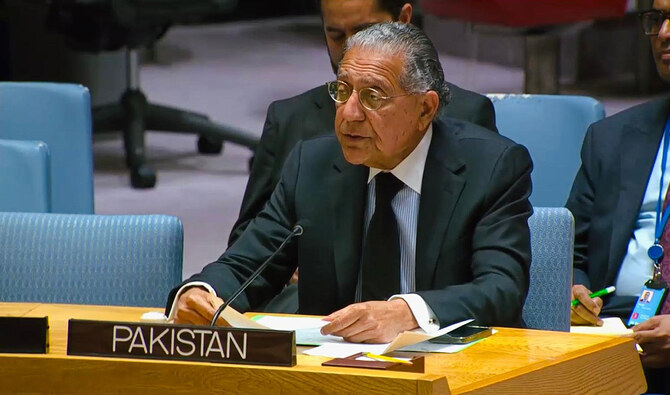
Ambassador Munir Akram raised this concern during a high-level debate at the UN Security Council on conflict prevention and peacebuilding convened by Sierra Leone, where participants focused on global, regional and national dimensions of various disputes around the world.
The Pakistani diplomat attributed the proliferation of conflicts in different regions to “flawed” international strategies that he maintained left much to be desired.
“The consequences of foreign occupation are nowhere as clear as in occupied Jammu and Kashmir and Palestine,” an official statement released after the debate quoted him as saying. “It is therefore the responsibility of this Council to end Israel’s genocidal war in Gaza.”
Akram noted the root causes of global conflicts ranged from the legacies of colonialism, internal struggles and external competition for scarce resources, including food and water, to interventions aimed at suppressing people’s struggles to reclaim their political and economic rights.
He maintained that national strategies for conflict prevention could only succeed if they were accompanied by regional and international measures to address key causes of conflicts, such as poverty, unemployment, injustice, exploitation of natural resources and external interventions.
He also emphasized the challenge of extremist violence, highlighting Pakistan’s strategy of working with local communities to address the issue.
“In Pakistan’s experience, fighting terrorism in our border regions was successful due to the support, assistance and participation of the local communities,” he said.
Akram expressed hope the debate in the Council would inspire new thinking to develop effective approaches for preventing conflicts, resolving disputes and building peace in countries dealing with conflicts.


![]()

Pakistan’s UN envoy links global conflicts to foreign occupation, urges end to Gaza war
Short Url
https://arab.news/5h9gz
Pakistan’s UN envoy links global conflicts to foreign occupation, urges end to Gaza war
- Ambassador Munir Akram addresses UN debate focusing on conflict prevention and peacebuilding
- He says Pakistan fought ‘terrorism in border regions’ with the help and participation of local communities
Latest updates


Recommended


© 2026 SAUDI RESEARCH & PUBLISHING COMPANY, All Rights Reserved And subject to Terms of Use Agreement.