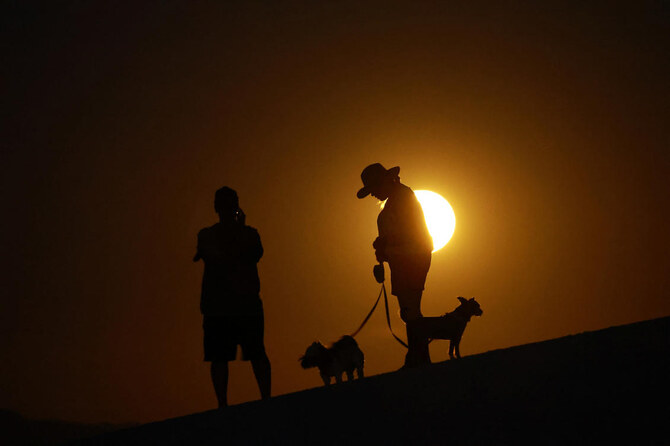
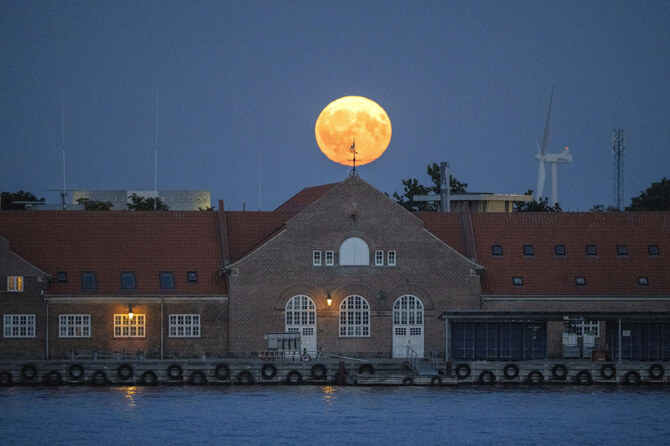
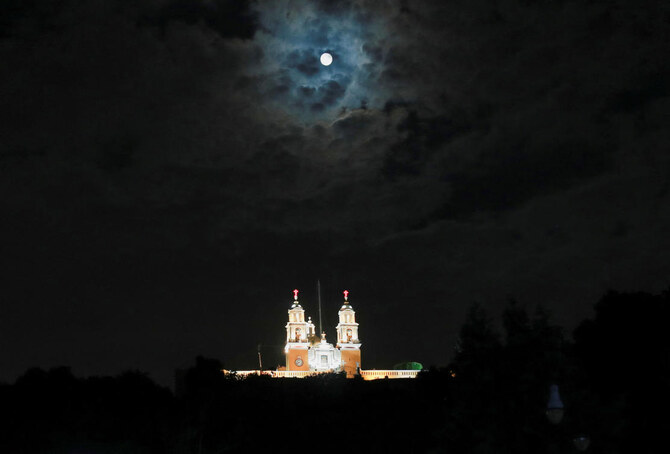
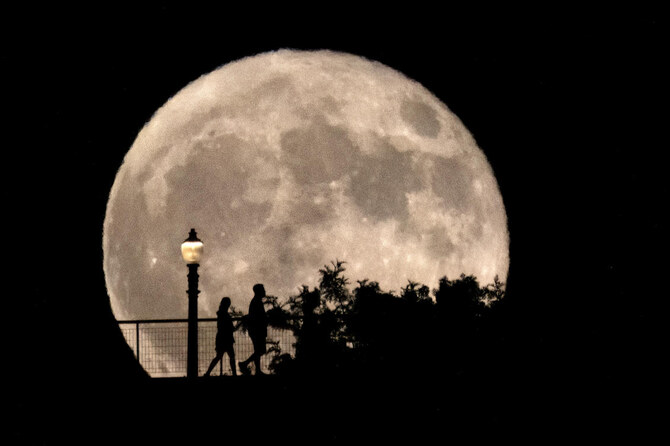
CAPE CANAVERAL, Florida: Monday’s supermoon is the first of four this year.
During a supermoon, the full moon inches a little closer than usual to Earth. A supermoon isn’t bigger, but it can appear that way in the night sky, although scientists say the difference can be barely perceptible.
September’s supermoon will coincide with a partial lunar eclipse. October’s will be the year’s closest approach, and November’s will round out the year.
More a popular term than a scientific one, a supermoon occurs when a full lunar phase syncs up with an especially close swing around Earth. This usually happens only three or four times a year and consecutively, given the moon’s constantly shifting, oval-shaped orbit.


![]()
![]()
![]()
![]()

August’s supermoon is the first of four lunar spectacles
Short Url
https://arab.news/9c5dp
August’s supermoon is the first of four lunar spectacles
- September’s supermoon will coincide with a partial lunar eclipse


Latest updates


© 2026 SAUDI RESEARCH & PUBLISHING COMPANY, All Rights Reserved And subject to Terms of Use Agreement.