

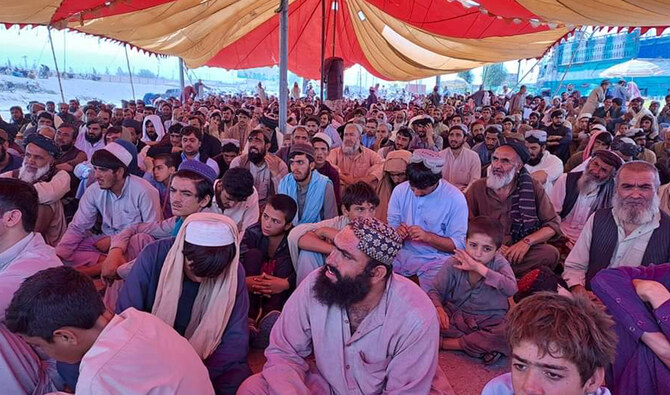

QUETTA: Residents of the southwestern Pakistani town of Chaman said they would continue a sit-in over border tightening measures that have curbed the flow of people and trade with Afghanistan, protest organizers said on Monday, as the government vows to implement a visa and passport policy due to security concerns.
Pakistani officials say the restrictions, which were put in place last year, are a necessary security measure as the country grapples with a resurgence in militant violence it blames on neighboring Afghanistan, whose Taliban rulers deny they allow insurgents to use their territory to launch attacks across the shared frontier.
Pashtun tribes straddling both sides of the British-era border’s Durand Line have historically moved freely for businesses and communal life. But starting last year, for the first time since the border was drawn over a century ago, Pakistani authorities are requiring residents to show a passport and visa before crossing over, paperwork virtually none of them possess. Previously, Chaman residents could pass through using only their Pakistan national identity cards.
A nine-month long protest at the Chaman border crossing ended late in July but last week demonstrators established a camp again at the Friendship Gate, a large concrete gateway along the main highway connecting Chaman to Spin Boldak, the nearest town in Afghanistan.
“A tribal elder and former provincial home minister came to our camp on July 21 and he announced that the government had accepted all of our demands, and the border would be opened on its previous position, but the situation is very different at the border,” Sadiq Khan Achakzai, the leader of the Chaman protest, told Arab News.
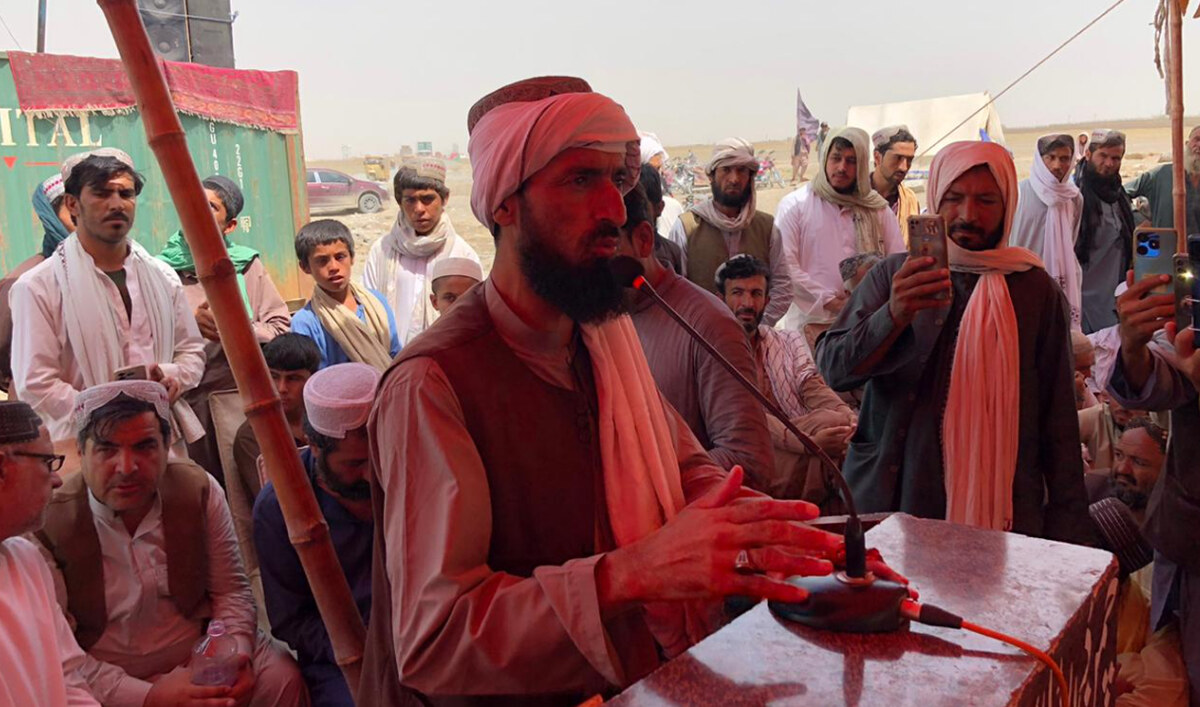
Local tribesmen and traders set up a protest camp against the visa and passport policy at Pakistan Afghan border in Chaman, Balochistan. (Supplied/Zafar Achakzai)
He said the government had promised to restore pedestrian movement through the Chaman border to previous conditions, which had not happened.
“We had no option but to start our protest again and the sit-in will continue until the government reverses the visa and passport policy for the residents of Chaman,” Achakzai added.
The travel restrictions are part of a larger policy Islamabad adopted last year, including a deportation drive against “illegal aliens” after a spike in suicide bombings which the Pakistan government, without providing evidence, says were carried out by Afghan nationals. Islamabad has also blamed them for smuggling, militant violence and other crimes. Kabul says Pakistan’s security issues are a domestic problem.
Chaman residents say the new visa rules have upended their daily lives. Small traders complain of being effectively locked out of their shops where their goods rot and bills for shuttered stores rise. Farmers say they have missed out on wheat harvests and porters, who once earned up to $3.50 a day by transporting goods like electrical items and groceries on their backs or on hand trolleys, say they have lost their livelihoods.
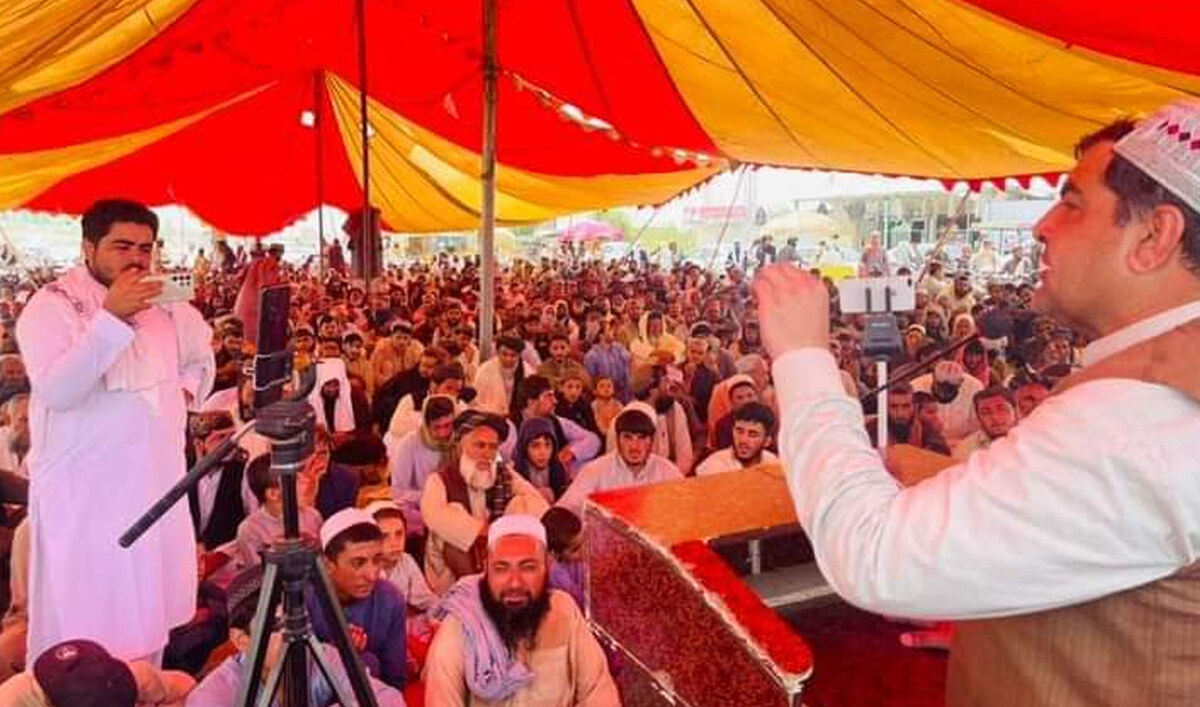
Local tribesmen and traders set up a protest camp against the visa and passport policy at Pakistan Afghan border in Chaman, Balochistan. (Supplied/Zafar Achakzai)
But Pakistani officials say cross-border movement must be regulated to improve security and control smuggling.
Shahid Rind, the provincial government spokesman, said the government had started implementing a one-document regime at the Chaman border and would stand by its position.
“We have released 90 million rupees ($32 million) for the issuance of new Pakistani passports to the residents of Chaman who work as daily wagers at the border,” Rind told Arab News. “Many Afghan nationals used to cross through the border illegally but now the government will keep close monitoring at border crossing points.”
Tensions over the border tightening measures boiled over in mid-June this year, after security forces were called in to clear protesters who had blocked the main highway linking Chaman to Quetta, the provincial capital 75 miles away. The officers clashed with the protesters, leaving more than 40 people injured.


