

Saadiyat Cultural District set to gather ‘curiosity,  creativity’ says Louvre Abu Dhabi director

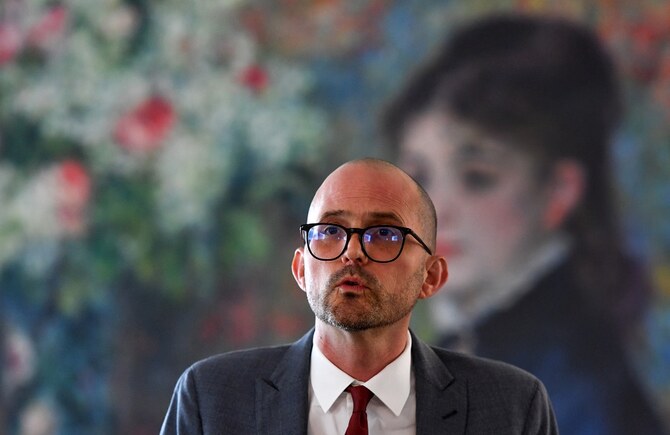
Louvre Abu Dhabi director Manuel Rabate spoke about Abu Dhabi's expanding Saadiyat Cultural District. (Getty Images)
Short Url
Updated 15 August 2024
Follow

Saadiyat Cultural District set to gather ‘curiosity,  creativity’ says Louvre Abu Dhabi director

DUBAI: Set to open in 2025, Abu Dhabi’s Saadiyat Cultural District will be home to the Zayed National Museum, the Guggenheim, the city’s Natural History Museum, and a teamLab outpost, with director of the Louvre Abu Dhabi Manuel Rabate telling Arab News the hub aims to offer guests the chance to access world class museums in one location.

“What Abu Dhabi is doing in Saadiyat, doing in this district, it's to gather all sources of curiosity, creativity, inspiration, education. It's an incredibly bold, I would say, commitment and belief in the importance of knowledge, of connection, of openness,” he said.

The idea has been in motion for years, said Rabate and a lot of brain power has been put into building a concept that is interconnected and part of one narrative in the capital of the UAE.

“The idea to bring world class museums has been communicated for a while. What we see now is the critical moment where the plan is becoming a reality,” he said.

All the institutions in the district are collaborating on many levels, explained Rabate. Other than sharing the physical vicinity on the island, many of the entities tell different parts of the same story.

“For the visitor experience, it is extremely pleasant, I think, to be able to move from one to the other, going to Zayed National Museum in the morning, an exhibition at Guggenheim to then having dinner at the Louvre Abu Dhabi and maybe catching a late show at Berklee, there is collaboration between institutions. Each one has its own mandate and its own narrative,” he explained.

With art, historical and technological institutions, the Saadiyat Cultural District positions itself as a unique global platform dedicated to celebrating Abu Dhabi’s traditions and embracing modernity.


UK entrepreneur says people who disagree with his Palestine solidarity should not shop at his stores

Updated 7 sec ago
Follow

UK entrepreneur says people who disagree with his Palestine solidarity should not shop at his stores

  • Mark Constantine shut all British branches of cosmetics retailer Lush earlier this year in solidarity with Gaza
  • ‘I don’t think being compassionate has a political stance,’ he tells the BBC

LONDON: A British cosmetics entrepreneur has told people who disagree with his support for Palestine not to shop at his businesses.

Mark Constantine is the co-founder and CEO of the Lush chain of cosmetic stores, which temporarily closed all of its UK outlets earlier this year in an act of solidarity with the people of Gaza.

He told the BBC that people should be “kind, sympathetic and compassionate,” that those who are “unkind to others” would not “get on very well with me,” and that anyone who disagrees with his views “shouldn’t come into my shop.”

He told the “Big Boss Interview” podcast: “I’m often called left wing because I’m interested in compassion. I don’t think being compassionate has a political stance.

“I think being kind, being sympathetic, being compassionate is something we’re all capable of and all want to do in certain areas.”

In September, every branch of Lush in the UK, as well as the company’s website, were shut down to show solidarity for the people of Gaza.

A statement on the page where the website was hosted read: “Across the Lush business we share the anguish that millions of people feel seeing the images of starving people in Gaza, Palestine.”

Messages were also posted in the windows of all the shuttered stores, stating: “Stop starving Gaza, we are closed in solidarity.”

Constantine was asked if he thought his views on Gaza could harm his business, and whether people might decide not to deal with him as a result.

“You shouldn’t come into my shop (if you don’t agree),” he said. “Because I’m going to take those profits you’re giving me and I’m going to do more of that — so you absolutely shouldn’t support me.

“The only problem is, who are you going to support? And what are you supporting when you do that? What is your position?”