KARACHI: A 32-year-old butcher has been diagnosed with Congo fever in Karachi, marking the first case of the viral disease in Pakistan this year, officials said on Thursday.
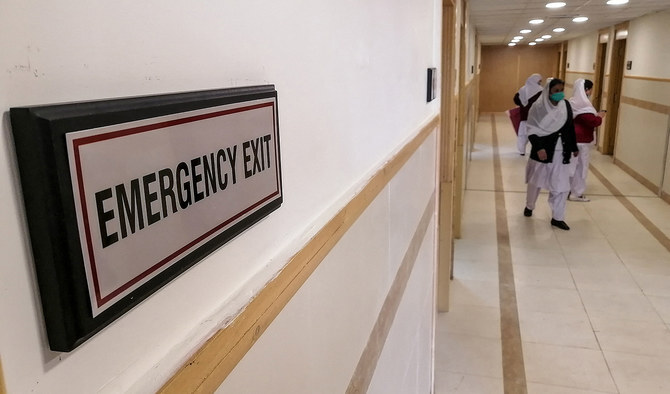
The patient, who hails from the Pan Mandi area of the city, was initially admitted to the Jinnah Postgraduate Medical Center (JPMC) with a high fever, according to Dr. Nausheen Ahmed, deputy director at the medical facility.
“A 32-year-old male was brought in with a high fever and was diagnosed with Congo fever,” she told Arab News.
Crimean-Congo hemorrhagic fever (CCHF) is a severe tick-borne viral illness with a case fatality rate of up to 40 percent, according to the World Health Organization.
It is endemic in parts of Africa, Europe and Asia. Humans can contract the disease through tick bites or contact with infected animal blood or tissues, particularly during or immediately after slaughter.
The majority of cases have occurred in people involved in the livestock industry, such as agricultural workers, slaughterhouse employees and veterinarians.
Ahmed confirmed that the patient had come into contact with animals due to the nature of his job.
“The patient is a butcher by profession and was infected by the animals,” she said while sharing the patient’s history.
According to Dr. Yahya Tunio, the JPMC executive deputy director, the patient’s condition was critical, and he had been transferred to the Sindh Institute of Infectious Diseases for specialized care.
The Sindh Health Department issued a warning to the public to exercise caution when handling animals ahead of Eid Al-Adha this year. Muslims sacrifice sheep, goats, cows or camels during the festivity and distribute meat among family, friends and those in need.
Symptoms of Congo fever include high fever, headache, nausea, vomiting and fatigue.
Health practitioners advise that anyone experiencing these symptoms after coming into contact with animals should seek immediate medical attention.
This is the second reported case of Congo fever in Karachi in less than a year.
In November 2023, a 42-year-old man from the city’s East District was diagnosed with the virus.

Karachi reports first Congo fever case this year after 32-year-old butcher falls ill
https://arab.news/j8bgx
Karachi reports first Congo fever case this year after 32-year-old butcher falls ill
- Last November, a 42-year-old resident of the city was diagnosed with the virus
- Congo fever can be fatal and cause headache, nausea, vomiting and fatigue
Amid political standoff, Pakistan PM engages KP chief minister on security, development
- Shehbaz Sharif urges counterterrorism, development cooperation with PTI-run province
- Meeting notable amid long strain between federal government and Imran Khan’s party
ISLAMABAD: Pakistani Prime Minister Shehbaz Sharif met the chief minister of Khyber Pakhtunkhwa on Monday in a rare high-level engagement between the federal government and a province governed by former prime minister Imran Khan’s opposition party, as Islamabad presses for closer cooperation on security and development.
The meeting is notable given Pakistan’s deeply polarized political landscape. Relations between the federal government, led by Sharif’s Pakistan Muslim League-Nawaz (PML-N), and the provincial KP government ruled by Khan’s Pakistan Tehreek-e-Insaf (PTI) party, have remained severely strained since Khan’s removal from office in 2022 and his subsequent imprisonment on multiple convictions, which PTI says are politically motivated.
Khyber Pakhtunkhwa, which borders Afghanistan, has faced a sharp rise in militant violence in recent years, with attacks by Pakistani Taliban factions straining provincial law enforcement and security institutions. Islamabad has repeatedly called for stronger provincial cooperation as it battles a nationwide resurgence of militancy.
According to a statement issued by the Prime Minister’s Office, Sharif met KP CM Sohail Afridi in Islamabad, with discussions focusing on law and order, counterterrorism and coordination between federal and provincial authorities.
“The Prime Minister emphasized the need for cooperation between the federal and provincial governments for the development and prosperity of the people of Khyber Pakhtunkhwa,” the PMO statement said.
On security, Sharif described coordination between Islamabad and Peshawar as essential.
“The Prime Minister declared cooperation between the federal and provincial governments indispensable for maintaining law and order in the province,” the statement said, adding that “there is a need to further intensify the provincial government’s efforts to establish peace.”
Sharif also called on the provincial administration to strengthen its own institutions to counter militancy.
“The provincial government should reinforce provincial institutions to combat terrorism,” the statement quoted him as saying, while stressing that both governments would continue “joint efforts for the complete elimination of terrorism.”
The prime minister underlined that maintaining security and delivering welfare were constitutional responsibilities of the provincial government.
“The provincial government is empowered and should take measures for health and education for the people of Khyber Pakhtunkhwa,” the statement said.
Sharif said the federal government remained committed to supporting the province within its constitutional mandate.
“The federal government has always strived for the betterment of the people of Khyber Pakhtunkhwa,” he said, describing the province as “an important unit of the federation.”
He added that national development required sustained coordination between Islamabad and the provinces.
“For national development and public service, close relations and effective coordination between the federation and the provinces are indispensable,” the statement said.
The prime minister assured cooperation on development projects, infrastructure, education, health and employment generation “within the federal domain,” reiterating that the government was pursuing a vision of balanced development across all provinces.
The meeting comes as Pakistan’s federal authorities seek to stabilize security conditions and revive economic confidence amid persistent political divisions, with analysts warning that continued friction between Islamabad and opposition-led provinces could complicate counterterrorism efforts and governance in vulnerable regions.


