

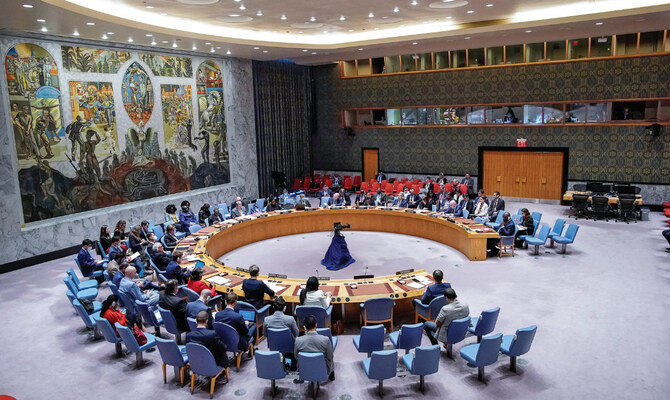

Multilateralism is in crisis. With every turn of events, multilateral systems and international organizations are being debilitated, almost always at the expense of the Global South.
The UN stands paralyzed. Even as, on the one hand, international laws and agreements are adopted to strengthen the rules-based international order, on the other hand they are being violated with impunity and without accountability.
But the problem runs much deeper. A majority of developing countries have become bystanders in the unraveling of the world order. The only insurance they have against this, universal participation in decision-making processes, is vanishing. Instead, they are presented with two differing, even opposing, worldviews to which they are asked to subscribe.
Almost all of the current problems, whether within the UN, the World Trade Organization, the International Monetary Fund or the World Bank, can be traced back to the inability of the multilateral system to accommodate new and emerging powers in the post-Second World War architecture.
Multilateralism is caught between those who fight to preserve the status-quo that existed in 1945 and those who demand reforms to reflect the current realities, which are more multipolar.
India has been the biggest advocate of a strengthening of multilateralism over the years. In our changed world, if the most populous country, with the fifth-largest economy, a track record of multilateralism, democracy and a civilizational ethos of humanity, cannot be given its due in terms of global governance, there is clearly a need for reform.
In fact, during the 10th annual summit of the BRICS group of developing nations nations, in 2018 in Johannesburg, Prime Minister Narendra Modi proposed for the first time his vision for a “reformed multilateralism” that would give major emerging powers a voice in global governance.
India’s track record in the recent past, including its two-year stint as a member of the UN Security Council in 2021 and 2022, reveals numerous examples, if examples were needed, of how we have bridged or overcome differences to build a more inclusive multilateral world.
Accosted by global challenges such as the COVID-19 pandemic, climate change, terrorism, and the digital and AI divide, and the sprouting of conflicts that threaten international peace and security, India has become indispensable in the efforts to find solutions.
Lest we forget, when the world was reeling during the pandemic, and many countries were hoarding vaccines for themselves, India stepped forward to produce and distribute vaccines. In our Vaccine Maitri initiative, we prioritized supplies for smaller and more vulnerable countries and saved numerous lives.
In December 2021, as a member of the Security Council, we successfully thwarted a move to wrest climate change policy away from the inclusive process led by the UN Framework Convention on Climate Change, in which all countries are represented, and bring it under the control of the Security Council, which effectively would have placed climate action at the mercy of its five permanent members (the US, UK, Russia, China and France), who are historically the major polluters.
India underscored the fact that this draft resolution sought “to hand over that responsibility to a body which neither works through consensus nor is reflective of the interests of the developing countries.”
The draft was defeated by a vote in which India voted against it and Russia, as a permanent member, exercised its power of veto. Had the resolution succeeded, climate change architecture by now would have marginalized the voices of the Global South, especially those of the most vulnerable among them, including Small Island Developing States.
India yet again took a stand on the side of inclusivity and multilateralism when it played an instrumental role in the setting up in 2015 of the International Solar Alliance, which now has more than 100 member countries.
The G20 is an influential plurilateral group, the members of which are major economies that make decisions on global economic and developmental issues that affect all other countries as well. However, a glaring lacuna was that it did not fully represent the smaller and medium-sized states of the Global South.
To bridge this gap, when India held the presidency pf the G20 in 2022-23, Modi convened the Voice of Global South Summit, in which 125 developing countries took part. The outcomes of the summit were channeled into G20 discussions during India’s presidency, to ensure that the group took informed and inclusive decisions to benefit the vast majority.
In addition, India lobbied for African Union membership of the G20 and inducted it into the organization, which was a huge step for a continent that had not been adequately represented in the G20, Security Council or other international bodies.
Needless to say, India has been at the forefront of efforts to reform the Security Council. Dealing with conflicts is the business of council members — but the inability to deal with them has become its hallmark.
When the UN was established, there were 51 member states. Now we have 193 but we still have only five permanent members of the Security Council, who are polarized and have paralyzed its decision-making.
The days when a small group of countries get to decide what the entire world should do are over. The logical ultimate fall-out from an unreformed Security Council is the emergence of other power centers to challenge it, leading to fragmentation of the world order.
Unless there is legitimate, representative and permanent representation of the Global South, especially that of the largest country, India, and Africa, a continent of 54 nations, we cannot have meaningful decisions made by the council.
Our support to the nations of the developing world was reinforced during India’s stint as a non-permanent member of the Security Council, during which we stood for their territorial integrity; increased humanitarian assistance; the correcting of historical injustices; reforms; development partnerships; the fight against terror; and the peaceful resolution of disputes.
However, it was India’s independent and proactive stance during the war in Ukraine that acted as a catalyst in helping other developing countries voice their dissatisfaction with the pursuit of a military solution to the conflict, and instead call for diplomacy and dialogue, even in the midst of intense fighting and high emotions when all levers were being weaponized.
This was India saying, in effect, that we do not have to choose sides between warring blocs, however big or important they might be. This was India saying that we stand for another worldview that seeks the path of dialogue over war, seeks an inclusive world over polarization and fragmentation, seeks independence of policymaking over the coercion of small and medium-sized states in their decision-making, seeks territorial integrity over occupation, and seeks reformed multilateralism over the status quo or unilateralism.
• T.S. Tirumurti is a former Indian ambassador and a professor at IIT Madras.


