

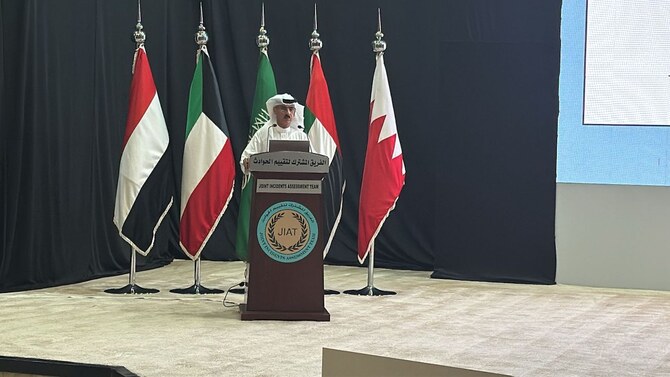
Coalition forces did not target Baqem Hospital in Yemen’s Saada: JIAT

The Coalition to Restore Legitimacy in Yemen did not target Baqem Hospital in Yemen’s Saada in October 2016, JIAT concluded on Wednesday. (SPA)
Short Url
Updated 14 August 2024
Follow

Coalition forces did not target Baqem Hospital in Yemen’s Saada: JIAT

  • JIAT said that after assessing the evidence, it found that Baqem Rural Hospital is on the coalition’s no-strike list
  • By studying the air missions carried out by coalition forces on Oct. 1, 2016, JIAT found that coalition forces did not carry out any air missions on Baqem city

RIYADH: The Coalition to Restore Legitimacy in Yemen did not target Baqem Rural Hospital in Yemen’s Saada governorate in October 2016 as claimed by Physicians for Human Rights, the Joint Incidents Assessment Team has concluded.

The coalition’s investigative body said it vetted the incident and reviewed all documents including air tasking orders, daily mission schedules, mission execution procedures, after-mission reports, satellite images, open sources, the website of the National Information Center in Yemen, which contains data on health centers and hospitals in Yemen, the coalition no-strike list, coalition forces rules of engagement, and the provisions and principles of international humanitarian law.

JIAT said that after assessing the evidence, it found that Baqem Rural Hospital is located in the northeastern part of Baqem city in Yemen’s Saada Governorate, and is on the coalition’s no-strike list.

JIAT specialists studied the satellite images of the hospital before and after the claimed date of the incident (Oct. 1, 2016) and found the following:

1. Baqem Rural Hospital consists of a main building and its annexes, surrounded by a fence.

2. JIAT is unable to determine the cause of traces of damage on one of the annex buildings.

By studying the air missions carried out by coalition forces on Oct. 1, 2016, JIAT found that coalition forces did not carry out any air missions on Baqem city.

By studying the daily mission schedule carried out by coalition forces one day prior and one day after the claimed date of the incident, JIAT found the following:

1. On Sept. 30, 2016, the day prior to the claimed incident date, JIAT found that coalition forces did not carry out any air missions on Baqem city.

2.On Oct. 2, 2016, the day after the claimed incident date, JIAT found that coalition forces did not carry out any air missions on Baqem city.

JIAT added that it had previously announced the results of an investigation into an earlier alleged targeting, in 2015, of Baqem Rural Hospital. It concluded that coalition forces did not target the hospital as claimed.


Klija Festival in Buraidah empowers small businesses

Updated 24 January 2026
Follow

Klija Festival in Buraidah empowers small businesses

  • Half a million attend 15-day celebration of heritage; event creates 1,500 seasonal jobs

RIYADH: The 17th Klija Festival in Buraidah drew more than half a million visitors during its 15-day run, celebrating the region’s heritage and entrepreneurial spirit.

Organized by the Qassim Chamber of Commerce, the event highlighted small businesses, providing a platform for entrepreneurs to showcase local products.

More than 340 sales outlets, marketing corners and points of sale welcomed attendees, while the festival provided 1,500 seasonal job opportunities, the Saudi Press Agency reported.

The small business pavilions featured families in the cottage industry, artisans and startups presenting traditional foods, and handicrafts and heritage items that reflect the region’s identity.

Participants said that the festival was a key marketing platform, boosting sales, increasing brand awareness, facilitating knowledge exchange and fostering connections with organizations supporting SMEs.

Mohammed Al-Hanaya, Qassim Chamber secretary-general and festival supervisor, said that the event brought together families, artisans, SMEs, companies and institutions, stimulating commercial activity, opening direct marketing channels and enhancing economic returns.

He added that the festival provided seasonal jobs for more than 1,500 young men and women across operations, marketing and services, supporting the labor market, empowering national talent, and connecting youth to the events and creative economy.

Klija, a traditional cookie made from wheat flour, dates or sugar, date syrup and natural ingredients such as cardamom and lemon, is a rich source of energy, carbohydrates, dietary fiber and natural proteins.

A cultural icon rooted in Qassim’s traditions, the cookie has gained international exposure through the festival, expanding the availability of packaged products.

Starting next year, the festival will be renamed the International Klija Festival, a rebranding approved by Qassim Gov. Prince Faisal bin Mishaal, who described it as a “successful model for turning local initiatives into global economic engines.”

This year’s festival, held at the King Khalid Cultural Center, included international participants from Egypt, Turkiye and Morocco, marking its evolution into a cross-cultural platform.