



ISLAMABAD: Rights activists belonging to religious minority communities in Pakistan lamented discrimination and a climate of impunity around violence and attacks against minorities this week, calling on the government to use August 14 Independence Day celebrations as a reminder that it needed to ensure freedom, peace and justice for all.
According to the latest digital census conducted last year, over 96 percent of Pakistan’s population is Muslim, with the remaining four percent comprising 5.2 million Hindus, 3.3 million Christians, 15,992 Sikhs and others.
Nearly all of Pakistan’s minorities feel that the state fails to protect them, though the government says protecting minorities and improving conditions for them is a key priority. There have been dozens of instances of mob violence against religious minorities in the South Asian nation in recent years, including an attack on Christians in Jaranwala, a town in Punjab province, where churches, homes and businesses were set ablaze in August 2023. In the southern Sindh province, Hindus have frequently complained about forced conversions, particularly of young girls within their community, and attacks on temples.
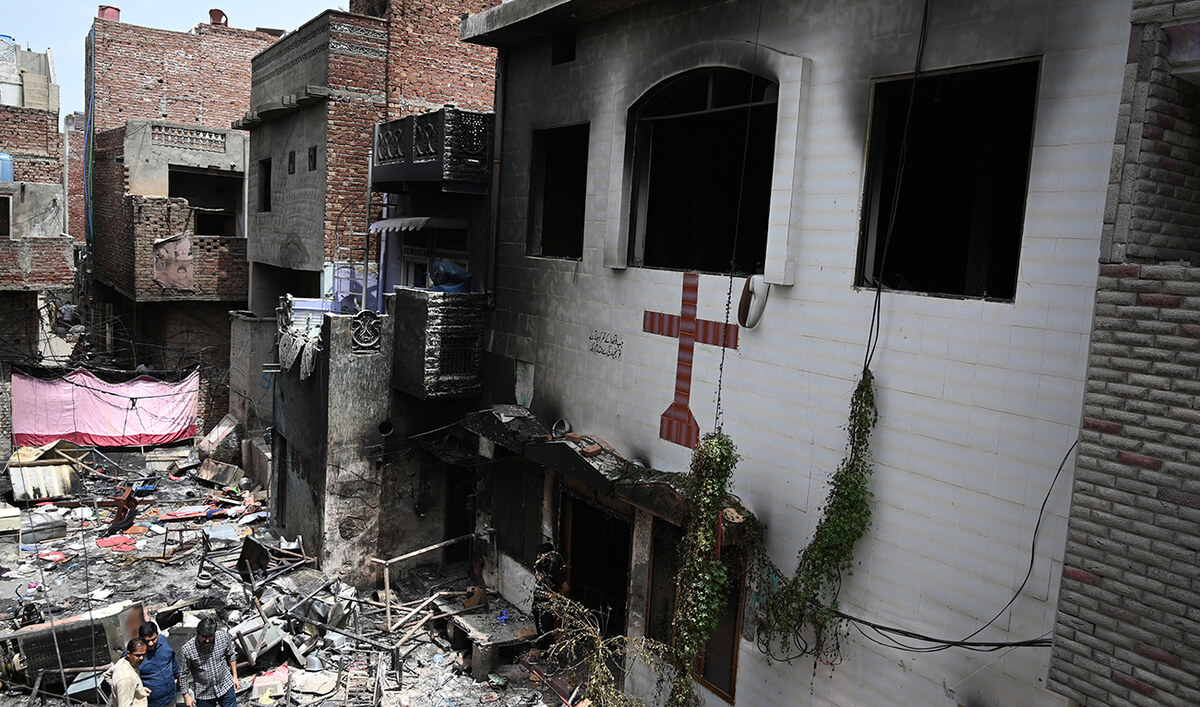
Men stand amid debris outside the torched Saint John Church in Jaranwala on the outskirts of Faisalabad on August 17, 2023, a day after an attack by Muslim men following spread allegations that Christians had desecrated the Koran. (AFP/File)
Muhammad Ali Jinnah, the hero of the country’s creation as a haven for the sub-continent’s Muslims, ushered in independence in 1947 with a promise to minorities that they would enjoy freedom of worship and equality without discrimination. But for many members of Pakistan’s minorities those words ring hollow.
“Right from the 1950s, we have seen religious minorities being targeted, and therefore, August 14 is a time that should remind everyone that those challenges should be tackled,” Peter Jacob, executive director of the Center for Social Justice, told Arab News.
“The minorities supported the idea of Pakistan with a hope that this country would allow equal rights to all and this will be a democracy.”
Jacob described the fight for minority rights as a “continuing struggle” by the country’s liberal and democratic forces but said Pakistan needed to revisit its constitutional framework to address the challenges faced by religious minorities, which include various forms of discrimination. For example, a 2022 report by the National Commission for Human Rights (NCHR) said nearly half of the posts reserved for religious minorities in government jobs remained vacant while 80 percent of low-paying jobs were filled by non-Muslims.
“On the one hand, you have equal rights in the [constitution’s] fundamental rights chapter, and on the other hand, there is embedded discrimination based on religion in the operative part,” Jacob said.
“STANDING WITH MINORTIES”
Last week, Pakistan’s president and prime minister promised to protect religious freedoms as the South Asian country marked National Minorities Day, a day it has been commemorating since 2009 on Aug. 11 each year.
Ramesh Singh Arora, who made history this year as the country’s first Sikh cabinet minister, said the provincial government in Punjab, where he is the minister for minorities, was trying to improve the plight of marginalized communities.
Listing the achievements of the Punjab government in the five months since the new administration was sworn in, the minister for minorities said the minority affairs department had seen a 188 percent increase in its budget, with the minority development fund increased from Rs1.5 million to Rs2.5 billion. Grants for religious festivals of minority groups had increased almost 600 percent, Arora said.
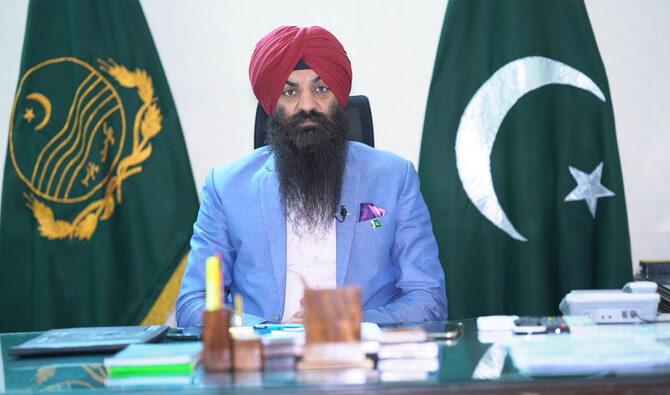
Punjab Minorities Minister Ramesh Singh Arora speaks to Arab News Pakistan in Lahore, Pakistan on August 11, 2024. (AN photo)
“This means that we are standing with our minorities, we look after them,” he told Arab News.
“The worship places that had fallen to landgrabbers, for a long time now, whether it was the Christian community, the Hindu community and some gurudwaras [Sikh temples], we had those freed, so we are determined and committed that in Punjab we are going to protect our minorities.”
In June this year, the Punjab government also approved the Sikh Marriage Act, which had been championed by Arora for years.
“Today, the Sikh marriage act [2018] rules are in place, we are trying to implement them, we are trying to enact the Hindu personal laws as well, we are working on Christian personal laws,” he said.
“Hindu marriage act has been passed in the national assembly, the rules of business are almost in place, we have started working on implementation. My own department has a five-year road map we are working toward.”
On National Minorities Day, the Punjab Assembly called a special session to commemorate minorities “for their services to and love for Pakistan.”
Even at that session, Arora pointed out, the problems of minorities were spoken about openly rather than brushed under the rug:
“[We] discussed a way out from those situations, because we are focused on addressing the reservations that minorities have, and the rightful demands they make of the state.”
“Minorities have valid demands which the government must resolve,” the minister added. “We are actively working to address them.”
“HEREIN LIES OUR HOPE”
A rights activist from the Hindu community, Jayaa Jaggi, said the green and white colors in the Pakistani flag were more than just national colors, with the white representing religious minorities and serving as a reminder of their presence in the country as well as of their rights.
“I think that’s the biggest hope, biggest privilege that probably hardly any other country has recognized for their religious minorities,” she told Arab News.
However, despite some progress made on basic rights, including job and educational quotas, there were still many challenges left, such as “hate speech in the curriculum,” Jaggi said.
Executive director of the Christian Study Center in Rawalpindi, Jennifer Christine Jag Jivan, said “spaces of greater interaction” could present opportunities for things to improve in the future.
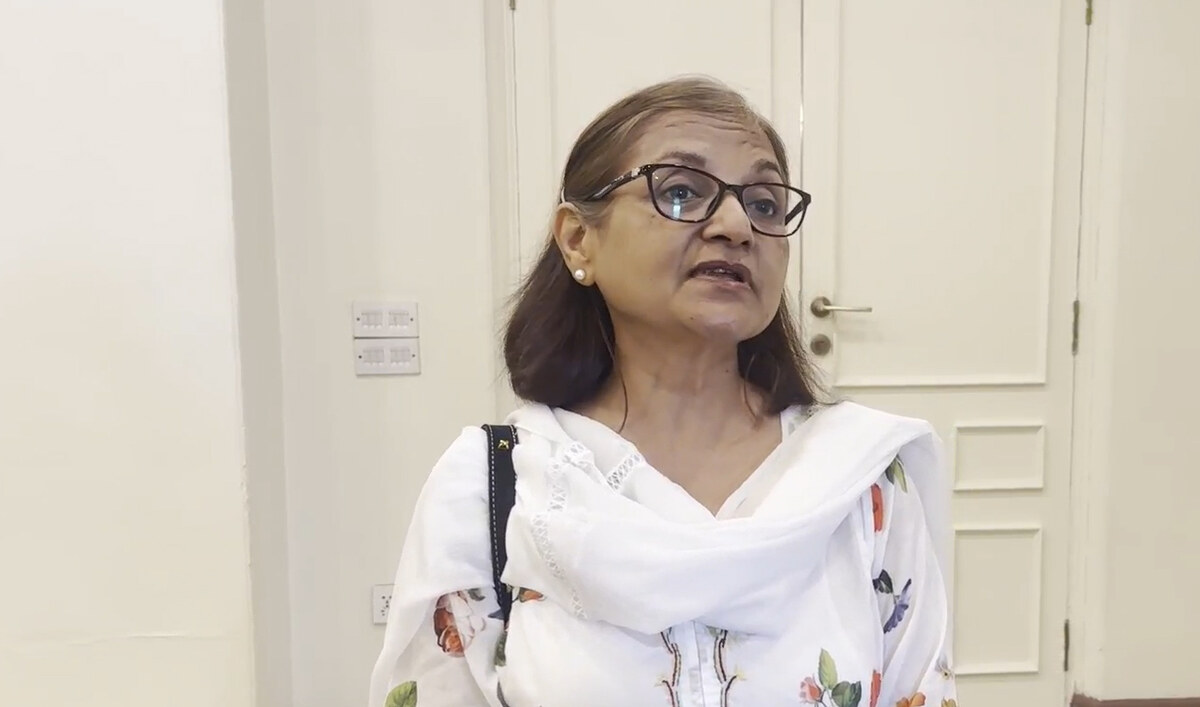
Executive director of the Christian Study Center in Rawalpindi, Jennifer Christine speaks during an interview with Arab News in Islamabad on August 12, 2024. (AN Photo)
“As a Pakistani citizen, I would like to say that wherever there are challenges, only there, people of vision, people of faith and people of hope need to find those spaces of more interaction, moving toward greater justice, moving toward greater peace,” Jivan said.
“And we need to find those spaces of greater love. Herein lies our hope.”


