

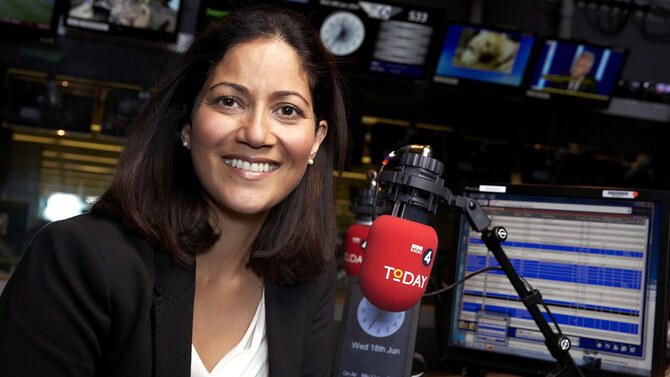

LONDON: Israeli government spokesperson David Mencer accused BBC presenter Mishal Husain and the broadcaster of exhibiting pro-Palestine bias.
In a heated exchange during an interview with BBC Radio 4’s Today program on Monday, Mencer criticized the broadcaster for its coverage of the war in Gaza, which began following the Oct. 7 attacks last year by Hamas on Israel.
“So is this your impression of impartial news coverage, Mishal? Because I think you just warrant the pro-Palestinian reporter of the year award, and I congratulate you for that,” he said.
“So these are the facts: We were attacked on Oct. 7, not in a war that we wanted; we were invaded; they (Hamas) want to destroy our country; it’s being controlled by IRNA (the Islamic Republic News Agency); we have a duty to defend our own people.”
A BBC spokesperson defended Husain and said the questions she posed to Mencer were “legitimate and important” and conducted “in a professional, fair and courteous manner.”
Throughout the interview, Mencer repeatedly defended Israel’s actions and dismissed criticisms of the actions of the nation’s military forces during the conflict.
Asked about an airstrike on a Gaza school on Saturday, which Palestinian health authorities said killed almost 100 people, Mencer expressed skepticism about the reports, arguing that the casualty figures have been inflated by “pseudo-medical staff” throughout the conflict in Gaza.
He said that the strike on the school had targeted 19 Hamas fighters and there were “no women and children present.”
Mencer added that while Israel is winning the war on the battlefield, it was losing the media battle, and blamed the BBC for playing a part in that.
“You, as the BBC, you do no credit to ordinary Gazans by just blindly repeating what terrorist organizations, (Daesh-like) organizations, the information which they feed you. It simply doesn’t bear any resemblance to the truth,” he said, adding that there was “no justice” in journalists “parroting” the numbers they are given.
Challenged on the ban imposed by Israeli authorities on international journalists that prevents them from reporting from Gaza and seeing the situation for themselves, Mencer said that unrestricted media access could hinder efforts to rescue Israeli hostages still held by Hamas and other groups.
A British media and public relations specialist, and a former director of the British parliamentary group Labour Friends of Israel, Mencer has been the Israeli government’s spokesperson since last fall.
During her interview with him, Husain also asked about a recent report by B’Tselem, a human rights organization in Jerusalem, which included allegations of abuses against Palestinian detainees carried out by the Israeli military.
Mencer dismissed the claims, saying there was “no such thing” and the Israeli government had to “make accommodations … for tens of thousands of terrorists.”
He added: “You pandering to fringe elements within Israeli society, that have every right to speak their minds, … that doesn’t make it fact, that doesn’t make it so. You guys just parroting it just produces radicalism that makes Jews in the UK afraid to walk the streets.”


