

Elon Musk should face sanctions, arrest for inciting UK rioters, ex-Twitter chief says

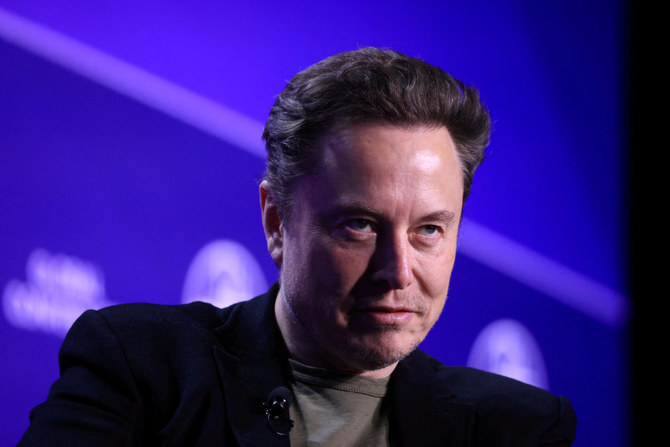
Elon Musk purchased the X platform (formerly Twitter) in 2022. (File/Reuters)
Short Url
Updated 13 August 2024
Follow

Elon Musk should face sanctions, arrest for inciting UK rioters, ex-Twitter chief says

  • Musk said that “civil war is inevitable” in the UK

LONDON: Elon Musk should face “personal sanctions” and potentially even the threat of an “arrest warrant” if he is found to have encouraged public disorder on his social media platform X, according to a former Twitter executive.

Bruce Daisley, who previously served as Twitter’s vice president for Europe, the Middle East, and Africa, argued on Monday that it was unacceptable for the billionaire owner of X, formerly Twitter, to sow discord without facing personal consequences.

Daisley’s comments come in the aftermath of week-long far-right riots across England and Northern Ireland, during which asylum hotels and mosques were attacked, The Guardian reported on Monday.

The unrest was stirred up and inflamed by online posts, including one from Musk stating that “civil war is inevitable” in the UK — a remark that Justice Minister Heidi Alexander condemned as “unacceptable.”

Musk also criticized Prime Minister Keir Starmer, labeling him “two-tier Keir” and a “hypocrite” for his handling of policing, and shared, then deleted, a false post claiming Starmer planned to establish “detainment camps” in the Falkland Islands.

Daisley suggested that Starmer should “beef up” online safety laws and reconsider whether the media regulator, Ofcom, is adequately equipped to manage the rapid actions of individuals like Musk.

He argued that the threat of personal sanctions could be more effective than corporate fines, particularly in influencing the lifestyles of tech billionaires.

Daisley, who worked at Twitter from 2012-2020, described Musk as someone who “has taken on the aura of a teenager on the bus with no headphones, creating lots of noise,” The Guardian reported.

“Were Musk to continue stirring up unrest, an arrest warrant for him might produce fireworks from his fingertips, but as an international jet-setter it would have the effect of focusing his mind.

“Musk’s actions should be a wake-up call for Starmer’s government to quietly legislate to take back control of what we collectively agree is permissible on social media.”

He argued: “In my experience, that threat of personal sanction is much more effective on executives than the risk of corporate fines.

“The question we are presented with is whether we’re willing to allow a billionaire oligarch to camp off the UK coastline and take potshots at our society. The idea that a boycott — whether by high-profile users or advertisers — should be our only sanction is clearly not meaningful.”

Daisley also pointed out that under existing laws, Musk and other executives could be held criminally liable for their actions.

He called for Britain’s Online Safety Act 2023 to be strengthened as a matter of urgency and added: “Musk might force his angry tweets to the top of your timeline, but the will of a democratically elected government should mean more than the fury of a tech oligarch — even him.”

Following the fatal stabbing of three young girls at a Taylor Swift-themed holiday dance class in Southport last month, the UK government has urged social media platforms to act responsibly, accusing them of enabling the spread of false claims about the attacker being an asylum-seeker. Police are already increasingly targeting individuals suspected of using online posts to incite violence, The Guardian reported.

The Yazidi nightmare
Ten years after the genocide, their torment continues

Enter


keywords

BBC backs Israel’s participation in Eurovision Song Contest amid expanding boycott

Updated 06 December 2025
Follow

BBC backs Israel’s participation in Eurovision Song Contest amid expanding boycott

  • Ireland, Spain, the Netherlands and Slovenia withdraw, citing concerns about the war in Gaza, after organizers clear Israel to compete
  • Critics accuse organizers of double standards, given that Russia was banned from Eurovision in 2022 after invasion of Ukraine

LONDON: The BBC has backed the European Broadcasting Union’s decision to allow Israel to participate in the 2026 Eurovision Song Contest, despite mounting opposition and an expanding boycott by European countries and public broadcasters.

National broadcasters in Ireland, Spain, the Netherlands and Slovenia have formally withdrawn from next year’s event, citing what they described as Israel’s violations of international law during its ongoing war on Gaza, which has killed more than 70,000 people, left much of the territory in ruins and prompted accusations of war crimes.

The BBC, however, said it backed the decision to allow Israel to take part in the contest.

“We support the collective decision made by members of the EBU,” a BBC spokesperson said. “This is about enforcing the rules of the EBU and being inclusive.”

Israel’s participation in the 2026 event, set to take place in the Austrian capital Vienna in May, was confirmed during the EBU’s general assembly in Geneva on Thursday. 

However, pressure continued to build in opposition to the decision, with broadcasters from four countries pulling out and critics accusing organizers of double standards, given that Russia was banned from Eurovision in 2022 after the invasion of Ukraine.

Following the EBU decision, Irish public broadcaster RTE said it would neither participate in nor screen the contest. It said Ireland’s participation “remains unconscionable given the appalling loss of lives in Gaza and the humanitarian crisis there.” It also condemned the killing of journalists in Gaza and the denial of access to the international media. More than 200 Palestinian journalists have reportedly been killed since the start of the war.

Slovenian broadcaster RTV said it was withdrawing from the competition “on behalf of the 20,000 children who died in Gaza.” Chairperson Natalija Gorscak said the decision reflected growing public demand to uphold European values of peace and press freedoms, noting that the international media are still banned from Gaza.

She added that Israel’s 2025 Eurovision performance had been overtly political, and contrasted the decision about Israel with the ban on Russia’s participation following the invasion of Ukraine.

Dutch broadcaster AVROTROS also withdrew from the contest, describing the decision of the EBU as “incompatible with the public values that are essential to us.”

CEO Taco Zimmerman said: “Culture unites, but not at all costs. What happened last year touches our boundaries … Universal values like humanity and a free press have been seriously violated.”

The EBU did not hold a vote on Israel’s participation in the contest. Instead, member broadcasters voted in favor of new rules for contest voting to prevent governments or other groups from unfairly promoting songs to manipulate the result.

Austria, which is set to host the competition after Viennese singer JJ won this year with “Wasted Love,” supports Israel’s participation. Germany, too, was said to back Israel.