QUETTA: The Baloch Yakjehti Committee (BYC), an ethnic Baloch rights group, on Friday called off its two-week-long protests after having reached another deal with the government in Pakistan’s southwestern Balochistan province, following days of clashes in Gwadar and other districts.
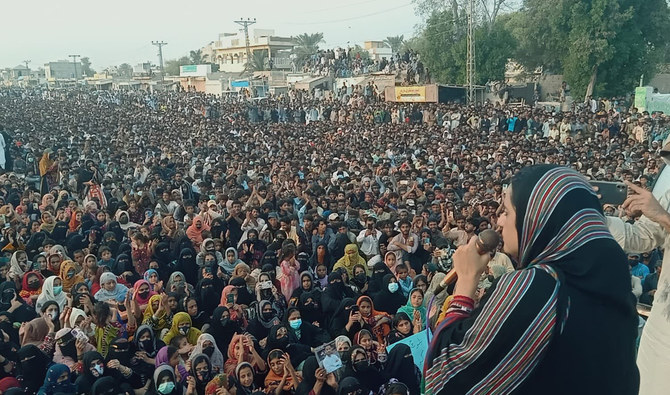
The BYC, which advocates for the rights of the ethnic Baloch people, summoned a ‘Baloch Raji Muchi,’ or Baloch National Gathering, in Balochistan’s Gwadar port city on July 28 against alleged human rights abuses, extra-judicial killings and enforced disappearances in Balochistan that rights activists and the families of victims blame on Pakistani security forces. The government and security agencies deny involvement.
Over the last two weeks, several districts in Balochistan witnessed clashes between ethnic Baloch protesters and Pakistani paramilitary forces that killed three people, including a Pakistani soldier, after the authorities blocked highways in Quetta, Mastung, Hub, Kech and Gwadar districts to stop hundreds of people from participating in the BYC sit-in in the Gwadar port city.
But thousands of people managed to gather in Gwadar, home to a key Chinese-built deep seaport central to the multi-billion-dollar China-Pakistan Economic Corridor (CPEC), despite the road closures and a complete Internet shutdown that cut off the city from the rest of the country for two weeks.
In a statement on Friday, the BYC said the government had accepted its demands after which it had called off the protests, while its head, Dr. Mahrang Baloch, and other members had left the port city of Gwadar and were en route to the provincial capital of Quetta via Turbat.
“The government has started releasing our detained members in Quetta and other cities of Balochistan,” Beberg Baloch, a senior BYC member who had been leading protests in Quetta, told Arab News. “We are collecting details of our people who are still in police custody.”
The BYC had demanded the government release all detained members, quash cases, grant compensation for damages, lift the Internet ban, open all blocked highways and agree to register no further cases against BYC members.
An earlier agreement, reached between the two sides last week, collapsed as government officials accused the protesters of not honoring it, while the BYC said the government had intensified its crackdown on protesters in Quetta, Nushki, Gwadar and Karachi despite the deal.
“If the government didn’t respect the new deal, we will again take to the streets,” said Sadia Baloch, another BYC member.
Shahid Rind, a provincial government spokesman, also confirmed reaching an agreement with the protesters.
“Normalcy has returned to Gwadar and the protest has been called off by the Baloch Yakjehti Committee,” he said at a news conference in Quetta on Friday. “The provincial government is ready to accept every single demand which is framed under the constitution of Pakistan.”
Zahoor Buledi, the Balochistan planning minister who led the talks with the BYC, told Arab News that cellular and Internet services as well as roads would be opened in Gwadar later today.
The agreement between the Balochistan government and the protesters comes days after a Pakistani military spokesman called the ethnic rights movement a “proxy” for militant groups.
Pakistan’s Balochistan province, which borders Iran and Afghanistan, is the site of a low-level insurgency for the last two decades by separatists, who say they are fighting what they see as unfair exploitation of the province’s wealth by the federation. The Pakistani state denies the allegation.


![]()

Baloch rights group calls off protests in Pakistan’s Gwadar after ‘deal’ with government
Short Url
https://arab.news/c33mp
Baloch rights group calls off protests in Pakistan’s Gwadar after ‘deal’ with government
- Baloch Yakjehti Committee announces calling off protests in Pakistan’s Balochistan province after second round of talks with government succeeds
- Three people, including an army soldier, were killed in two-week-long clashes that had brought life to a standstill in many parts of Balochistan province
Latest updates


© 2026 SAUDI RESEARCH & PUBLISHING COMPANY, All Rights Reserved And subject to Terms of Use Agreement.