Pakistan court acquits alleged crime boss in 41st case as experts rue ‘weak prosecutions’

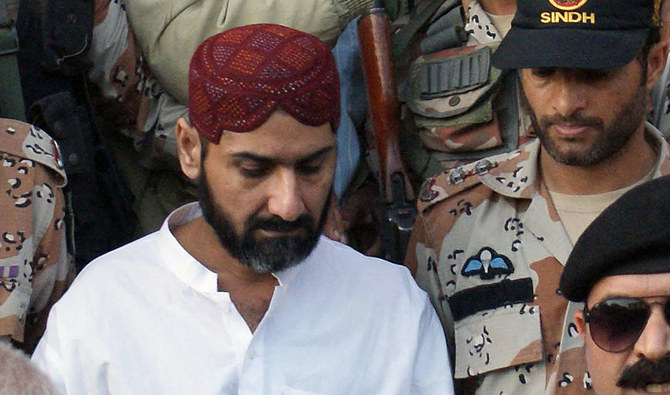
In this file photograph, taken on January 30, 2016, Pakistani rangers escort gang leader Uzair Baloch from a court in Karachi. (AFP/File)
Short Url
Updated 07 August 2024
Follow

Pakistan court acquits alleged crime boss in 41st case as experts rue ‘weak prosecutions’

  • Uzair Jan Baloch has long been suspected of building criminal empire through extortion, drugs and kidnapping
  • A military court in April 2020 convicted Baloch of spying for Iran, handing him a 12-year jail sentence 

KARACHI: A Pakistani court on Wednesday acquitted suspected crime lord Uzair Jan Baloch in his 41st criminal case due to lack of evidence, his lawyer confirmed, as crime experts pointed out flaws in the country’s prosecution especially concerning suspects with ties to political leaders. 
Baloch, long suspected of building a criminal empire through extortion, kidnapping, and drugs, has been cleared of charges in a 2009 police encounter that killed his predecessor, Abdul Rehman, known as “Rehman Dakait.”
The acquittal marks the 41st time Baloch has been cleared of criminal charges since his arrest in 2016, one of his legal counsels Abid Zaman told Arab News. Zaman hoped charges against Uzair in the remaining 18 cases would be dropped “soon” due to lack of evidence. 
“Uzair Baloch has been acquitted in the police encounter case due to lack of evidence,” Safdar Ali, the alleged warlord’s lawyer pleading his cases in district courts, told reporters. He said the case was registered in 2009 in Karachi’s Steel Town Police Station.
Despite his acquittal, Baloch will remain in prison on other charges and is also serving a sentence handed down by a military court for spying for Iran.
Baloch was for years considered close to politicians within the ruling party in the southern Sindh province, the Pakistan People’s Party (PPP).
Zoha Waseem, co-coordinator of the global research network Urban Violence Research Network and author of ‘Insecure Guardians: Enforcement, encounters and Everyday Policing in Postcolonial Karachi,’ said it is difficult to provide evidence against people like Baloch, who are “politically connected individuals.”
She said such people are “prioritized as assets by various centers of power” in Pakistan, adding that evidence against them hardly stands in court and helps prosecution. 
“Such individuals are high risk assets because they may reveal information that can hurt the powers that be,” she told Arab News. “Or perhaps they are still seen as potential assets.”
Waseem said cases against politically connected individuals like Uzair are weakened sometimes due to legal technicalities and sometimes due to “political preferences in a given political climate.”
Arman Sabir, an expert on Karachi crime, said Baloch was initially not involved in criminal activities. However, following the murder of his father, Baloch sought revenge against a rival. 
“Baloch’s criminal record grew as he became entangled in numerous skirmishes with rival gangs, resulting in multiple criminal cases against him,” Sabir noted. 
He said Baloch managed to avoid arrest largely due to political support from influential figures in Pakistan.
“Acquittals in these cases have been facilitated by poorly drafted FIRs [complaints] and weak prosecutions, highlighting significant deficiencies in the police and home department’s handling of these cases,” Sabir said.
He said even if acquitted in all cases, Baloch will remain in jail until his term announced by the military court completes.


India look forward to Pakistan ‘challenge’ at T20 World Cup

Updated 7 sec ago
Follow

India look forward to Pakistan ‘challenge’ at T20 World Cup

  • Pakistan government late Monday ended a week-long stand-off by rescinding order for its team to boycott Feb. 15 match
  • Pakistan’s decision to go ahead with the match was hailed Tuesday as an outbreak of ‘good sense’ and ‘good for cricket’

NEW DELHI: India said Tuesday it would be “a challenge” to face a “quality” Pakistan team in Colombo after Islamabad U-turned and decided to play the blockbuster T20 World Cup clash.

The Pakistan government late Monday ended a week-long stand-off by rescinding its order for the cricket team to boycott the February 15 match.

“It’s great that the game is back on, we kind of never changed the preparation,” said India assistant coach Ryan ten Doeschate.

India will face a second Group A match against Namibia on Thursday in New Delhi before flying to Sri Lanka.

It means a quick turnaround for Sunday’s match, the biggest and most lucrative clash in world cricket.

“It’s going to be a challenge going to Colombo where Pakistan have been for the last two weeks,” added Ten Doeschate.

“We are delighted to have another chance to play against a quality side in the first phase of the tournament.

“We are fully focused on just bringing our best game to that fixture.”

Pakistan’s decision to go ahead with the match was hailed Tuesday as an outbreak of “good sense” and “good for cricket.”

A frantic weekend of negotiations saw International Cricket Council (ICC) and Bangladesh Cricket Board (BCB) chiefs fly to Lahore on Sunday for talks with the Pakistan Cricket Board (PCB).

The governments of Bangladesh and Sri Lanka both wrote to the Islamabad government on Monday urging it to change its stance and allow the game to go ahead.

After “multilateral discussions, as well as the request of friendly countries, the Government of Pakistan hereby directs the Pakistan National Cricket Team to take the field on February 15,” the Islamabad government said on its official X account late Monday night.

The decision had been taken with the aim of “protecting the spirit of cricket,” it added.

’GOOD FOR CRICKET’

Former India cricketer Madan Lal told AFP on Tuesday that it was “good for cricket.”

“We want strong teams to play so that the charm of the World Cup is not lost,” he added.

Sri Lanka, who will host the match which generates multi-millions of dollars in advertising, broadcast rights, sponsorship and tourism, also praised the decision.

Sri Lankan President Anura Kumara Dissanayake, in a social media post, thanked Pakistan’s Prime Minister Shehbaz Sharif for “ensuring the game we all love goes on.”

Veteran Indian journalist Pradeep Magazine told AFP “good sense has prevailed on all sides.”

Financial considerations would have been taken into account, he added.

“Everyone realized that losing the revenue from an India-Pakistan match would have been a loss-loss situation for all ICC member nations.”

The 20-team tournament has been overshadowed by an acrimonious political build-up.

Bangladesh, who refused to play in India citing security concerns, were replaced by Scotland.

As a protest, the Pakistan government ordered the team not to face co-hosts India in the Group A fixture.

Pakistan, who edged out Netherlands in the tournament opener on Saturday, would have conceded two points if they had forfeited the match.

Pakistan will play all their T20 World Cup matches in Sri Lanka as part of an International Cricket Council deal that ensures the two nations only meet on neutral territory.

India captain Suryakumar Yadav said on Friday before their opening win against the USA that his team would travel to Colombo for the clash, whether the game was on or not.

“We haven’t said no to playing them,” Suryakumar said. “Our flights are booked and we are going to Colombo.”