

G7 nations urge de-escalation in Middle East amid threat of broader conflict

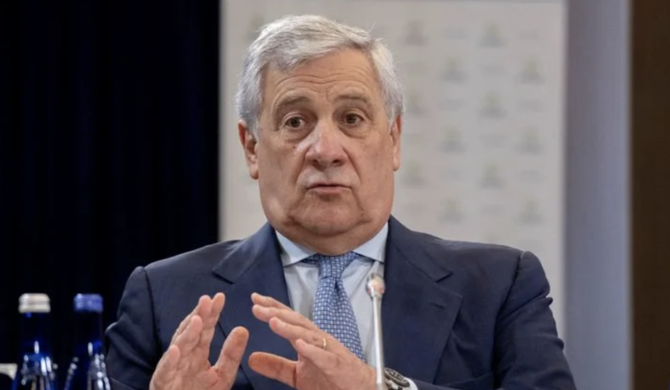
G7 foreign ministers met by videoconference Sunday to discuss the Middle East and expressed “strong concern” over the threat of escalation, Italy’s Foreign Minister Antonio Tajani said. (Reuters/File Photo)
Short Url
Updated 05 August 2024
Follow

G7 nations urge de-escalation in Middle East amid threat of broader conflict

  • Italy’s Foreign Minister Antonio Tajani said they expressed “strong concern” over the threat of escalation

ROME: G7 foreign ministers met by videoconference Sunday to discuss the Middle East and expressed “strong concern” over the threat of escalation, Italy’s Foreign Minister Antonio Tajani said.

The Group of Seven major democracies urged restraint and de-escalation in the Middle East on Monday, saying that recent events "threatened to ignite a broader conflict in the region."
The G7 urged "all involved parties once again to refrain from perpetuating the current destructive cycle of retaliatory violence, to lower tensions and engage constructively toward de-escalation," in a statement. 

“Together with our partners, we have expressed strong concern about recent events that threaten to determine a regionalization of the crisis, starting from Lebanon,” said Tajani in a statement.

“We call on the parties involved to desist from any initiative that could hinder the path of dialogue and moderation and favor a new escalation,” said the statement issued by the foreign ministry of Italy, which holds the G7 presidency this year.

The foreign ministers, it said, “reiterated the priority of a favorable conclusion of the negotiations on the ceasefire in Gaza and the release of hostages” while stepping up humanitarian assistance.


Israel agrees to ‘limited reopening’ of Rafah crossing: PM’s office

Updated 26 January 2026
Follow

Israel agrees to ‘limited reopening’ of Rafah crossing: PM’s office

  • The announcement came after visiting US envoys reportedly pressed Israeli officials to reopen the crossing, a vital entry point for aid into Gaza

JERUSALEM: Israel said Monday it would allow a “limited reopening” of the Rafah border crossing between Gaza and Egypt once it had recovered the remains of the last hostage in the Palestinian territory.
The announcement came after visiting US envoys reportedly pressed Israeli officials to reopen the crossing, a vital entry point for aid into Gaza.
Reopening Rafah forms part of a Gaza truce framework announced by US President Donald Trump in October, but the crossing has remained closed after Israeli forces took control of it during the war.
The Israeli military also said it was searching a cemetery in the Gaza Strip on Sunday for the remains of the last hostage, Ran Gvili, a non-commissioned officer in the police’s elite Yassam unit.
Prime Minister Benjamin Netanyahu’s office said the reopening would depend on “the return of all living hostages and a 100 percent effort by Hamas to locate and return all deceased hostages,” Netanyahu’s office said on X.
It said Israel’s military was “currently conducting a focused operation to exhaust all of the intelligence that has been gathered in the effort to locate and return” Gvili’s body.
“Upon completion of this operation, and in accordance with what has been agreed upon with the US, Israel will open the Rafah Crossing,” it said.