ISLAMABAD: Pakistan’s high commission in Dhaka has asked Pakistani students to stay indoors and away from renewed anti-government protests in Bangladesh, which killed dozens of people and injured hundreds on Sunday.
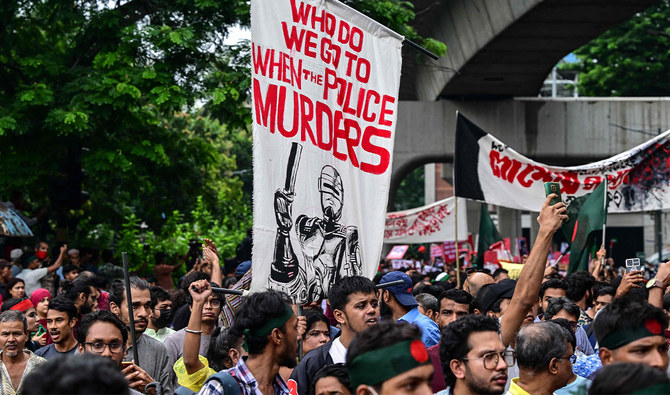
At least 55 people were killed and hundreds injured in clashes in Bangladesh as police fired tear gas and rubber bullets to disperse tens of thousands of protesters calling for Prime Minister Sheikh Hasina to resign.
The government declared an indefinite nationwide curfew starting at 6pm on Sunday, the first time it has taken such a step during the current protests that began last month. It also announced a three-day general holiday starting from Monday.
Pakistan’s high commission in Dhaka said it was closely monitoring the changing situation and was in constant contact with Pakistani citizens, especially students.
“As soon as the situation started to deteriorate, the students were asked to reach the High Commission immediately,” it said in a statement. “Those who could not reach have been contacted through telephone and asked to be confined to their rooms and separate themselves from the current situation.”
One-third of the 144 Pakistani students studying in Bangladesh have already gone to Pakistan, while a few more students are leaving for Pakistan in the next few days, according to the high commission. Some of the students who remained in Bangladesh have reached the high commission.
“The High Commission is in constant touch with the students and will continue to take all possible measures to ensure their safety,” it said. “High Commission officials are also in touch with Bangladesh authorities.”
The unrest, which has prompted the government to shut down Internet services, is Hasina’s biggest test since January when deadly protests erupted after she won a fourth straight term in elections that were boycotted by the main opposition Bangladesh Nationalist Party.
Critics of Hasina, along with human rights groups, have accused her government of using excessive force against protesters, a charge she and her ministers deny.
Last month, at least 150 people were killed and thousands injured in violence touched off by student groups protesting against quotas for government jobs.
The protests paused after the Supreme Court scrapped most quotas, but students returned to the streets in sporadic protests last week, demanding justice for the families of those killed.


![]()

Pakistan moves to ensure security of its students as clashes rock Bangladesh, curfew imposed
Short Url
https://arab.news/6kapq
Pakistan moves to ensure security of its students as clashes rock Bangladesh, curfew imposed
- At least 55 people were killed and hundreds injured in clashes in Bangladesh as police tried to disperse protesters calling for PM Hasina to resign
- One-third of 144 Pakistani students in Bangladesh have already gone to Pakistan, while a few more will be leaving in next few days, high commission says
Latest updates


Recommended


© 2026 SAUDI RESEARCH & PUBLISHING COMPANY, All Rights Reserved And subject to Terms of Use Agreement.