

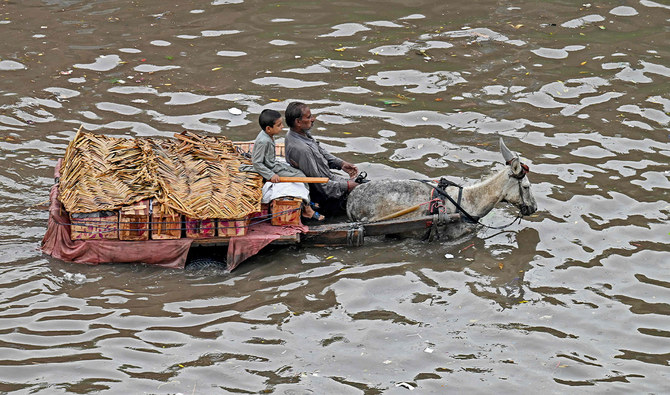

ISLAMABAD: The Provincial Disaster Management Authority (PDMA) of Punjab on Thursday put emergency services on alert after heavy rains inundated several neighborhoods in the eastern city of Lahore amid a monsoon spell that is expected to continue until August 6.
The monsoon season is crucial for the region, providing essential water for agriculture, which is the backbone of Pakistan’s economy.
However, unprecedented cloudbursts driven by climate change have increasingly turned this vital weather pattern into a threat, as seen in the devastating 2022 floods that caused an estimated $35 billion in losses and claimed over 1,700 lives.
Local media channels showed footage of roads, houses and even hospitals in Lahore being affected by floodwater.
“Heavy rain continues in various areas of the provincial capital of Lahore,” Irfan Ali Kathia, the PDMA director general, was quoted in an official statement circulated by his department. “Relevant departments are to stay on high alert to deal with emergency situations.”
He said the PDMA team was monitoring the situation while asking Rescue 1122 to remain prepared for any medical emergencies.
Kathia also instructed deputy commissioners across the province to be vigilant and ensure rapid drainage of water from low-lying area.
“Citizens should take precautions and stay away from electric poles and hanging wires,” he continued. “The public should stay away from mud houses and dilapidated buildings.”
“Take special care of children and do not allow them near accumulated water in low-lying areas,” he added.


