

Owner of Pakistani cola company returns home five days after ‘kidnapping’ – lawyer

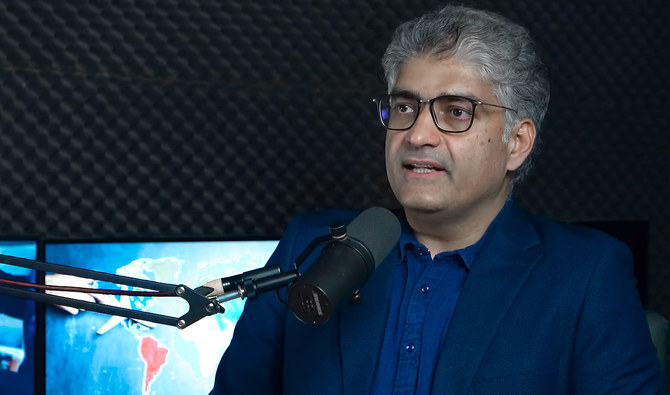
In this screengrab, taken from a video posted by ‘Off The School’ YouTube channel on April, 28, 2023, prominent Pakistani businessman Zulfiqar Ahmed speaks about successful business policies during a podcast. (Screengrab/YouTube/@Off-The-School)
Short Url
Updated 29 July 2024
Follow

Owner of Pakistani cola company returns home five days after ‘kidnapping’ – lawyer

  • Zulfiqar Ahmed was allegedly abducted by armed men in Karachi on July 23
  • Whereabouts of two of his staffers associated with Cola Next still unknown

KARACHI: A prominent Pakistani businessman, owner of a local cola company among other businesses, returned home in the eastern Pakistani city of Lahore on Sunday, his lawyer said, five days after his “kidnapping” in Karachi in the country’s south.

Zulfiqar Ahmed, the owner of Next Cola, was kidnapped on July 23 after he left his office in Karachi, according to his family.

The vehicle of Ahmed, who is also the managing director of Paracha Textile Mills and Mezan Group, was intercepted by eight armed men in Karachi’s Mauripur area, who abducted him and one of his friends before allowing the latter to go after a while.

Ahmed’s family and his company’s management submitted an application at the Kalri police station in Karachi on the same day, but the police refused to register a complaint, making them go to the Sindh High Court. The court ordered the police to lodge the case on Friday.

Police, however, denied it had refused to register the complaint.

“The family just confirmed to me that Zulfiqar Ahmed has returned home,” Mian Ali Ashfaq, the counsel representing Ahmed and his family, told Arab News on Sunday night.

He said Ahmed returned home to his extended family in Lahore and that he would be in a position to share more details once he spoke with his client.

Asad Raza, deputy inspector-general (DIG) of police in Karachi’s South district where the incident occurred, said Ahmed’s family had confirmed to him that he had returned home safely.

“This is all what could be shared at the moment,” Raza said, when asked further about the case.

The news of Ahmed’s abduction was widely shared by Pakistanis on social media platforms, who demanded authorities take steps for his release.

However, the case was further complicated after two senior staff members associated with Cola Next were also picked up from Lahore and Kasur on Friday, according to Ahmed’s lawyer. The two staffers included Hassan Nawaz, deputy general manager of finance at Meezan Beverage, and Danial Afzal Khan, general manager at Meezan Beverage.

Ahmed’s lawyer, Ashfaq, said since the owner of Cola Next had returned home, his two employees should also be set free soon.

Launched in 2016, Cola Next has gained more visibility in Pakistan amid calls to boycott Coca-Cola for its alleged ties to Israel,  including funding military operations in Palestine. 


Pakistan’s OGDC ramps up unconventional gas plans

Updated 4 sec ago
Follow

Pakistan’s OGDC ramps up unconventional gas plans

  • Pakistan has long been viewed as having potential in tight and shale gas but commercial output has yet to be proved
  • OGDC says has tripled tight-gas study area to 4,500 square km after new seismic, reservoir analysis indicates potential

ISLAMABAD: Pakistan’s state-run Oil & Gas Development Company is planning a major expansion of unconventional gas developments from early next year, aiming to boost production and reduce reliance on imported liquefied natural gas.

Pakistan has long been viewed as having potential in both tight and shale gas, which are trapped in rock and can only be released with specialized drilling, but commercial output has yet to be proved.

Managing Director Ahmed Lak told Reuters that OGDC had tripled its tight-gas study area to 4,500 square kilometers (1,737 square miles) after new seismic and reservoir analysis indicated larger potential. Phase two of a technical evaluation will finish by end-January, followed by full development plans.

The renewed push comes after US President Donald Trump said Pakistan held “massive” oil reserves in July, a statement analysts said lacked credible geological evidence, but which prompted Islamabad to underscore that it is pursuing its own efforts to unlock unconventional resources.

“We started with 85 wells, but the footprint has expanded massively,” Lak said, adding that OGDC’s next five-year plan would look “drastically different.”

Early results point to a “significant” resource across parts of Sindh and Balochistan, where multiple reservoirs show tight-gas characteristics, he said.

SHALE PILOT RAMPS UP

OGDC is also fast-tracking its shale program, shifting from a single test well to a five- to six-well plan in 2026–27, with expected flows of 3–4 million standard cubic feet per day (mmcfd) per well.

If successful, the development could scale to hundreds or even more than 1,000 wells, Lak said.

He said shale alone could eventually add 600 mmcfd to 1 billion standard cubic feet per day of incremental supply, though partners would be needed if the pilot proves viable.

The company is open to partners “on a reciprocal basis,” potentially exchanging acreage abroad for participation in Pakistan, he said.

A 2015 US Energy Information Administration study estimated Pakistan had 9.1 billion barrels of technically recoverable shale oil, the largest such resource outside China and the United States.

A 2022 assessment found parts of the Indus Basin geologically comparable to North American shale plays, though analysts say commercial viability still hinges on better geomechanical data, expanded fracking capacity and water availability.

OGDC plans to begin drilling a deep-water offshore well in the Indus Basin, known as the Deepal prospect, in the fourth quarter of 2026, Lak said. In October, Turkiye’s TPAO with PPL and its consortium partners, including OGDC, were awarded a block for offshore exploration.

A combination of weak gas demand, rising solar uptake and a rigid LNG import schedule has created a surplus of gas that forced OGDC to curb output and pushed Pakistan to divert cargoes from Italy’s ENI and seek revised terms with Qatar.