

Pakistan initiates talks on reprofiling Chinese power sector debt in Pakistan

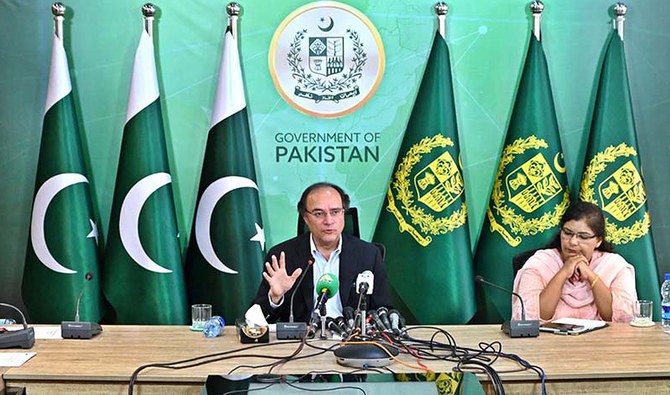
In this file photograph, taken on June 30, 2024, Pakistan Finance Minister Muhammad Aurangzeb speaks during a press briefing at the Pakistan Television Headquarters in Islamabad. (APP/File)
Short Url
Updated 28 July 2024
Follow

Pakistan initiates talks on reprofiling Chinese power sector debt in Pakistan

  • Islamabad looking to appoint local adviser in China for reprofiling Chinese credit to power sector, says finance minister
  • Rollovers or disbursements on loans from China have helped Pakistan meets its external financing over the years 

KARACHI: Pakistan has initiated talks on reprofiling its power sector debt to China, alongside talks on structural reforms suggested by the International Monetary Fund, Pakistan’s finance minister told a press conference on Sunday.

He said that Pakistan will address the reprofiling of Chinese credit to the power sector on a project-by-project basis and that Islamabad is looking to appoint a local adviser in China for the purpose.

The finance minister stressed that it is reprofiling and not restructuring of debt because there is no question of cutting the amount it owes. Reprofiling is generally understood to involve an agreed lengthening of the time needed to repay.

The countries, which share a border, have been longtime allies, and rollovers or disbursements on loans from China have helped Pakistan meet its external financing needs in the past.

Pakistan is in talks with Saudi Arabia, the United Arab Emirates, and China in order to meet gross financing needs under the IMF program for which Islamabad needs a board-level approval.

The IMF this month agreed on a $7 billion bailout for the heavily indebted South Asian economy, while raising concerns over high rates of power theft and distribution losses that result in debt accumulating across the production chain.



Security forces kill nine Pakistani Taliban militants in restive northwest, military says

Updated 21 December 2025
Follow

Security forces kill nine Pakistani Taliban militants in restive northwest, military says

  • The militants were killed in separate operations in Khyber Pakhtunkhwa's Dera Ismail Khan and Bannu districts
  • Pakistan this week summoned Afghanistan’s deputy head of mission to demand action against the Pakistani Taliban

ISLAMABAD: Pakistan security forces have killed nine Pakistani Taliban militants in two separate engagements in the northwestern Khyber Pakhtunkhwa (KP) province, the military said on Sunday, amid a surge in militancy in the region bordering Afghanistan.

Four militants were killed in an intelligence-based operation in KP's Dera Ismail Khan, while five other Pakistani Taliban members were gunned in an exchange of fire with security forces in the Bannu district, according to the Inter-Services Public Relations (ISPR), the military's media wing.

Weapons and ammunition were also recovered from the deceased "Indian-sponsored" militants, who remained actively involved in numerous activities against security forces and law enforcement agencies and target killing of civilians. There was no immediate response from India to the statement.

"Sanitization operations are being conducted to eliminate any other Indian sponsored kharja [militant] found in the area," the ISPR said in a statement. "Pakistan will continue at full pace to wipe out menace of foreign sponsored and supported terrorism from the country."

KP has seen a surge in militancy in recent years, with the Pakistani Taliban, or the Tehreek-e-Taliban Pakistan (TTP), and other militant groups frequently targeting security forces convoys and check-posts, besides targeted killings and kidnappings of law enforcers and government officials.

Pakistan this week summoned Afghanistan’s deputy head of mission and demanded “decisive action” against the TTP after four Pakistani soldiers were killed in an attack on a military camp in KP’s North Waziristan district that also killed four assailants, according to the Pakistani foreign office.

Islamabad has long accused Kabul of allowing its soil and India of backing militant groups, including the TTP, for attacks against Pakistan. Kabul and New Delhi have consistently denied this.

The uptick in militant violence triggered fierce clashes between Pakistan and Afghanistan in Oct. The two countries agreed to a ceasefire in Doha on Oct. 19, but tensions remain high between the neighbors.