

Saudi Arabia seeks stronger ties with Brazil in mining sector

1 / 5
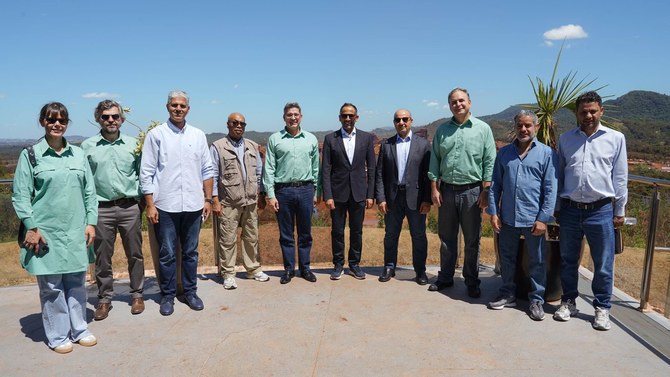
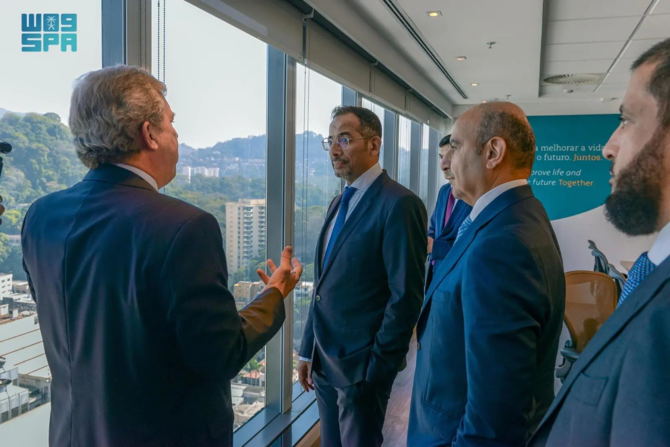
Saudi Minister of Industry and Mineral Resources Bandar Alkhorayef visits the Vale mines in Carajas, Brazil. X/@BAlkhorayef
2 / 5
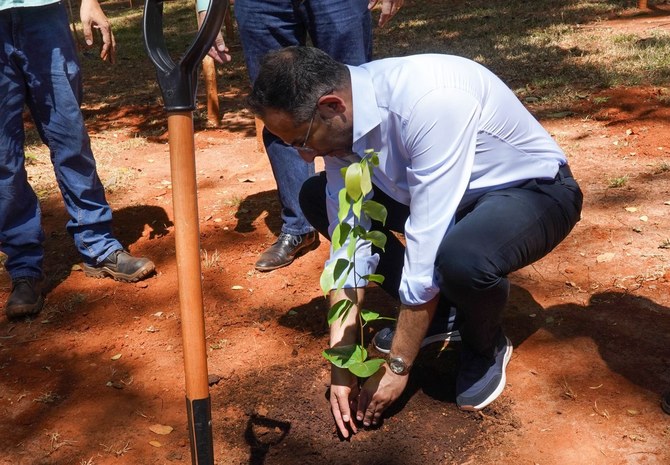
Saudi Minister of Industry and Mineral Resources Bandar Alkhorayef visits the Vale mines in Carajas, Brazil. X/@BAlkhorayef
3 / 5
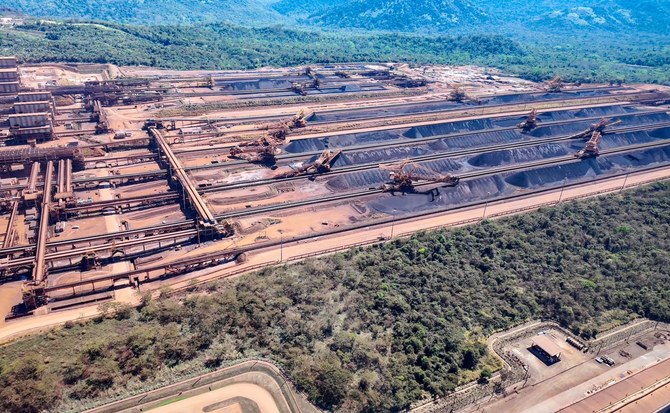
Saudi Minister of Industry and Mineral Resources Bandar Alkhorayef visits the Vale mines in Carajas, Brazil. X/@BAlkhorayef
4 / 5
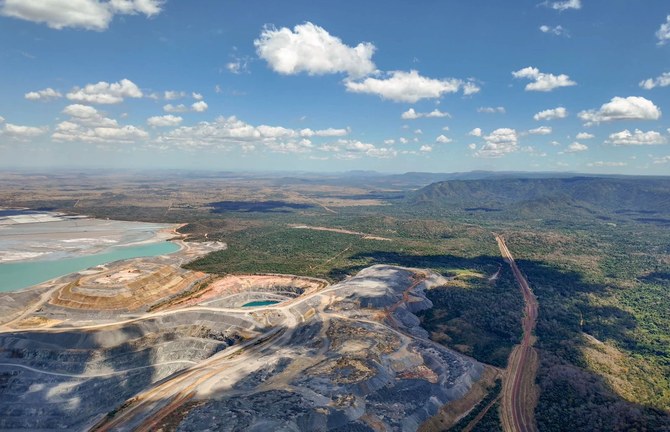
Saudi Minister of Industry and Mineral Resources Bandar Alkhorayef visits the Vale mines in Carajas, Brazil. X/@BAlkhorayef
5 / 5
Saudi Minister of Industry and Mineral Resources Bandar Alkhorayef visits the Vale mines in Carajas, Brazil. SPA
Short Url
Updated 01 October 2024
Follow

Saudi Arabia seeks stronger ties with Brazil in mining sector

  • Discussions centered on the expansive investment opportunities available to Brazilian companies in the Kingdom’s mining sector
  • Kingdom recently acquired a 10% stake in Vale Basic Metals Co.

RIYADH: A high-level Saudi delegation continued discussions in Brazil on Sunday to enhance bilateral ties and advance Saudi Arabia’s mining sector.

On July 28, Saudi Minister of Industry and Mineral Resources Bandar Alkhorayef visited Vale’s Carajas mines, where he was briefed on advanced technologies used in mineral extraction and processing, including remote mine management and driverless trucks, according to the Saudi Press Agency.

Accompanied by Deputy Minister of Industry and Mineral Resources Khalid Al-Mudaifer and other industry leaders, Alkhorayef engaged with Vale officials on transferring knowledge and expertise, particularly in mining within rainforests and nature reserves, and on forming effective partnerships with local communities. 

Discussions also covered Vale’s expansion plans in Saudi Arabia and potential cooperation in developing the Carajas mines, which produce over 300 million tons of iron ore annually.

“I visited Vale’s Carajas mining complex in the Brazilian Amazon, one of the largest iron ore production sites globally, and explored their innovative methods in mineral extraction and processing,” Alkhorayef noted in a post on his X account.

This visit is part of Alkhorayef’s broader trip to South America, which also included a visit to Chile to strengthen bilateral ties and explore mutual investment opportunities in various industrial sectors. 

Saudi Arabia is making significant strides to develop its mining sector, which holds an estimated $2.5 trillion in untapped mineral resources, to establish mining as a third pillar of its industrial division to boost the national economy.

During a recent meeting in Sao Paulo, Al-Mudaifer discussed how increased cooperation with Brazilian companies could benefit Saudi Arabia’s mining sector. 

In talks with Vale Mining Co. CEO Eduardo Bartolomeo, Al-Mudaifer emphasized Saudi Arabia’s commitment to fostering international partnerships and attracting investment in its emerging mining industry. 

The discussions focused on investment opportunities for Brazilian companies in Saudi Arabia’s mining sector, with a key emphasis on adopting modern technologies to enhance production efficiency and environmental sustainability, aiming for carbon neutrality in the coming decades.

Bartolomeo praised Saudi Arabia’s remarkable development and economic resurgence, noting Vale’s support, particularly in establishing the iron pelletizing project in Ras Al-Khair. 

Al-Mudaifer also met with Petrobras CEO Magda Chambriard to explore collaboration in the manufacturing and petrochemical sectors.

Saudi Arabia’s strategic acquisition of a 10 percent stake in Vale Basic Metals Co., through Manara Minerals Co. (a joint venture between the Public Investment Fund and Ma’aden), underscores its commitment to strengthening international partnerships. 

Vale is also investing over SR4 billion ($1.06 billion) to develop a factory and logistics center for iron pellet production in Ras Al-Khair Industrial City, with a capacity of up to 4 million tons per year.

Brazil’s rich mining resources and extensive expertise make it a valuable partner for Saudi Arabia. As the world’s second-largest producer of iron ore, Brazil has a long history of mining, with more than 3,000 mines. 

The two nations have enjoyed strong bilateral relations for over 50 years, with significant cooperation in the food, energy, and mineral sectors.


Saudi stock market soars on historic foreign investment reform

Updated 8 sec ago
Follow

Saudi stock market soars on historic foreign investment reform

RIYADH: Saudi Arabia’s Tadawul All Share Index surged at opening on Jan. 7, posting its largest single-day gain since September 2025, following the Kingdom’s Capital Market Authority decision to fully open the market to all categories of foreign investors.

The benchmark index opened with a sharp rise, climbing 2.5 percent and breaking through the 10,500-point barrier. The rally was broad-based, with 260 listed companies advancing, while only three declined and three remained unchanged. The index later settled slightly below that peak, trading near 10,460 points.

The CMA announced that, effective Feb, 1, it will eliminate the previous framework that restricted direct market access primarily to Qualified Foreign Investors and those using swap agreements. The regulatory change will allow all international investors to participate directly in the Main Market without needing to meet prior qualification requirements.

“This is a historic decision and the most positively impactful market development in ten years,” Hesham Abou Jamee, chief adviser at Naif Al Rajhi Investments told Asharq Business. He emphasized that the market impact is immediate, despite full implementation being weeks away, and should help the market recover recent losses.

The CMA stated the amendments aim to expand and diversify the investor base, supporting investment inflows and enhancing market liquidity.

Al-Eqtisadiah newspaper financial analyst Ikrami Abdullah agreed on the decision’s positive impact, noting its timing coincides with a period of market decline and weak liquidity, as reported by Asharq Business.

Official data shows foreign investor ownership in the Saudi capital market exceeded SR590 billion ($157.32 billion) by the end of the third quarter of 2025, with international investments in the Main Market reaching approximately SR519 billion.

Market participants are now anticipating a follow-up decision to raise the current 49 percent ceiling on foreign ownership in listed companies.

Asharq Business reported that analysts suggest such a move could unlock substantial inflows, with J.P. Morgan estimating that lifting the limit to 100 percent could attract an additional $10.6 billion.

The reform is a key part of Saudi Arabia’s broader economic diversification agenda, following other initiatives to attract foreign capital, such as establishing exchange-traded funds with partners in Japan and Hong Kong.

Leading financial institutions welcomed the move. SNB Capital congratulated the CMA on this “fundamental development that enhances liquidity and market depth,” while Al Rajhi Capital greeted “investors from around the world,” calling it “a new step toward wider opportunities and more open investment.”