
LONDON: Asian governments and refiners rushed to assess oil stockpiles as well as alternative shipping routes and supplies as the Iran conflict disrupted shipping in the crucial Strait of Hormuz, with oil prices expected to rise when trading resumes on March 2.
Asia will feel the biggest impact from any disruption in Middle East oil supply as it buys two-thirds of its crude from the Gulf, with half of the top global importer China’s supply and 90 percent of Japan’s coming from the region.
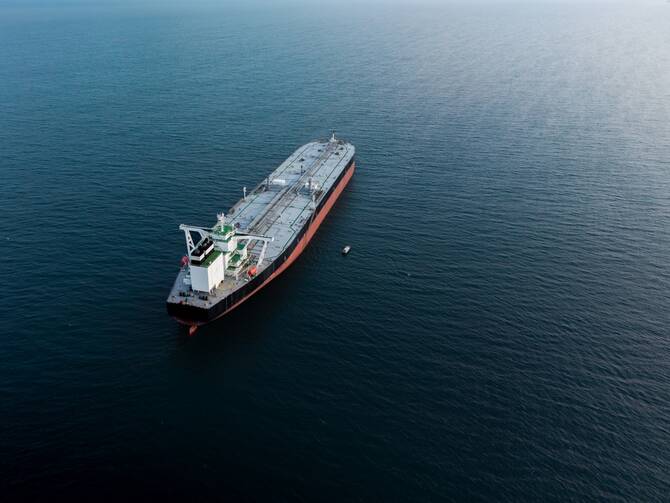
The Strait of Hormuz is the narrow waterway between Iran and Oman, connecting the Gulf to the Arabian Sea, and on a typical day, tankers carrying the equivalent of 20 percent of global oil consumption pass through it with cargoes from producers such as Saudi Arabia, Iraq, and Iran, as well as the UAE, Kuwait, and Qatar.
Japanese shipping firms said they are halting operations around the Strait of Hormuz, although Chief Cabinet Secretary Minoru Kihara said Tokyo had not received any reports of an immediate impact on supply for Japan.
However, Indian state refiners have already started scouting for alternative supplies, two refining officials said, declining to be identified. India, the world’s No.2 oil importer, has been increasing imports from the Middle East to replace Russian crude.
“Our team is already engaged with other suppliers,” one of the officials said, adding that Indian state refiners have reserves of 20 days of crude and liquefied petroleum gas, which is sufficient if the situation eases in the coming days.
June Goh, senior analyst at Sparta Commodities, said oil prices would likely trade higher, with the impact tempered by an expected increase in production from the OPEC+ producers group.
She noted that oil infrastructure was not yet affected.
“The industry is currently grappling with a slowdown in shipping activity via the Strait of Hormuz due to insurability, not an outright blockade,” she said.
Several tanker owners, oil majors and trading houses have suspended crude, fuel and liquefied natural gas shipments via the Strait.
South Korea, Taiwan
The South Korean government will offer petroleum from its stockpiles to local industries if any supply disruptions are prolonged, the industry ministry said in a statement on March 1 following an emergency meeting.
An official from a local refiner said South Korea’s oil stockpiles held jointly with state-run Korean National Oil Corp. can last seven months.
“We are checking if any vessels are still allowed to sail through the Strait now,” he added.
“But if the Strait of Hormuz is closed ... we will seek spot supplies in Asia. We need to see which countries release such spot supplies then,” he said.
South Korean refiners HD Hyundai Oilbank and GS Caltex said they are monitoring the situation.
Hyundai Oilbank said it has yet to halt oil loadings in the Middle East.
China has bulked up its crude stockpiles in recent months, with imports hitting a record in December.
In Taiwan, oil and liquefied natural gas suppliers are proceeding with shipments as scheduled, the economy ministry said, adding that the portion of oil and gas imports from the Middle East has been decreasing annually.