Warring tribes agree to ceasefire in Pakistan’s Kurram after clashes leave 30 dead

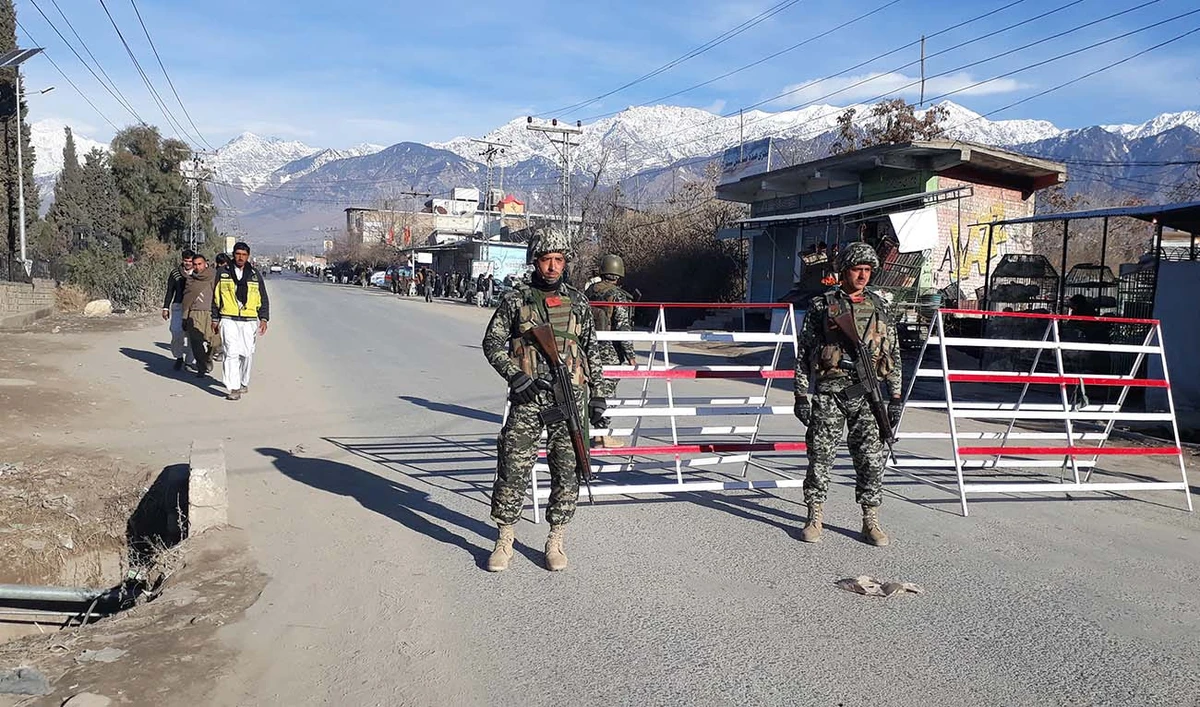
Pakistani soldiers stand guard at a checkpoint in Parachinar, capital of the Kurram tribal district, on January 22, 2017. (AFP/File)
Short Url
Updated 28 July 2024
Follow

Warring tribes agree to ceasefire in Pakistan’s Kurram after clashes leave 30 dead

  • The clashes erupted over the ownership of a property between two families that engulfed the volatile district that border Afghanistan
  • Most of the villages in the area faced a shortage of food, lifesaving medicines amid closure of roads by authorities to contain unrest

PESHAWAR: Warring tribes in Pakistan’s northwestern Kurram district have agreed to a ceasefire and ended hostilities, officials said on Sunday, following five days of armed clashes in the district that left 30 people dead and 158 wounded over a property dispute.
Located along Pakistan’s border with Afghanistan in the northwestern Khyber Pakhtunkhwa (KP) province, the Kurram tribal district has witnessed deadly conflicts among tribes and religious groups as well as sectarian clashes and militant attacks.
A major conflict that began in 2007 continued for years before it was ended with the help of a jirga, a traditional assembly of tribal elders, in 2011. The latest clashes over a property broke out five days ago and quickly spread to several villages and nearby settlements.
“Officials with the help of tribal elders have brokered a truce between the two tribes today,” Nisar Ahmad Khan, the district police officer (DPO), told Arab News. “Police are now busy vacating bunkers and trenches from the warring tribes and taking control of those bunkers.”
The clashes erupted over the ownership of a property between two families that engulfed the entire volatile district, according to officials and local politicians.
Dr. Mir Hassan Jan, medical superintendent at the District Headquarters Hospital in Parachinar, the main town in Kurram district, told Arab News on Sunday that medical facilities in the district had so far received 30 bodies.
“We have a total number of 30 dead and another 158 wounded that had been brought or are being treated at the district’s hospitals,” he added.
Most of the villages in the area faced a shortage of food and lifesaving medicines amid clashes and closure of roads by authorities to contain the unrest as the warring sides pounded each other with small and heavy and small weapons.
Sajid Hussain Turi, a politician from the area who served as federal minister for overseas Pakistanis in Prime Minister Shehbaz Sharif’s previous administration, said the main focus of civil and security officials was to help reach a ceasefire, which materialized today thorough the support of tribal elders.
“Our priority was to broker a ceasefire first,” Turi said. “[In] the second phase, the jirga will settle the land dispute.”

IMF hails Pakistan privatization drive, calls PIA sale a ‘milestone’

Updated 10 January 2026
Follow

IMF hails Pakistan privatization drive, calls PIA sale a ‘milestone’

  • Fund backs sale of national airline as key step in divesting loss-making state firms
  • IMF has long urged Islamabad to reduce fiscal burden posed by state-owned entities

KARACHI: The International Monetary Fund (IMF) on Saturday welcomed Pakistan’s privatization efforts, describing the sale of the country’s national airline to a private consortium last month as a milestone that could help advance the divestment of loss-making state-owned enterprises (SOEs).

The comments follow the government’s sale of a 75 percent stake in Pakistan International Airlines (PIA) to a consortium led by the Arif Habib Group for Rs 135 billion ($486 million) after several rounds of bidding in a competitive process, marking Islamabad’s second attempt to privatize the carrier after a failed effort a year earlier.

Between the two privatization attempts, PIA resumed flight operations to several international destinations after aviation authorities in the European Union and Britain lifted restrictions nearly five years after the airline was grounded following a deadly Airbus A320 crash in Karachi in 2020 that killed 97 people.

“We welcome the authorities’ privatization efforts and the completion of the PIA privatization process, which was a commitment under the EFF,” Mahir Binici, the IMF’s resident representative in Pakistan, said in response to an Arab News query, referring to the $7 billion Extended Fund Facility.

“This privatization represents a milestone within the authorities’ reform agenda, aimed at decreasing governmental involvement in commercial sectors and attracting investments to promote economic growth in Pakistan,” he added.

The IMF has long urged Islamabad to reduce the fiscal burden posed by loss-making state firms, which have weighed public finances for years and required repeated government bailouts. Beyond PIA, the government has signaled plans to restructure or sell stakes in additional SOEs as part of broader reforms under the IMF program.

Privatization also remains politically sensitive in Pakistan, with critics warning of job losses and concerns over national assets, while supporters argue private sector management could improve efficiency and service delivery in chronically underperforming entities.

Pakistan’s Cabinet Committee on State-Owned Enterprises said on Friday that SOEs recorded a net loss of Rs 122.9 billion ($442 million) in the 2024–25 fiscal year, compared with a net loss of Rs 30.6 billion ($110 million) in the previous year.