PARIS: Carrying backpacks and small children, hundreds of people sleeping on the streets of Paris climbed aboard buses surrounded by armed police Thursday, the latest group of migrants and homeless people to be driven out of the city ahead of the opening ceremony of the 2024 Olympics.
The group of largely African migrants headed for the fringes of the city in buses paid for by the French government and into temporary lodging until at least the end of the Games. While some living on the streets were happy to have a roof over their head for the night, few knew what laid ahead once the world’s eyes were off Paris.
“It’s like poker. I don’t know where I will go, or how much time I will stay,” said Nikki, a 47-year-old homeless Parisian who asked that her last name not be used to protect her privacy.
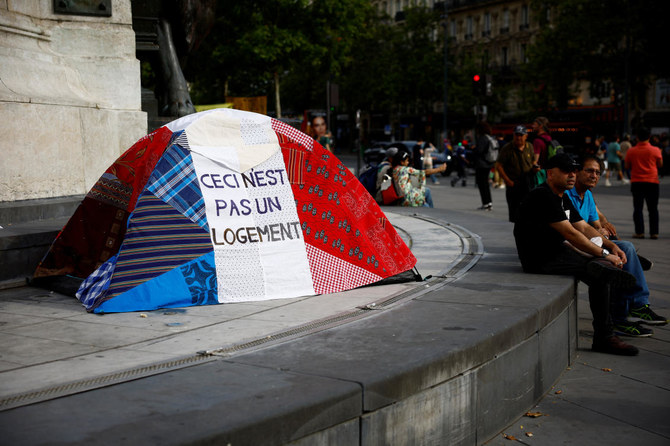
French authorities have been clearing out migrant and homeless encampments for months leading up to the massive global sports event, which is an important moment for President Emmanuel Macron at a time of political turmoil. But the Games also have faced criticism as Parisians have complained about everything from elevated public transit fees to government spending on cleaning up the Seine River for swimming instead of investing in the social safety net.
Authorities also have been sharply criticized as they have bused camping migrants from the city center where the Olympics are taking place to the fringes of Paris or other areas. Activist groups and migrants have called the practice – long used in other Olympic host cities like Rio de Janeiro in 2016 – a form of “social cleansing.”
“They want to clean the city for the Olympic Games, for the tourists,” said Nathan Lequeux, an organizer for the activist group Utopia 56. “As treatment of migrants is becoming more horrible and infamous, people are being chased off the streets. ... Since the Olympics, this aggressiveness, this policy of hunting has become more pronounced.”
Christophe Noël Du Payrat, chief of staff of the regional government of Île-de-France that surrounds Paris, firmly denied those accusations and said the government has relocated migrants from the city for years.
“We are taking care of them,” he said. ”We don’t really understand the criticism because we are very much determined to offer places for these people.”
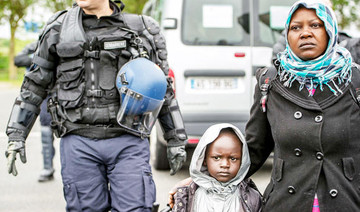
He spoke as dozens of police rounded up migrants, blocking them from walking on the streets and putting up caution tape. When asked why there were so many armed police officers for a group largely made up of families, Noël Du Payrat said it was to maintain “peace and calm.”
The buses Thursday came after three days of protest by hundreds of migrants and other homeless people like Nikki, who slept in front of a local government office as athletes and tourists flooded into Paris. They railed against authorities breaking up homeless encampments and demanded better access to temporary housing.
Among them was Natacha Louise Gbetie, a 36-year-old migrant from Burkina Faso, and her 1-year-old son she carried on her back. Gbetie, who once worked as an accountant in her country, migrated to the southern French city of Montpellier with family members five years ago.
Many of the families relocated by French authorities are like Gbetie — from African countries once colonized by the French, including Burkina Faso, Guinea, Ivory Coast and Senegal.
After an abusive situation, she moved to Paris. She was able to make ends meet working as a baby-sitter and sleeping in public housing. That ended during the lead up to the Olympics, when she said access to social housing was slashed and prices of lodging in hostels soared. She said most employers in France don’t want to hire her because she’s an immigrant without legal status and has felt rejected as an anti-immigrant far-right party has gained greater power in France.
“I think France is saturated. They’re tired of migrants, they want us to leave their country,” Gbetie said.
The protest group agreed that families would board buses to a province near Paris and families would remain together in shelters.
Despite the agreement, protest leaders expressed concern that the move would isolate migrants and said it was still unclear what would happen to the city’s homeless people.
Others like Gbetie worried for the future of her 1-year-old son, Richard. Despite being born in France, Gbetie said he was among those who had been forgotten.
“We have children who are French,” she said. “They will be the future engineers and executives of this country. Think of them first and, for now, forget about the Olympics.”


![]()

Migrants and homeless people are cleared out of Paris during the Olympics
Short Url
https://arab.news/9am6x
Migrants and homeless people are cleared out of Paris during the Olympics
- Group of largely African migrants headed for the fringes of the city in buses paid for by the French government and into temporary lodging until at least the end of the Games
- Activist groups and migrants have called the practice – long used in other Olympic host cities like Rio de Janeiro in 2016 – a form of ‘social cleansing’

Latest updates





Recommended


© 2026 SAUDI RESEARCH & PUBLISHING COMPANY, All Rights Reserved And subject to Terms of Use Agreement.