

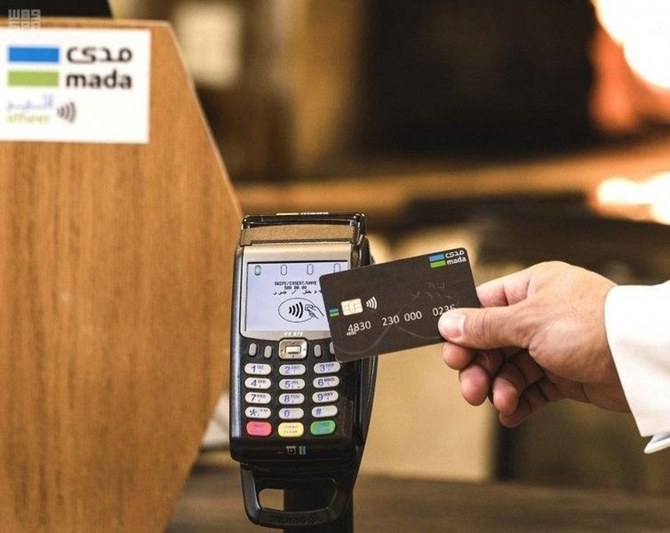

RIYADH: E-commerce sales via Mada cards in Saudi Arabia surged by 28 percent annually to reach SR16.22 billion ($4.32 billion) in May.
Data from the Saudi Central Bank indicates that this included online shopping, in-app purchases, and e-wallet transactions, but did not include transactions using different credit cards.
The number of transactions using Mada cards increased by 30 percent year-on-year, totaling SR91.87 million in May 2024, up from 70.77 million the previous year. This shows that consumers are increasingly comfortable and reliant on digital payment methods.
SAMA’s Mada scheme aims to promote digital payments in the country, particularly in supporting e-commerce, point-of-sale, and ATM growth. Connected directly to the cardholder’s bank account, Mada enables real-time, secure, and reliable transactions for various purposes such as purchasing, cash withdrawals, and electronic payments.
This initiative is part of Vision 2030, which strives to develop Saudi Arabia's digital payment infrastructure to encourage a cashless economy, expand financial inclusion, and drive sector innovation. The electronic retail industry in Saudi Arabia is rapidly growing, driven by technological advancements, high mobile and internet penetration rates, and a young, tech-savvy population.
E-commerce is expected to represent over 25 percent of retail sales in Saudi Arabia by 2035, up from the current 10 percent. For the first quarter of this year, internet-based sales totaled SR44.42 billion, reflecting a 22 percent increase from the same period last year.
The total number of transactions for the quarter reached SR263.24 million, a 36 percent annual increase. Globally, e-commerce is projected to account for 41 percent of retail sales by 2027, a significant increase from 18 percent in 2017, according to Boston Consulting Group.
In the Middle East, Saudi Arabia and the UAE are at the forefront of digital retail markets, with substantial growth expected. McKinsey & Co. reported that the number of people shopping online weekly in these countries has doubled over the past two years.
Another report issued by Agility Logistics highlighted that Saudi Arabia’s online retail sector generated $10 billion in revenue in 2023, making it the 28th largest digital market globally, alongside the UAE.
It also predicted that the country’s revenue from this sector will grow at an annual rate of 13.5 percent through 2027, surpassing the global average of 11.2 percent. As smartphone and internet access become more widespread, e-commerce is set to grow further, solidifying its role as a crucial part of the retail landscape.
Saudi Arabia’s Vision 2030 is propelling the development of trade zones, boosting the country’s competitiveness with regional hubs, and positioning it among the top 10 emerging logistics markets globally, according to a February report by Agility Logistics. The country’s regulatory reforms have streamlined licensing for domestic delivery providers and increased investment in logistics infrastructure, such as warehousing, fulfillment, and trucking.
Advancements in digital payment systems, AI-driven personalization, and improved logistics have made online shopping more convenient and appealing. Additionally, the increasing number of mobile users has significantly influenced the shift toward virtual shopping, with mobile devices playing a central role in consumers’ shopping experiences by providing easy access to online stores and facilitating seamless transactions.


