

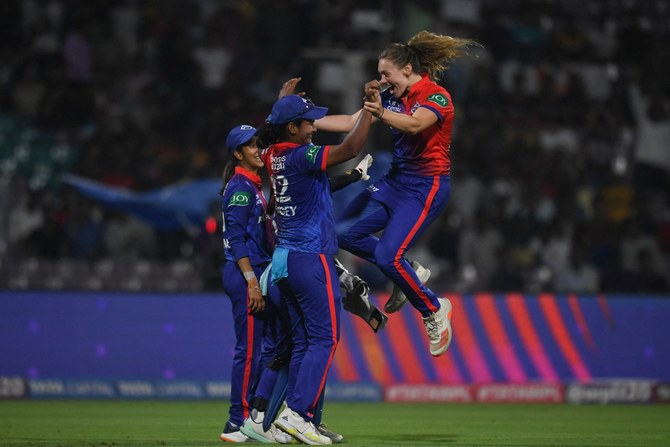

The 2024 annual conference of the International Cricket Council was held in Colombo between July 19 and 22, and one of its outcomes reaffirmed the ICC’s commitment to equity in the game.
The 2030 women’s T20 World Cup will comprise 16 teams, up from 12 in 2026. In the forthcoming 2024 competition, between Oct. 3 and 20 in Bangladesh, 10 teams will participate. An increase to 16 in 2030 is not quite equity, since the 2024 men’s T20I World Cup comprised 20. However, it ought to be regarded as a step in the right direction.
Women’s cricket has grown very quickly in the last decade. Heather Knight, England’s captain, who spoke at the World Cricket Connects event at Lords on July 5, which was reviewed in last week’s column, emphasized that the women’s game must learn lessons from the men’s game and avoid falling into the same traps.
The main trap to which she seemed to be referring is franchise cricket. There are now 11 men’s franchise leagues compared with four for women. Australia’s Women’s Big Bash League started in 2015/2016, followed in England and Wales by The Hundred in 2021, the West Indies Caribbean League in 2022, and India’s Women’s Premier League in 2023.
Knight is expecting this number to grow. What concerns her is how that growth will be managed.
The expansion of men’s franchise leagues has led to a very crowded calendar that has already forced some Test match cricket out of its historic temporal rhythm and ODI cricket to the margin. There is simply no room to accommodate every format to its full extent.
Knight’s concern is that if the women’s game falls into similar scheduling issues the consequences could be even more severe. She stressed the need for a clear direction to be established, supported by good governance.
It is not clear in which direction she was looking. The ICC is cricket’s governing body. A franchise league requires sanctioning by the ICC in order to be legitimate. If this was refused, players participating in such a league would be barred from existing franchises and international cricket. It is not known if any applications have been refused.
The ICC warns members about dubious offers from intermediaries to organize a franchise league. So far, these actions appear sufficient to deter notions of breakaway leagues.
However, the ICC has not been able to establish a universal limit on the number of overseas players per playing lineup across the franchises. Its preferred number is four. In July 2023, the ICC’s Chief Executives Committee could not reach agreement on the number.
This was a relief to the DP World ILT20 and the US’ Major Cricket League, which allow nine and six international players in starting lineups. It is understood that the Board of Control for Cricket in India, although in agreement with the principle of a limit of four, was against imposing restrictions, a rather anomalous position.
Market forces clearly dominate the men’s game, with some players choosing to follow the money, either by electing franchise cricket over country or one franchise over another.
Knight fears that uncontrolled market forces will affect the women’s game disproportionately. This is because there is a shallower pool of women players in many countries.
If the best players are attracted by the franchise leagues, they may be lost either totally or partially to international cricket. This will be weakened as a result, along with the international team which the players represented.
It is also the case that women’s salaries and the amount of funding available to national cricket boards vary widely. The amount of Test cricket played by women is much lower than by men. In theory, this should cause less of a scheduling issue in women’s cricket.
Yet, Knight is concerned that a proper balance is found, so that players are able to play both for their country and in franchise leagues. The former remains the peak of ambition, the latter an opportunity to earn money and be exposed to different experiences. There have already been examples of the top players having to juggle availability, a situation that Knight is asking to be minimized.
Her aim is laudable, but who will take responsibility to plan coherent schedules? Market forces have a habit of winning if not regulated, as is apparent from the men’s game, in which there seems no turning back.
A new test of market forces is looming which will affect both the men’s and women’s games. This relates to The Hundred and the England and Wales Cricket Board’s proposal to sell off 49 percent of the competition’s equity, valued at $515 million (£400 million) or more by the board. The balance of 51 percent equity would be owned by each of the six host counties, free to decide what to do with it.
Rumors abound that those private investors who have expressed interest are becoming frustrated at the lack of clarity over what they will receive for their funding, a reluctance by counties to sell their equity, a desire to exercise a veto over who could buy stakes, and a lack of player-availability guarantees.
It is known that there is interest from Indian Premier League franchise owners who are sure to want as much control as possible. The ECB’s CEO has said that “English cricket is not for sale.”
There are many variables at play in this complex scenario. At its base, selling and buying parties are seeking to maximize financial returns and control. This normal economic equation is clouded by the sellers’ desires to protect the heritage of English and Welsh cricket. There is no guarantee that the buyers will do that or even understand it.
By acclaim, The Hundred has been positive for women’s cricket. Knight’s hopes for orderly schedules may be dashed by the machinations over that competition, which are directed mainly by men. This seems unfair given the heightened profile and contribution of women in cricket.
It would be no surprise if they felt a need to control their own competitions and schedules.


