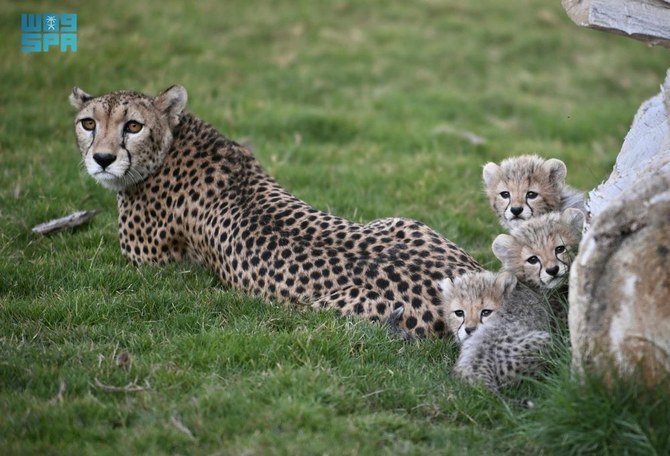
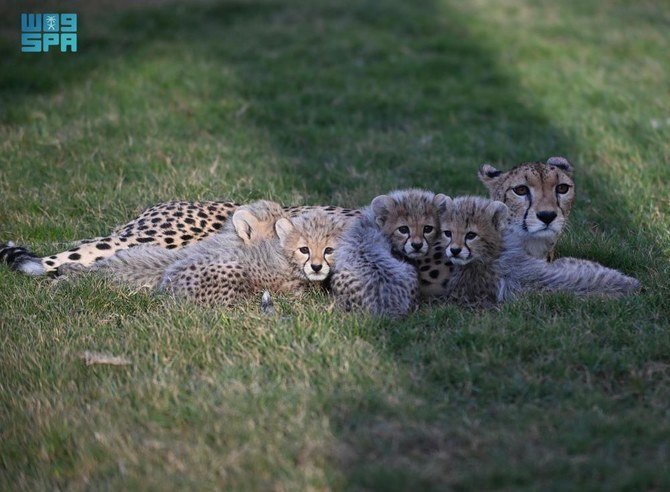
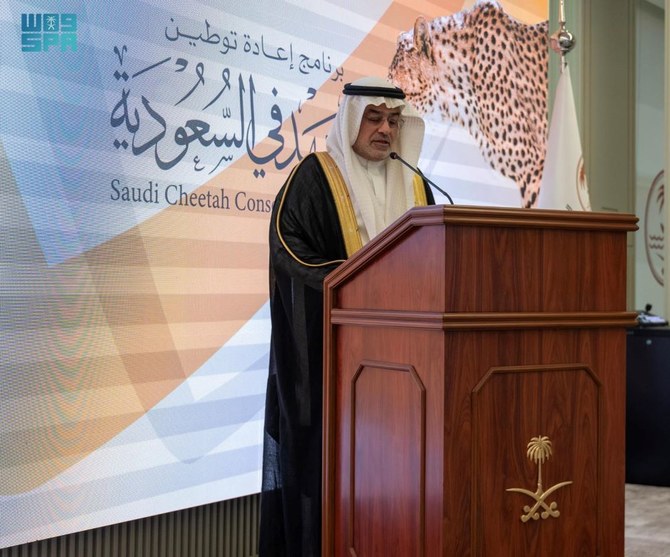

RIYADH: Saudi Arabia’s National Center for Wildlife has announced a major breakthrough in its cheetah conservation efforts, with the birth of four cubs and the completion of a comprehensive national strategy.
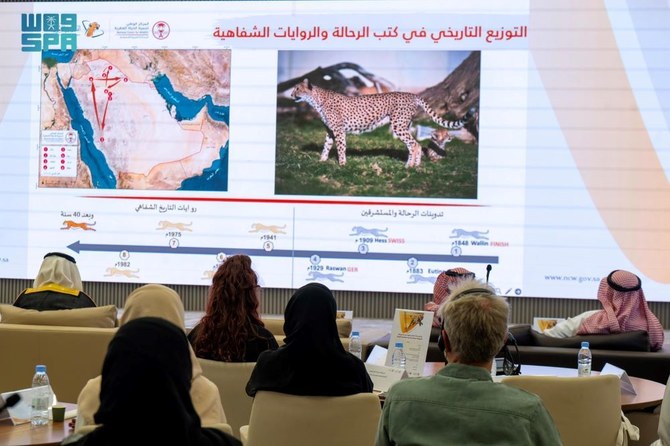
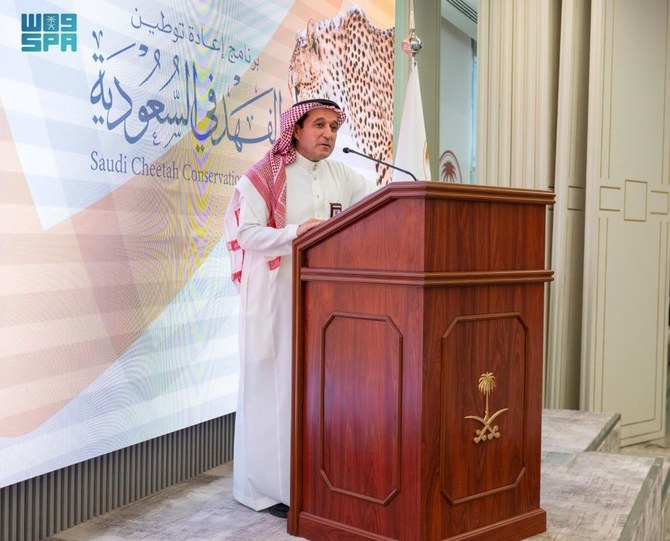
The announcement came during a session held by the center on Tuesday to introduce the cheetah, and outline efforts for its reintroduction. This initiative is part of the National Cheetah Conservation Strategy within the National Cheetah Reintroduction Program, launched last year under the auspices of the minister of environment, water and agriculture, Abdulrahman Al-Fadhli, who is also chairman of the center.
The center’s CEO, Dr. Mohammed Qurban, said: “The official launch of the National Cheetah Conservation Strategy and the announcement of the birth of four cheetah cubs signifies an important achievement in our conservation efforts. This strategy reflects our unwavering commitment to ensuring a sustainable future for wild cheetahs in their natural habitats in the Kingdom.”
Qurban added that the birth of the cubs was especially important given the cheetah’s absence from the Arabian Peninsula for more than four decades.
“Our recent discovery of ancient cheetah mummies in northern Saudi Arabia underscores the region’s historical role as a prime cheetah habitat,” he said.
Qurban said that this discovery would fuel the determination to reestablish cheetah populations, “guided by an integrated strategy designed in accordance with best international practices.”
He said: “The current remaining distribution of cheetahs worldwide is limited to 9 percent of their historical range, with only 7,100 in existence among 34 different groups in the wild.”
The center also unveiled its multi-phase National Cheetah Conservation Strategy during the briefing session. The plan outlines a series of critical steps aimed at reestablishing a viable cheetah population in Saudi Arabia.
The strategy begins with the creation of specialized breeding facilities and rewilding centers, identifying protected areas that offer suitable habitats for the reintroduced cheetahs, preparing for reintroduction, community partnership in the protection program, and finally, reintroduction and establishment of a self-sustaining breeding population.
The announcement reflects Saudi Arabia’s leading role and success in efforts to enhance environmental balance through the conservation of endangered species, their captive breeding, and reintroduction. The center said that only 15 percent of cheetahs born in the wild could breed in captivity, and of this group, only 20 percent continued to reproduce.
The center’s research team, in collaboration with global experts, has recently disclosed pivotal findings from its comprehensive cheetah research, offering new perspectives on the species’ presence in the Arabian Peninsula. The study, which examined the chronological age of specimens and identified cheetah subspecies, provided a fresh look at the cultural and historical significance of these big cats in the region. The findings are set to recalibrate current conservation strategies. By correcting long-held misconceptions and providing region-specific data, the study allows for more targeted and effective conservation efforts.
The team has successfully pinpointed the timeline of the cheetah’s extinction in the region and extracted crucial genetic information from historical specimens. The scientists have identified the specific subspecies of the Arabian cheetah, comparing its genetic sequence with those of cheetahs currently housed in the center’s facilities and populations worldwide. The findings support the center’s ongoing efforts to breed and reintroduce cheetahs to their native habitats in Saudi Arabia.
The Kingdom is ramping up its commitment to cheetah conservation, employing a multi-faceted approach that combines scientific research, innovative strategies and collaborative partnerships.