

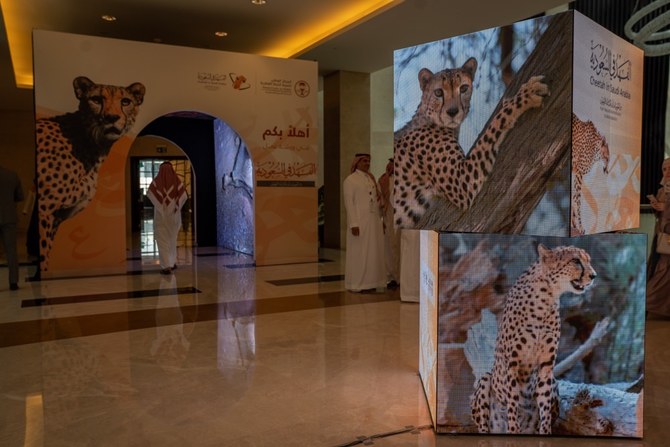


RIYADH: More information about the well-preserved remains of cheetahs discovered recently in northern Saudi Arabia was revealed on Wednesday during a workshop, hosted by the Saudi National Center for Wildlife, that also included the official launch of the Kingdom’s inaugural Cheetah Repatriation Program.
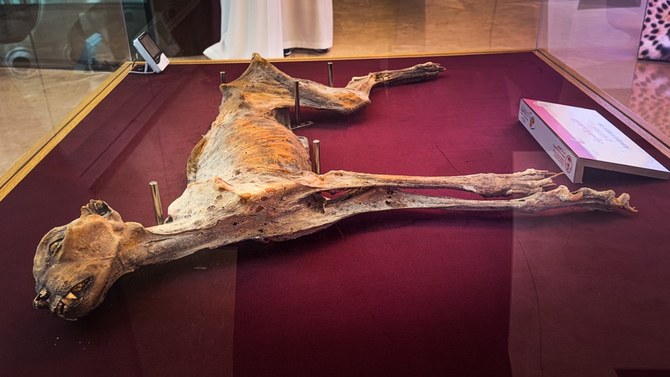
The discovery last year of the mummified cheetah remains, which was described as significant, attracted worldwide attention and prompted international experts to work with local specialists to discuss and research the find.
Ahmad Alboug, general manager of the wildlife center’s terrestrial wildlife conservation department, told Arab News: “The discovery of the mummies in ground caves in Saudi Arabia is a big opportunity, not only on a national level but an International level.”
The center announced last year that the well-preserved, naturally mummified remains of 17 cheetahs had been found in a cave in the north of the Kingdom. Tests have revealed that the cheetahs roamed the region as far back as 4,000 years ago, and as recently as 120 years ago, confirming the historical presence of the mammals in the Arabian Peninsula. Genetic analysis confirmed the animals had originated in the region.
“The center has been working to reintroduce cheetahs since the establishment of the National Center for Wildlife in 2021,” said Alboug. “But at that time there were gaps in the information … (These recent discoveries allowed us) to get a lot of data, extract the DNA from these samples, and determine through carbon-14 dating the ages of the samples and the contents.
“This will help to also improve our knowledge to support Saudi Vision 2030, and also to support the Saudi Green Initiative and to rehabilitate and reintroduce the native species of Saudi Arabia.”
Scans of the remains revealed that some internal organs, including the stomach and intestines, were remarkably well-preserved. Mohammed Qurban, the CEO of the wildlife center, said during the workshop that the discovery has provided an abundance of valuable information for the breeding and resettlement program, clarified a lot of previously unconfirmed information, and will have a positive effect on future wildlife research while also increasing the determination among researchers to find even more evidence in this field.
In collaboration with international experts, the wildlife center was able to establish the age of the remains, identify the subspecies, determine the genetic makeup, and compare this with the genetic sequence of cheetahs in the center’s shelters and other groups of the animals around the world.
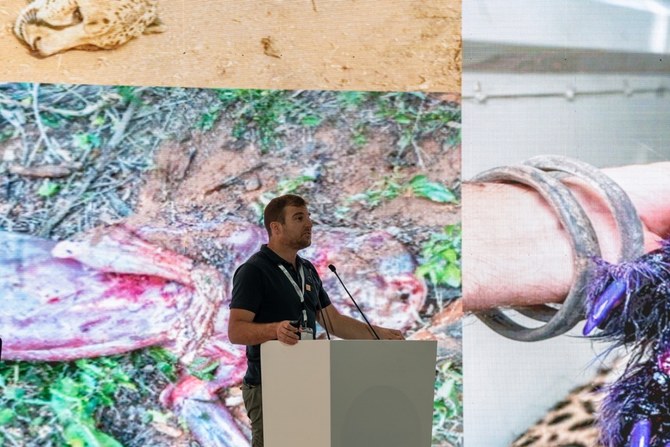
The workshop on Wednesday featured speakers from around the world who presented a global overview of cheetah conservation and discussed important findings, the cultural and historical significance of cheetahs, and the Kingdom’s conservation strategy.
Vincent van der Merwe, manager of the Cheetah Metapopulation Initiative in South Africa, told Arab News: “In southern Africa, we still have most of our indigenous large-mammal species, we never lost them.
“If you go to a place like Europe, the original habitats and wildlife disappeared so long ago that the idea of bringing it back is not even in their mind.
“A country like Saudi Arabia has realized that … it’s an opportunity for it to set a precedent and to restore ecological functioning … There’s massive potential for environmental gains, conservation and reintroductions. I think this is going to be a very exciting place to work in the next 50 years.”
Abdulrahman Al-Fadhli, the minister of environment, water and agriculture, and chairman of the wildlife center’s board of directors, inaugurated the Cheetah Repatriation Program during the workshop. The center aims to continue its research into the cheetah remains as part of the implementation of the national strategy for the reintroduction of the species across the Kingdom.
The research will include studies of historical environmental changes and their effects on the extinction of the cheetah in the region, and testing of the digestive systems in the mummified remains to determine the animals’ historical prey.
Threatened by habitat loss, cheetah populations are in a vulnerable state worldwide and there are only around 7,100 of the animals confirmed to be living in the wild. The cheetah is known to have been extinct in the Arabian Peninsula for more than 50 years.


