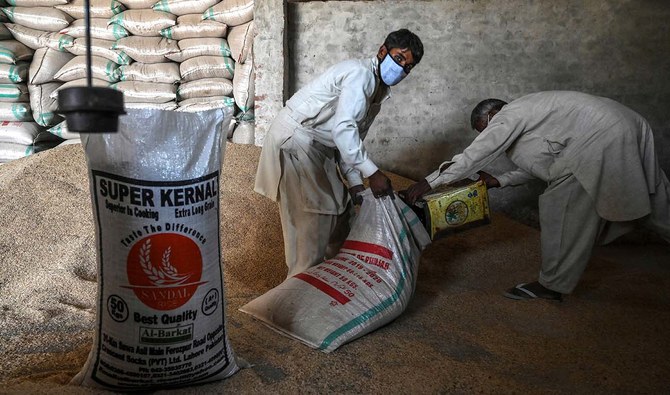
ISLAMABAD: Pakistani rice traders on Friday warned the government of a possible reduction in their exports to $2 billion, against the ambitious $5 billion target, blaming the new tax regime expected to make them pay a larger share of their earnings than in the past.
The country’s rice exports to Saudi Arabia, the United Arab Emirates, China, Malaysia and other countries reached $3.9 billion in the last fiscal year, a noticeable improvement compared to the previous year’s $2.1 billion, reflecting an upward trajectory.
For the current fiscal year, Pakistani rice traders have been eyeing $5 billion. However, they say this might not happen due to the government’s decision to replace the Final Tax Regime with the Hybrid Tax Regime, which would double the tax rates and force exporters to file returns each month.
The Final Tax Regime refers to a system where specific sources of income, such as dividends, have final tax deductions made at the source, meaning no further tax is payable. In contrast, the Hybrid Tax Regime applies to businesses or individuals with multiple income streams, combining final taxed income with additional taxable income, requiring more meticulous filing of returns and higher overall tax rates.
“This new tax regime will leave us uncompetitive in the international market,” Chela Ram Kewlani, Chairman Rice Exporters Association of Pakistan, told Arab News. “This will automatically result in a drop in our rice exports to $2 billion as we have already been doing business at record high markup rates and electricity costs.”
He said the new tax regime would open the door for the Federal Board of Revenue (FBR), the country’s tax collection body, to audit their business, resulting in “corruption and harassment” of rice exporters.
“There is a clear contradiction in the government’s statements and actions,” he said. “They want to boost the exports, but at the same time they want to burden the sector with heavy taxes.”
Kewlani said, besides the new tax regime, the government would levy 10 percent super tax if the exports of a trader went beyond Rs4 billion ($14.4 million).
He informed the exporters held a meeting with Federal Minister for Finance Muhammad Aurangzeb last week to discuss the issue, though it did not yield their desired results.
“You are aware of the economic situation, so the government has no option but to levy additional taxes on the rice exports,” he said while quoting the finance minister.
Muhammad Jawed Hanif, Chairman of the National Assembly’s Standing Committee on Commerce, said he was aware of the challenges posed by additional taxes, adding the committee would discuss the matter in its next meeting.
“We have a meeting on July 24 wherein we will discuss these rice export issues,” he told Arab News.
“All issues related to exports will be on my priority list as the country badly needs foreign exchange through increased exports of our products,” he added.


![]()

Pakistani rice traders warn government of drop in exports due to additional taxes
Short Url
https://arab.news/6bzf2
Pakistani rice traders warn government of drop in exports due to additional taxes
- Local traders of the commodity set $5 billion of export target before government introduced new tax regime
- National Assembly Standing Committee on Commerce will take up the issue in its forthcoming meeting next week
Latest updates


© 2026 SAUDI RESEARCH & PUBLISHING COMPANY, All Rights Reserved And subject to Terms of Use Agreement.