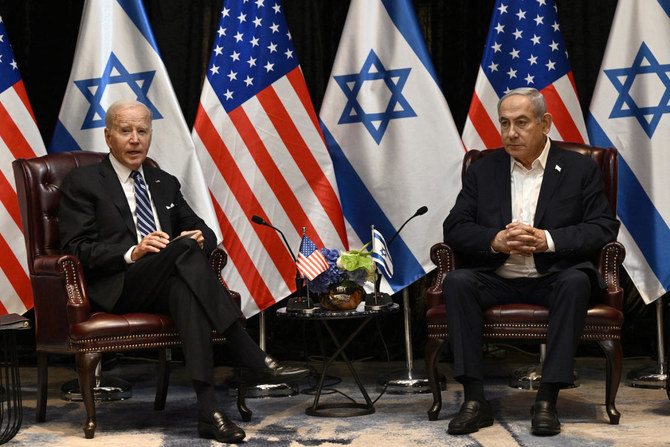
WASHINGTON: US President Joe Biden expects to be able to meet Israeli Prime Minister Benjamin Netanyahu next week depending on his recovery from COVID-19, the White House said on Thursday.
Netanyahu will be in Washington next week for a July 24 address to a joint session of the US Congress. The two governments have tentatively scheduled a meeting between Biden and Netanyahu on Monday.
Vice President Kamala Harris will also meet Netanyahu while he is in Washington, a White House official said.
Biden, under pressure from some fellow Democrats to not seek reelection due to a disastrous debate performance against Republican Donald Trump on June 27, tested positive on Wednesday for COVID-19 and is recuperating at his beach house in Delaware. His current plan is to return to Washington on Sunday.
The two leaders have had strained relations for months over Netanyahu’s handling of the Gaza conflict where more than 38,000 people have been killed in Israel’s pursuit of Hamas militants responsible for the Oct. 7 attack on southern Israel in which 1,200 people were killed.
“We have every expectation that the two leaders will have the chance to see each other while Prime Minister Netanyahu is in town,” said White House national security spokesperson John Kirby, without mentioning a specific date.
“Obviously we need to make sure that the president’s health and his recovery from COVID takes priority and if and how that might affect the discussion with Prime Minister Netanyahu, we’re just not in a position today to be able to help,” he told reporters.
The United States has been working with Qatar and Egypt to try to arrange a ceasefire in the Gaza conflict in order to free hostages held since Oct. 7 and get more humanitarian aid into the enclave
A US official said US Middle East envoy Brett McGurk was traveling to the Middle East on Thursday for consultations on the Gaza conflict, with stops planned in the United Arab Emirates and Jordan, a US official said.
No deal appeared imminent. Kirby said McGurk’s trip was part of regular consultations.
Netanyahu’s visit would be his first visit to the White House since he returned to office in late 2022.
The Biden administration may have eased on one point of contention last week when it said it would resume shipping 500-pound bombs to Israel, though it said it would continue to hold back on supplying 2,000-pound bombs over concerns about their use in densely populated Gaza.
In June, Netanyahu had criticized the United States for withholding some weapons, prompting Biden’s aides to express disappointment and confusion over the Israeli leader’s remarks.
The invitation for Netanyahu to address a joint meeting of Congress was orchestrated by the House of Representatives’ Republican leadership, which has accused the Democratic president of not being supportive enough of Israel’s strategy in the Gaza war.
Addresses to joint meetings of Congress by foreign leaders are a rare honor generally reserved for the closest US allies or major world figures.
Netanyahu’s speech could highlight differences over Israel policy between Biden and some progressive Democrats, especially if some of them follow through on their threat to boycott the Israeli leader’s appearance.


![]()

White House: Biden expecting to meet Netanyahu next week
Short Url
https://arab.news/9ry9p
White House: Biden expecting to meet Netanyahu next week
- Netanyahu will be in Washington next week for a July 24 address to a joint session of the US Congress
- The two leaders have had strained relations for months over Netanyahu’s handling of the Gaza conflict


Latest updates




Recommended


© 2026 SAUDI RESEARCH & PUBLISHING COMPANY, All Rights Reserved And subject to Terms of Use Agreement.