ABU DHABI: The UAE is considering building a second nuclear power plant to meet the growing demand for electricity in the Gulf state, a government official told Reuters.
The country of some 10 million people has become a proponent of nuclear power, a low-carbon energy source, as it seeks to diversify its economy and attract foreign investment. Its first plant started commercial operations in 2021.
Any contract for a new nuclear power plant would be worth tens of billions of dollars and could attract tender bids from China, Russia and the US, among others.
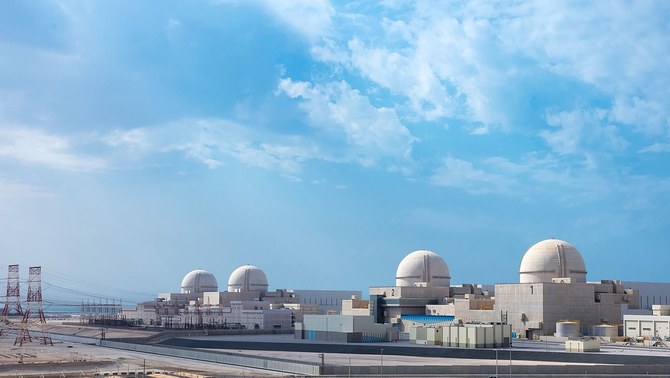
As the final reactor of the UAE’s only nuclear plant is set to start commercial operations this year, Hamad Al-Kaabi said the government was evaluating whether to build a second plant.
“The government is looking at this option. No final decision has been made in terms of the tender process but I can tell you that the government is actively exploring this option,” he said.
The government is projecting there will be a substantial increase in electricity use over the next decade that will be driven by population growth and an expanding industrial sector.
The government has yet to budget for a second power plant or decide on the size or the location, but Al-Kaabi said it was possible a tender could be issued this year.
Sources told Reuters in April the UAE planned a second nuclear power plant and that it could seek bids to build a four-reactor facility within a few months.
Any new power plant would likely consist of two or four reactors, said Al-Kaabi, who is the UAE’s ambassador to Austria and the permanent representative to the UN’s nuclear agency.
The size of a new power plant would depend on the build and technology, he said, adding that South Korea, which built the existing plant, would not be treated as a favored bidder for any tender.
“It’s a policy decision to give opportunity for all potential bidders,” he said in an interview in Abu Dhabi.
Al-Kaabi also serves as the deputy chairman of the board of management of the UAE nuclear regulator known as FANR.
The UAE awarded Korea Electric Power Corporation a $20 billion contract in 2009 to design, build and operate four reactors in Abu Dhabi toward the border with Saudi Arabia.
KEPCO operates the plant in a joint venture with the power plant’s state owner, Emirates Nuclear Energy Corporation.
Each of the Barakah power plant’s reactors has a capacity of 1400 megawatts and a total combined capacity of 5600 megawatts.
Al-Kaabi said the UAE has had discussions with major developers of nuclear energy technology but did not name them.
The UAE is a close security partner of the US and in 2009 signed nuclear energy cooperation agreement with Washington.
It says its nuclear program is peaceful and solely for energy purposes to decrease its reliance on oil, and buys the fuel it needs for its reactors from the international market to avoid enriching uranium. Enriched uranium, the fuel for nuclear power plants, can be used to make nuclear bombs.
Removing enrichment from nuclear programs decreases the potential for weapons development.
The UAE sits across the Gulf from Iran, which the US accuses of trying to develop weapons with its nuclear program, while Tehran says it needs atomic power. The UAE also neighbors Saudi Arabia, which is in talks with the US over ambitions to develop its own civil nuclear power industry.


![]()

UAE considers building second nuclear power plant
Short Url
https://arab.news/rr63b
UAE considers building second nuclear power plant
- New plant would cost billions of dollars, tender could be issued this year
- Sole nuclear plant started commercial operations in 2019


Latest updates


© 2026 SAUDI RESEARCH & PUBLISHING COMPANY, All Rights Reserved And subject to Terms of Use Agreement.