

Chinese investors embrace Saudi equities as 2 ETFs debut in Shanghai, Shenzhen

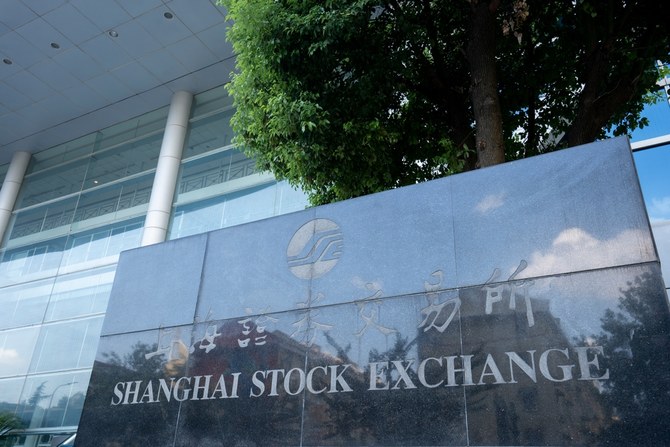
Shanghai Stock Exchange in the city’s Lujiazui Financial District
Short Url
Updated 16 July 2024
Follow

Chinese investors embrace Saudi equities as 2 ETFs debut in Shanghai, Shenzhen

RIYADH: Chinese investors showed strong interest in Saudi equities as two new exchange-traded funds focused on the Kingdom’s stocks debuted in Shanghai and Shenzhen.  

The feeder funds, operating under the Qualified Domestic Institutional Investor program, began trading on July 16, with both briefly hitting the 10 percent daily limit on their launch day.    

The first fund, CSOP Saudi Arabia ETF QDII, managed by China Southern Asset Management, is listed on the Shenzhen Stock Exchange after raising 634 million Chinese yuan ($87 million).   

The second fund, the Huatai-PineBridge managed CSOP Saudi Arabia ETF QDII, started trading on the Shanghai Stock Exchange after raising 590 million Chinese yuan, Bloomberg reported.   

The new offerings mark a significant step in the deepening economic ties between China and Saudi Arabia, allowing mainland investors to diversify their portfolios with exposure to the Kingdom’s stock market.     

This comes as investor relations between the two nations flourish with China becoming the top greenfield foreign direct investor in Saudi Arabia with investments amounting to $16.8 billion in 2023, a 1,020 percent rise from the previous year.      

The two ETFs indirectly invest in the Kingdom’s stock market through the CSOP Saudi Arabia ETF, which was listed on the Hong Kong Stock Exchange, marking the first Saudi Arabia-focused ETF in the Asia-Pacific region.   

Following their approval from the China Securities Regulatory Commission last month, these funds are designed to facilitate greater international diversification for Chinese investors, particularly in sectors where Saudi Arabia has considerable influence, such as energy and oil.   

“People will pay more attention to Saudi Arabia looking at the energy and financial sector compared with US or Japan investment options,” Mao Wei, chief equity investment officer at China Southern Asset Management Co., told Bloomberg.   

Mainland investors will find it easier to build exposure to Saudi stocks using the funds as they can invest in yuan and find information in Chinese, according to Melody Xian He, deputy chief executive officer at CSOP Asset Management.   

About 20,000 individuals and funds took allocations in the ETFs during an offer period of seven days, she said in an interview.   

As investment links between China and Saudi Arabia deepen, Hong Kong could be “the largest beneficiary of the Saudi China ETF connect program because ETFs that are listed in Saudi Arabia and mainland China could feed back into the Hong Kong ETF,” said Rebecca Sin, an analyst at Bloomberg Intelligence in Hong Kong.   

“The next step of the Saudi China ETF Connect could be that Saudi Arabia asset managers launch a feeder fund,” she added.  

This fund tracks the FTSE Saudi Arabia Index and counts the Kingdom’s sovereign wealth fund among its major investors.  

The Saudi China ETF program aims to facilitate the cross-listing of funds in both countries and the launch of feeder funds, further cementing financial cooperation between the two nations amidst evolving geopolitical landscapes.  


Arab food and beverage sector draws $22bn in foreign investment over 2 decades: Dhaman 

Updated 28 December 2025
Follow

Arab food and beverage sector draws $22bn in foreign investment over 2 decades: Dhaman 

JEDDAH: Foreign investors committed about $22 billion to the Arab region’s food and beverage sector over the past two decades, backing 516 projects that generated roughly 93,000 jobs, according to a new sectoral report. 

In its third food and beverage industry study for 2025, the Arab Investment and Export Credit Guarantee Corp., known as Dhaman, said the bulk of investment flowed to a handful of markets. Egypt, Saudi Arabia, the UAE, Morocco and Qatar attracted 421 projects — about 82 percent of the total — with capital expenditure exceeding $17 billion, or nearly four-fifths of overall investment. 

Projects in those five countries accounted for around 71,000 jobs, representing 76 percent of total employment created by foreign direct investment in the sector over the 2003–2024 period, the report said, according to figures carried by the Kuwait News Agency. 

“The US has been the region's top food and beverage investor over the past 22 years with 74 projects or 14 projects of the total, and Capex of approximately $4 billion or 18 percent of the total, creating more than 14,000 jobs,” KUNA reported. 

Investment was also concentrated among a small group of multinational players. The sector’s top 10 foreign investors accounted for roughly 15 percent of projects, 32 percent of capital expenditure and 29 percent of newly created jobs.  

Swiss food group Nestlé led in project count with 14 initiatives, while Ukrainian agribusiness firm NIBULON topped capital spending and job creation, investing $2 billion and generating around 6,000 jobs. 

At the inter-Arab investment level, the report noted that 12 Arab countries invested in 108 projects, accounting for about 21 percent of total FDI projects in the sector over the past 22 years. These initiatives, carried out by 65 companies, involved $6.5 billion in capital expenditure, representing 30 percent of total FDI, and generated nearly 28,000 jobs. 

The UAE led inter-Arab investments, accounting for 45 percent of total projects and 58 percent of total capital expenditure, the report added, according to KUNA. 

The report also noted that the UAE, Saudi Arabia, Egypt, and Qatar topped the Arab ranking as the most attractive countries for investment in the sector in 2024, followed by Oman, Bahrain, Algeria, Morocco, and Kuwait. 

Looking ahead, Dhaman expects consumer demand to continue rising. Food and non-alcoholic beverage sales across 16 Arab countries are projected to increase 8.6 percent to more than $430 billion by the end of 2025, equivalent to 4.2 percent of global sales, before exceeding $560 billion by 2029. 

Sales are expected to remain highly concentrated geographically, with Egypt, Saudi Arabia, Algeria, the UAE and Iraq accounting for about 77 percent of the regional total. By product category, meat and poultry are forecast to lead with sales of about $106 billion, followed by cereals, pasta and baked goods at roughly $63 billion. 

Average annual per capita spending on food and non-alcoholic beverages in the region is projected to rise 7.2 percent to more than $1,845 by the end of 2025, approaching the global average, and to reach about $2,255 by 2029. Household spending on these products is expected to represent 25.8 percent of total expenditure in 13 Arab countries, above the global average of 24.2 percent. 

Arab external trade in food and beverages grew more than 15 percent in 2024 to $195 billion, with exports rising 18 percent to $56 billion and imports increasing 14 percent to $139 billion. Brazil was the largest foreign supplier to the region, exporting $16.5 billion worth of products, while Saudi Arabia ranked as the top Arab exporter at $6.6 billion.