PESHAWAR: A high court in Pakistan has ruled that Pakistani woman married to Afghan nationals were entitled to hold dual nationality despite possessing the Afghan Citizens Card (ACC) or Proof of Registration (PoR), with a lawyer representing petitioners describing the ruling as a “landmark” development.
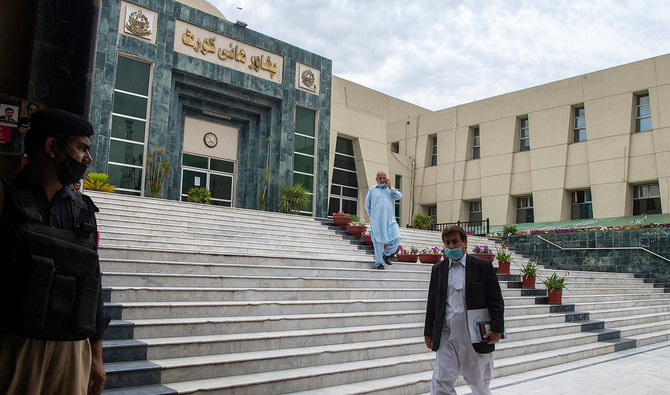
A two-member bench of the Peshawar High Court (PHC), comprising Justice Arshad Ali and Justice Wiqar Ahmad, issued the 62-page judgment, deciding 65 petitions on issues surrounding Pakistani citizenship filed by individuals who either had ACC or PoR cards, married an Afghan national or had children born to Pakistani-Afghan parents.
The decision, announced on July 9, came after a number of Pakistani and Afghan nationals filed petitions in the high court to seek relief following last year’s directives by the Pakistani government for all illegal foreigners to leave the country by November 2023 or face arrest.
“This is a landmark decision of the Peshawar High Court as several individuals were suffering for years. This is not an issue of these 65 individuals but thousands of individuals who have been suffering over some time now,” Nouman Muhib Kakakhel, one of the lawyers who represented the petitioners, told Arab News on Sunday.
“Pakistan didn’t have any dual nationality law with Afghanistan. This decision will pave the way for many to address their issues in the court.”
The verdict divided the case into four categories, including children born to Pakistani and Afghan parents with ACC or PoR cards issued in their name, Pakistanis holding an ACC who claim dual citizenship, Afghans married to Pakistani nationals seeking PoR or citizenship, and individuals who were Pakistani but were mistakenly declared Afghan and issued ACC cards.
“The situation that emerges from this analysis invariably leads one to a conclusion that a female Pakistani citizen who marries an Afghan citizen can retain dual nationality. Similarly, children born out of such wedlock can also retain their dual nationality of Pakistan as well as Afghanistan till attaining the age of 21 years,” the verdict read.
“They cannot be denied citizenship status as citizens of Pakistan for the reason that they are ACC or PoR holders. Their entry can co-exist, as such in NADRA database as well as in other databases of the government of Pakistan. Their CNICs [computerized national identity cards], if issued already, couldn’t be blocked for the reason that names of such persons have been found in the data of Afghan Citizenship or they have been found to be holders of PoRs.”
About such children, the court ruled that they would be “entitled to citizenship of Pakistan by issuance of Form B, notwithstanding the fact that they have been entered [as] ACC or PoR holders.”
The court ruled that the applications of Pakistani nationals, who had acquired ACC and PoR cards, would be “processed and decided swiftly by realizing that certain citizens of the state are also suffering and their grievances require to be remedied quickly.”
Hayat Roghani, a human rights activist, the verdict would encourage many Afghans and Pakistanis, who had been facing similar issues, to go to a court for relief.
“The Afghan refugees have lived together with Pakistani Pashtuns and have relations with each other,” he said. “The last year’s order of the Pakistan government to expel undocumented foreign nationals to their countries intensified the problems of Pakistanis too.”
Roghani noted that Pakistani Pashtuns and Afghan refugees had shared businesses and married each other, but the directives to expel foreign nationals made things difficult for them both.
“The decision of the Peshawar High Court is a precedent and many others will benefit from it in the future,” he added.


![]()

Pakistani women married to Afghan nationals entitled to dual nationality, court rules
Short Url
https://arab.news/7cm8y
Pakistani women married to Afghan nationals entitled to dual nationality, court rules
- Peshawar High Court issued the verdict on 65 petitions filed by individuals who had Afghan citizenship, married Afghan nationals or had children with them
- The petitioners moved the court after last year’s directives by Islamabad for all illegal foreigners to leave the country by November 2023 or face arrest
Latest updates


© 2026 SAUDI RESEARCH & PUBLISHING COMPANY, All Rights Reserved And subject to Terms of Use Agreement.