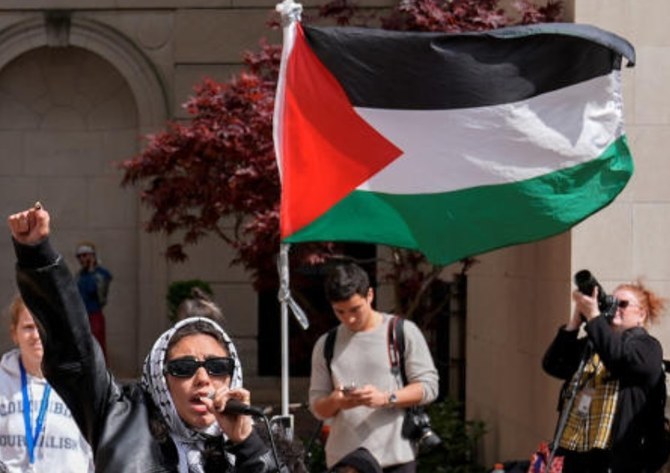
CHICAGO: Two college students who participated in campus protests against Israel’s actions during its war on the Gaza Strip plan to file lawsuits against organizations they accuse of engaging in “illegal harassment” and “bullying” that provoked “death threats” against them.
The Civil Liability for Doxxing Act, an Illinois law that came into effect in January this year, gives residents of the state the right to raise a civil action against individuals or organizations that intentionally publish their personal information without consent to cause harm or economic injury. It gives courts the power to issue protection orders to ensure the safety of victims, lawyers for the students said.
Laila Ali and Kinza Khan, who participated in pro-Palestine protests during the spring, said they “suffered greatly,” personally and professionally, after their personal information was posted on social media, an act known as “doxxing,” by two organizations that target Palestinian students.
The organizations — StopAntisemitism, which is accused of harassing students on Twitter, and Canary Mission — are considered by critics to be among the most virulent anti-Arab hate groups in the US.
“The doxxing, harassment and threats that I faced were completely out of line,” Khan said during a press conference in Chicago hosted by the Council on American Islamic Relations.
“This abusive, doxxing behavior is continuing for others who support Palestine, including kids, college students, small business owners and other vulnerable people.
“We are witnessing a double standard in how pro-Palestinian doxxing gets addressed, or not addressed, by law enforcement. It’s time to demand that the anti-doxxing law is implemented fairly.”
Khan and Ali said they received thousands of emails and telephone calls after their personal details were revealed, not only to their homes but also to their employers in an attempt to have them fired.
“They threatened my life and they threatened my career,” Khan said.
Phil Robertson, CAIR-Chicago’s litigation director, said the intent of the organizations through their actions was to silence legitimate criticism of a foreign government, and that such criticism has nothing to do with antisemitism or hatred of Jews or any religious group.
“Doxxing not only aims to suppress freedom of expression but also creates an atmosphere of fear and vulnerability among Palestinians and their allies, both online and offline,” he added.
“In this situation, we have two individuals — who are indicative of many, many more — who have been subjected to this type of harassment and treatment online and it has resulted in very adverse impacts on their lives and to their well-being.”
Ali and Khan have had issues with their employers and careers as a result of the harassment, Robertson said.
“We now have tools in Illinois to allow citizens to go after people who are harassing them … We want to encourage people to contact CAIR to let us know if they have been doxxed, how long it has been going on, and keep these lawsuits coming so that we can work to end this scourge that has been happening for far too long in this country,” he added.
“The impact extends beyond individual victims to affect broader advocacy efforts and public discourse on Palestinian issues, highlighting the urgent need for enhanced protections against online abuse and harassment based on political beliefs and affiliations.”
CAIR-Chicago’s director, Ahmad Rehab, said that CAIR and the plaintiffs in the lawsuits oppose antisemitism and do not engage in “hatred against people who are Jewish.”
He added: “These organizations are weaponizing antisemitism in order to shut down Palestinian voices, individuals who have a constitutional right of expression in America.
“But don’t be mistaken. We are also very clear that we oppose antisemitism. We will not support the hatred of anyone, including Jewish people. But no one can say that you can’t criticize a foreign country or foreign government, or anyone, simply because they are Jewish. Weaponizing antisemitism actually weakens the fight against antisemitism.”
Rehab described StopAntisemitism and Canary Mission as “anti-American organizations that contradict American civil rights and don’t belong in America.”


![]()

Lawsuits target alleged anti-Arab hate groups accused of bullying pro-Palestine student protesters
Short Url
https://arab.news/p2eq5
Lawsuits target alleged anti-Arab hate groups accused of bullying pro-Palestine student protesters
- Laila Ali and Kinza Khan say they ‘suffered greatly,’ personally and professionally, after their personal details were published by the groups, an act known as ‘doxxing’
- A law introduced in January gives people in Illinois the right to take civil action against persons who reveal personal details to cause harm or economic injury


Latest updates


© 2026 SAUDI RESEARCH & PUBLISHING COMPANY, All Rights Reserved And subject to Terms of Use Agreement.