



LONDON: Before last Thursday, few British voters outside of the east London constituency of Ilford North had heard of Leanne Mohamad, the independent candidate running for election in the seat held by one of the Labour Party’s biggest names.
Mohamad’s name was no better known after the election, in which Wes Streeting, Labour’s shadow health secretary, held on to the seat he had captured from the Conservatives in 2015.
But the success of the 23-year-old British-Palestinian in coming within a whisker of defeating Streeting was one of several warning shots fired across the bows of a Labour Party which has now woken up to the fact that the UK’s Muslim community might have an equal or even greater say in its chances of remaining in power for more than one term as the UK Jewish lobby, which the party has spent the past five years courting assiduously.
Streeting, who is now Labour’s new health secretary, squeezed back in by just 528 votes — 15,647 to Mohamad’s 15,119 — an unprecedented collapse of support over a single issue of foreign policy.
He was not the only senior party member who felt the wrath of the Muslim community and its supporters over Labour’s half-hearted stance on Gaza.
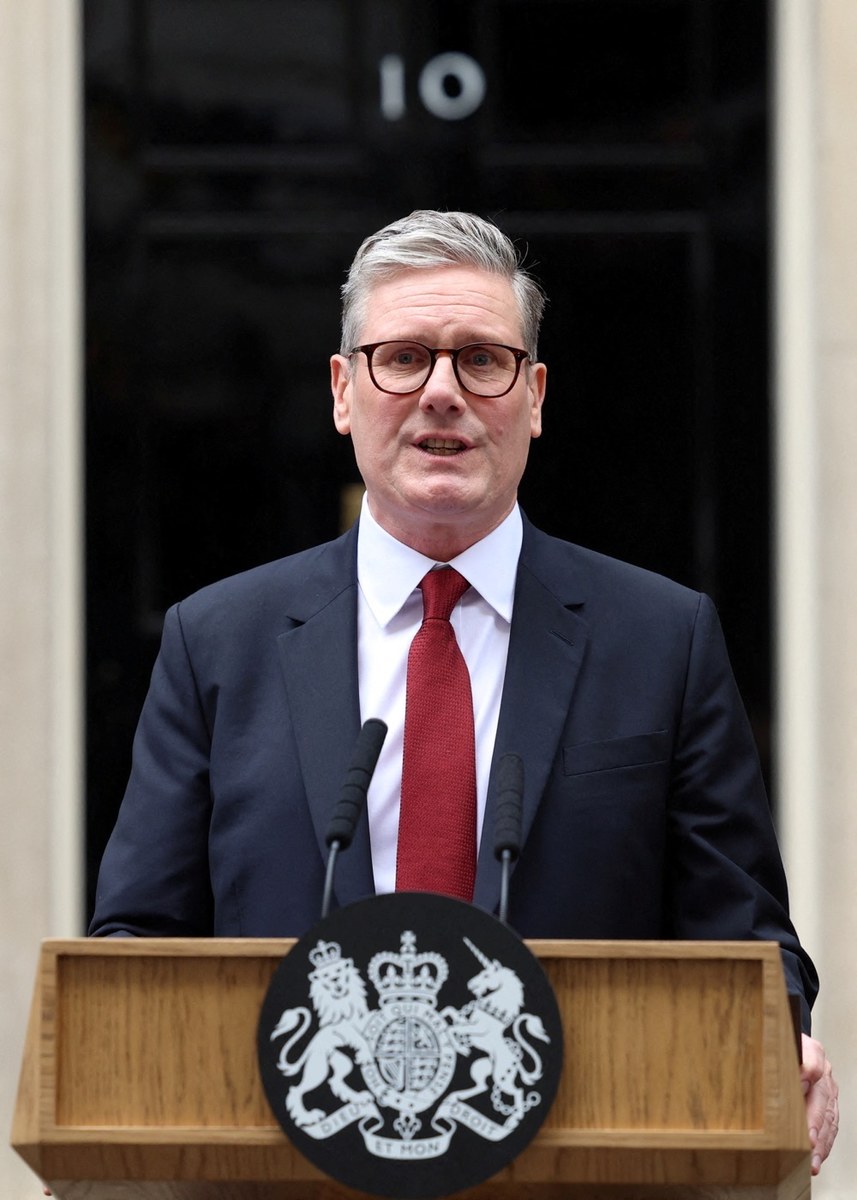
Labour’s new prime minister is on tricky ground over Gaza. (Reuters)
In the constituency of Holborn & St. Pancras, even Labour leader Sir Keir Starmer’s 2019 majority of 36,641 was slashed in half.
His chief opponent was another independent, Andrew Feinstein, a former South African politician and the son of a Holocaust survivor who criticized Starmer’s pre-election position on Gaza, having previously argued that the Palestinian-led Boycott, Divestment and Sanctions movement is “a peaceful mechanism to weaken and thus force concessions from” an “apartheid Israel.”
Over 120 miles north in Birmingham Ladywood, long-serving Labour MP Shabana Mahmood, who secured 79 percent of the constituency’s votes in 2019, saw her majority cut in half and almost equaled by Akhmed Yakoob, yet another pro-Palestinian independent candidate.
In the neighboring constituency of Birmingham Yardley, Labour’s Jess Phillips saw her 2019 majority of 10,659 slashed to fewer than 700 votes by newcomer Jody McIntyre, running for the Workers Party.
Her setback came her November 2023 resignation from the shadow cabinet in protest over her party’s stance on the Israel-Hamas conflict, declaring she had to vote “with my constituents, my head, and my heart, which has felt as if it were breaking over the last four weeks with the horror of the situation in Israel and Palestine.”

The new health secretary, Wes Streeting, narrowly escaped defeat to Pro-Palestine independent Leanne Mohamad. (Reuters)
And they were the lucky ones. In 21 seats in the UK where more than one-fifth of the population is Muslim, Labour saw its share of the vote fall by 25 percent, and four MPs lost their seats to independents on pro-Gaza tickets.
The message for Labour, which has been received loud and clear, is that Britain’s sizable Muslim community has found its voice and its political power, and its support can no longer be taken for granted.
As Shabana Mahmood said after holding on to her Birmingham Ladywood seat, “we have bridges to rebuild … we have trust that we must earn back from my own community.”
There are already signs that Britain’s new government, whose program of social and economic reform is dependent upon securing a second term in office five years from now, is taking steps to do just that.
Starmer, whose wife is Jewish, inherited the leadership of the Labour Party in April 2020 from Jeremy Corbyn, a staunch supporter of the Palestinian cause whose five years as leader were overshadowed by persistent accusations that the party he presided over was antisemitic — allegations that Corbyn and his supporters saw as an orchestrated campaign motivated by Labour’s support for Palestine.

Former Labour leader Jeremy Corbyn, a staunch supporter of the Palestinian cause, regained his seat as an independent candidate. (Reuters)
A report by the Equality and Human Rights Commission, the UK’s human rights watchdog, published in October 2020, concluded there were “serious failings in the Labour Party leadership in addressing antisemitism and an inadequate process for handling antisemitism complaints.”
The report had a Catch-22 air about it, concluding as it did that Labour’s protestations that the multiple accusations of antisemitism against it — from organizations including the Jewish Labour Movement, the Campaign Against Antisemitism and Jewish Voice for Labour — were manufactured smears, was, in itself, evidence of antisemitism.
Starmer set out to rebuild the trust of the Jewish community, declaring that he would “tear out this poison by its roots and judge success by the return of Jewish members.”
It seems to have worked. In the 2019 general election an estimated 11 percent of British Jews voted Labour; last Thursday it was closer to 50 percent.

Staremer, whose wife is Jewish, told The Guardian, “half of the family are Jewish, they’re either here or in Israel.” (AFP)
But Labour’s new prime minister is on tricky ground over Gaza. As he told The Guardian in an interview last month, “half of the family are Jewish, they’re either here or in Israel.”
Now that the election is over, and his party has been badly bruised at the ballot box by the perception that it has turned its back on the plight of the Palestinians, a cause traditionally close to Labour’s heart, Starmer faces the puzzle of how to retain UK Jewish support while bringing Muslims back on board.
“Labour has been very vocal about the need to counter antisemitism, and this now puts it in a very awkward position,” Kelly Petillo, program manager for the Middle East and North Africa at the European Council on Foreign Relations, told Arab News.
“On the one hand, they have portrayed themselves as the people who are going to clean up the Labour Party, but on the other they have to grapple with the reality that many independent candidates won because Labour’s stance on the war in Gaza was unsatisfactory for many.”
It is possible, she believes, that Labour will tread water on the issue of Gaza and the broader question of Palestinian statehood until the outcome of November’s presidential election in the US is settled.

Israel has been conducting a devestating military assault on the Gaza Strip since October last year. (AFP)
If, as seems increasingly likely, Donald Trump returns to the presidency, “there could well be alignment with the Trump administration, leading to a bias toward Israel, which is already evident in the nature of some of the candidates Labour selected to run in the election.”
For example, one of Labour’s new parliamentarians is Luke Akehurst, the MP for North Durham and former director of the pro-Israeli activist group We Believe in Israel, who has described Israel’s actions in Gaza as proportionate.
But for now, at least, the new UK government’s foreign policy is already showing signs of taking a turn for the pro-Palestinian.
Before the election, the then Conservative government had challenged the decision by the International Criminal Court to consider approving the chief prosecutor’s request for arrest warrants to be issued against Israeli Prime Minister Benjamin Netanyahu and Defense Minister Yoav Gallant, for alleged war crimes in Gaza.
The UK questioned the ICC’s jurisdiction in the case, but the new Labour-led government has hinted it may withdraw the objection.

Israel’s military campaign in the Palestinian enclave has killed more than 35,000 people. (AFP)
The news leaked after two early calls to leaders in the region by Starmer. In one, he spoke to Mahmoud Abbas, president of the Palestinian Authority, expressing his concern about “the ongoing suffering and devastating loss of life” in Gaza, and restating the support for a Palestinian state that David Lammy, his foreign secretary, had already articulated.
Starmer’s other call was to Netanyahu. According to a Labour transcript, the new prime minister spoke of the “clear and urgent” need for a ceasefire in Gaza, adding that it was “also important to ensure the long-term conditions for a two-state solution were in place, including ensuring the Palestinian Authority had the financial means to operate effectively.”
Opinion
This section contains relevant reference points, placed in (Opinion field)
Starmer also urged the Israeli leader to act with caution in his dealings with Hezbollah on Israel’s northern border.
Meanwhile, Lammy has said that the Labour administration will reexamine legal advice given to the Conservative government that UK arms being sold to Israel were not being used in breach of international humanitarian law.
Lammy has also suggested the UK might reverse its decision to stop funding UNRWA, the UN’s Palestinian relief agency. In January, major donors to the agency, including the US, the EU, the UK and Germany, withdrew funding when it emerged that a dozen of UNRWA’s 30,000 Palestinian employees were suspected of having been involved in the Oct. 7 Hamas-led attack on Israel.
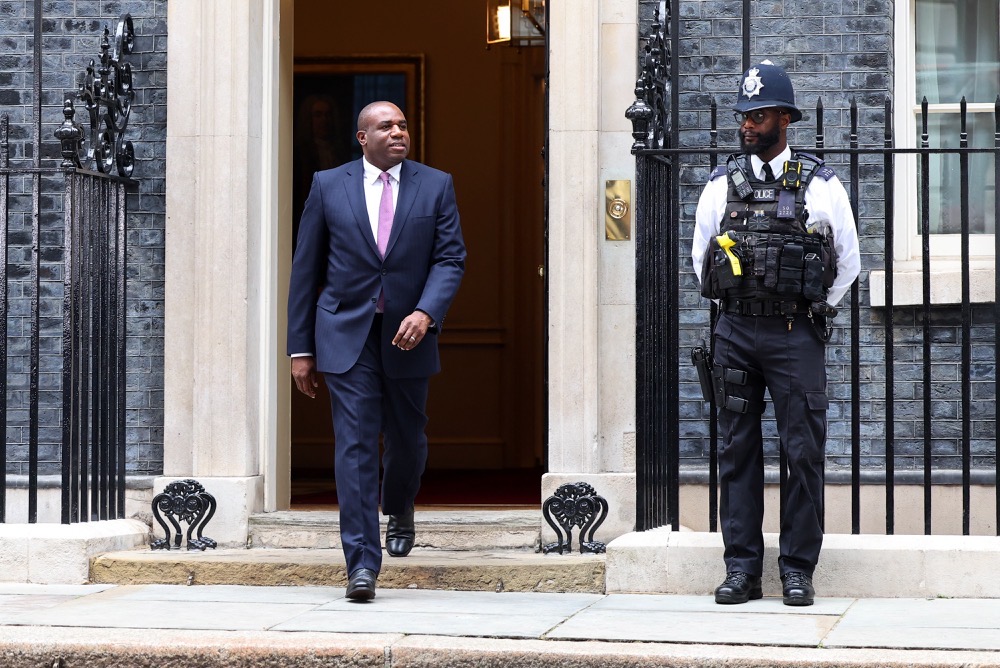
Britain’s newly appointed Foreign Secretary David Lammy leaves Downing Street. (Reuters)
By April, most of this international funding had been restored and “the UK is now in the weird position where it is one of the few countries that has not restored UNRWA funding,” said Petillo.
Despite Lammy’s pronouncements, “I think Starmer is being advised internally to delay this as much as possible, keeping the UK in line with the US, which has blocked it until March 2025. This type of deflection is probably a tactic they will use to address some of the domestic tensions they are under.”
Because of this and other issues, UK policy in the Middle East “will continue to be dictated to a certain extent by US politics and the US line; you could argue that we won’t see a huge change from foreign policy in this area under the Conservatives.
“On the other hand, one can anticipate change just because the bar set by the Conservative government was so low, partly because of all the distractions they have faced, but also because of the narrow lens through which they have looked at Middle East policy, focused mostly on migration and countering extremism and, of course, through a reduction in aid budgets, which has affected countries like Yemen and Syria massively.”

Smoke billows during Israeli bombardment on the village of Khiam in south Lebanon near the border with Israel. (AFP)
Lammy has already made plain that Labour intends to reengage with the Middle East through a new policy of what he called “progressive realism,” and has also spoken of the need for the UK to mend relations with the Arab Gulf states.
This would be timely and highly welcome in the region, said Petillo.
“The UK has definitely shifted its attention a bit away from the region,” she said. “It was a big part of the international support for Ukraine and lately has been looking at the Gulf states solely through the narrow lens of energy.
FASTFACTS
• SR83.31bn Total Saudi-UK trade in goods and services in 2023.
• SR116.54bn Total UK-UAE trade in goods and services in 2023.
•SR37.56bn Total UK-Qatar trade in goods and services in 2023.
“This has really frustrated the Gulf countries, but Lammy has been traveling to the region, even before the war in Gaza, to address this grievance, and since then has been using the war as an opportunity to widen the conversation.
“There is a conversation right now among the Gulf states about building a regional security architecture, into which the process of Arab-Israeli normalization fits, and the new UK government is very keen to enter this conversation in a way that the Conservatives were not.”
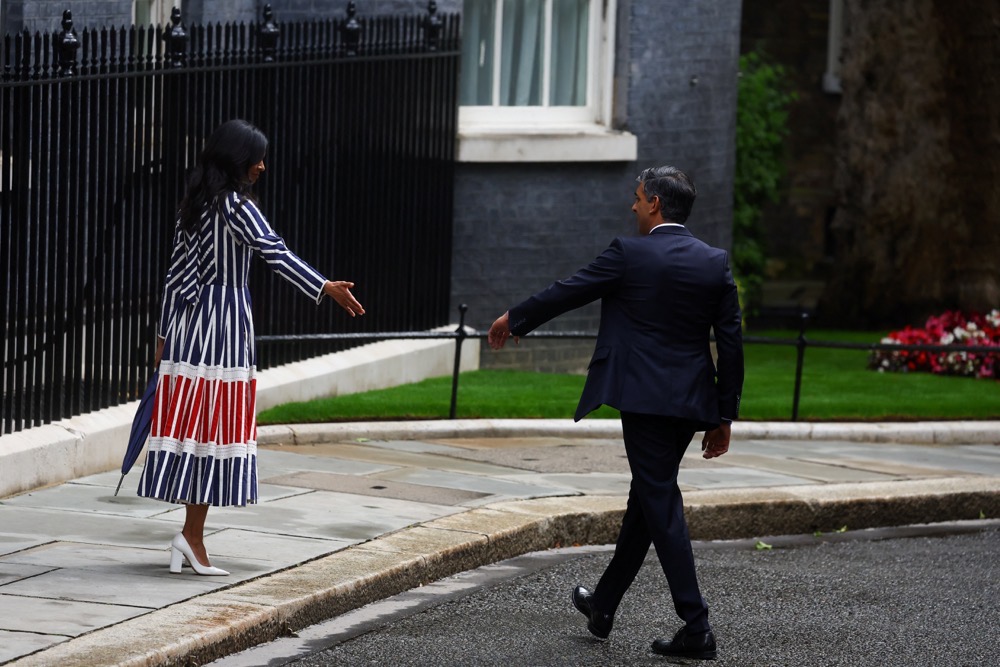
Rishi Sunak’s Conservative Party lost power in an election landslide to Labour. (Reuters)
The new UK government, Lina Khatib, director of the SOAS Middle East Institute and associate Fellow of the Chatham House Middle East and North Africa Program, told Arab News, “has the mandate to implement the needed foreign policy resets that the Labour party had prioritized ahead of the general election. Repairing relations with Arab countries in the Gulf and taking action toward a ceasefire in Gaza and resurrecting the Israel-Palestine peace process are two such priorities.”
According to Khatib, Labour has “rightly framed the Gulf as an important partner for security and economic growth.
“However, the UK government must pursue a more comprehensive strategy toward the Gulf which also takes into consideration the region’s geopolitical interests,” she said.
“This includes adopting a bold approach in addressing the destabilizing role of Iran and its proxies in the Middle East, which the previous UK government had merely skirted around.”

Labour will tread water on the issue of Gaza until the outcome of November’s presidential election in the US is settled, analyst Kelly Petillo indicated.
The UK “must also strengthen its diplomatic, cultural, and business engagement with the Middle East and North Africa. This will help nurture areas of growth across those sectors in the region and bolster the UK’s own standing.”The Labour Middle East Council, established in January this year by British politicians and former ambassadors to the region, with “the fundamental goal of cultivating understanding and fostering enduring relationships between UK parliamentarians and the Middle East & North Africa,” was “one avenue for facilitating such engagement.”
Two perspectives on a historic relationship
MIRAN HASSAN, Founder and director, Labour Middle East Council
It’s about treating the UK-Gulf relationship with more respect and giving it the attention that it deserves. For example, if you look at the GCC-UK Free Trade Agreement, those negotiations have been going on for years with no meaningful progress. That’s a very good example of where the relationship needs to be enhanced and given the attention that it deserves, considering the bloc is one of our largest trading partners.
Not enough attention was paid by the Conservatives to the GCC as a priority trading partner, and I’m hopeful and quite confident that’s going to change under this government.
This is no longer a world where the UK and the US are the only partners available. Now you can just go over to China, Russia is making strategic alliances, and so on. It’s now a world where the UK needs to actually fight to be a partner and for opportunities. It isn’t that the region wants to turn its back on the UK, but one that commands respect. And if they don't have the right level of engagement, then naturally they will look elsewhere.
What’s important for us at Labour Middle East Council is to have the region viewed through the lens of how interconnected our foreign policy is. So, when we look at the issue with the Houthis and their attacks, for example, how has that impacted global trade as a whole and our interests in other parts of the world?
Domestically, migration is a huge priority for the UK government, and we need to be engaged with the region that is the source of a lot of that migration, especially as climate change plays a bigger role and has a huge impact on many countries, such as Syria, Iraq and Libya.
BURCU OZCELIK, Senior Research Fellow (Middle East Security), RUSI
The Labour government has inherited status quo-altering challenges on multiple fronts in the Middle East. With the epicenter in Gaza, conflict vectors reach across Yemen and the Red Sea, Iraq, Syria, and notably with Lebanon-based Hezbollah, where the threat of an escalated war looms large.
While voting results show that Labour gained the trust of a sizeable portion of the British Jewish electorate, largely thanks to rejecting the Corbyn era’s polarizing policies to a more centrist approach, how Labour behaves both in its domestic response to voter expectations, and in its foreign-policy posture in the Middle East, will be scrutinized closely by Jewish and Muslim voters alike, who look to the new government to reduce the devastating human cost of the conflict.
Foreign Secretary David Lammy is set to emphasize the pledge enshrined in the Labour manifesto to recognize a Palestinian state as part of a peace process toward a two-state solution “with a safe and secure Israel alongside a viable and sovereign Palestinian state.” The issue is the extent to which Britain will play a proactive role in being pro-peace above all.
With the electoral campaign now behind us, voters will look to see tangible evidence that policies will match promises. This requires foregrounding a human-rights based approach equally all those civilians impacted, continuing to call for the immediate release of Israeli hostages held since Oct. 7, 2023, by Hamas, alongside pressure for a ceasefire, and urgent humanitarian aid to Palestinians. Unresolved issues will demand urgent attention, such as reviewing future means of funding that will permit the Palestinian Authority to govern effectively, legal concerns around UK arms sales, and the ICC’s ruling on Israel.
The Gulf states are poised — with the appropriate diplomatic assurances — to contribute to a necessary regional effort to support the rehabilitation, reconstruction and rebuilding of Gaza. Despite lulls and lags in the relationship, Labour now has an opportunity to engage with Gulf states (and societies) to facilitate a regional and sustained response to support Gaza, reassure Israel, and work toward the objective of Palestinian statehood.
Israeli PM Benjamin Netanyahu and his far-right allies will seek to buy more time. Britain can apply pressure to bring an end to the humanitarian crisis and support mechanisms — with strong buy-in from the Arab states — to begin planning for the day after.


