
RIYADH: In Saudi Arabia’s Northern Border Region, a quiet revolution is underway to preserve the area’s rich cultural heritage through an unlikely medium: private museums.
These personal collections, often tucked away in homes and personal spaces, are becoming important ties across generations, Saudi Press Agency reported recently.

One museum showcases lightweight weapons, swords, and daggers, alongside tools from the region’s development during the trans-arabian Pipeline era from 1950 to the early 1980s. (SPA)
Stepping into the museums transports visitors to a bygone era, allowing them to see firsthand the rich tapestry of the region’s history and the daily lives of the people who once lived there.
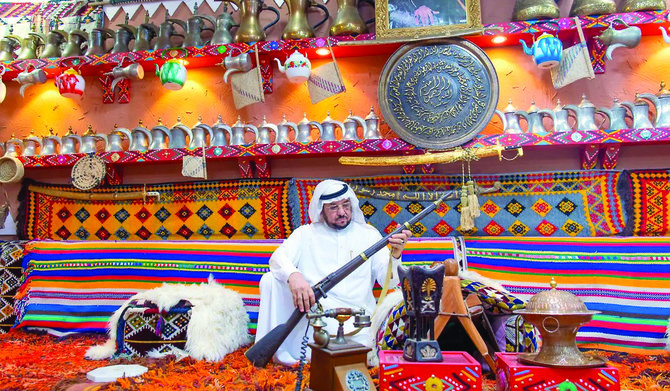
Ahmed Al-Sultani, a collector turned curator, has transformed part of his Arar home into a time capsule. “For over 25 years, I’ve been gathering pieces of our past,” he said in an interview with SPA.
One museum showcases lightweight weapons, swords, and daggers, alongside tools from the region’s development during the trans-arabian Pipeline era from 1950 to the early 1980s. (SPA)
Ancient household utensils, including copperware, coffee pots, jugs, and food containers, make up part of his collection, which also holds items once owned by nomadic Bedouin and local residents.
The museum showcases lightweight weapons, swords, and daggers, alongside tools from the region’s development during the Trans-Arabian Pipeline era from 1950 to the early 1980s.

One museum showcases lightweight weapons, swords, and daggers, alongside tools from the region’s development during the trans-arabian Pipeline era from 1950 to the early 1980s. (SPA)
Drawing visitors from both the local community and beyond, Al-Sultani’s museum has become a magnet for history buffs, archaeology enthusiasts, and school and university students. Heritage pieces are displayed to recreate authentic glimpses of the past and as important introductions to the history of the region.
Meanwhile, Zahia Al-Anazi is breaking new ground as one of the first women in the region to open a private museum. Her collection includes objects related to women’s lives along the Northern Border.

One museum showcases lightweight weapons, swords, and daggers, alongside tools from the region’s development during the trans-arabian Pipeline era from 1950 to the early 1980s. (SPA)
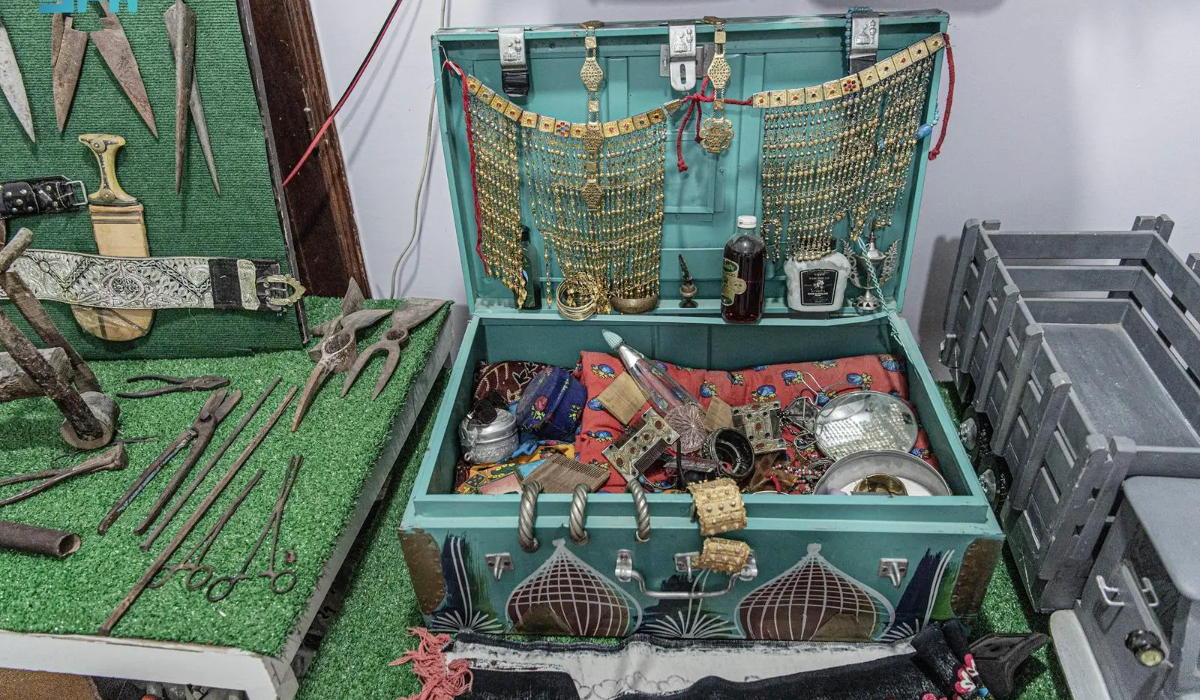
Visitors to Al-Anazi’s museum step into meticulously recreated scenes from the past. A bride’s room, replete with traditional outfits and wool furnishings, provides insights into local wedding customs, while a beauty room displaying items such as kohl and hair oils offers insights into past cosmetic practices.
Another room is dedicated to traditional Northern attire, as well as vintage household utensils, including copperware and kitchen tools.

One museum showcases lightweight weapons, swords, and daggers, alongside tools from the region’s development during the trans-arabian Pipeline era from 1950 to the early 1980s. (SPA)
Al-Anazi said that she learnt about handicrafts, such as embroidery, spinning, and sewing, from her grandmothers and mother, prompting her to open the museum.
“My goal is to preserve our heritage and instill its value in everyone, especially the new generation,” she said.
Al-Anazi’s approach reinforces aspects of national identity among children and introduces younger generations to the beauty of their past.