Pakistan telecom authority proposes framework to tighten control on social media, digital platforms

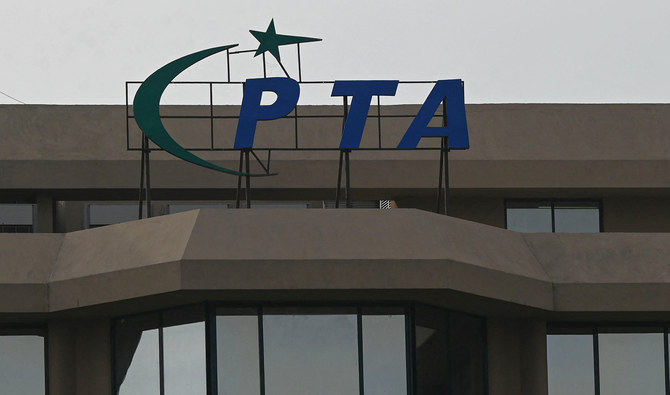
The logo of the Pakistan Telecommunication Authority is pictured on the building facade at its headquarters in Islamabad on June 24, 2023. (AFP/File)
Short Url
Updated 06 July 2024
Follow

Pakistan telecom authority proposes framework to tighten control on social media, digital platforms

  • PTA wants the OTT services to seek a 15-year authorization to maintain legal operations in the country
  • It also wants them not to store the personal data of local consumers beyond Pakistan’s territory

ISLAMABAD: The Pakistan Telecommunication Authority (PTA) has developed a regulatory framework for over-the-top (OTT) services, including social media, digital streaming platforms and popular messaging apps, with the aim to exert greater control after eliciting feedback from stakeholders and finalizing it.
The PTA has posted a 14-page document containing all the provisions along with a list of questions for feedback.
The framework specifies three different kinds of OTT services, dealing with communication (such as Skype, WhatsApp and Facebook Messengers), application (like LinkedIn and X) and media (including YouTube, Netflix and Spotify).
It mentions the OTT authorization that these services will have to obtain from the PTA to maintain legal operations in the country.
“This OTT Authorization shall be valid for a period of fifteen (15) years,” it says. “The Licensed OTT Service Provider shall be required to enter into agreement with the TSPs [telecom service providers] licensees.”
It also mentions data localization, saying these services will not be able to store the personal data of local consumers beyond the country’s geographical territories without the PTA’s approval.
Additionally, it highlights the responsibility for the blocking of unlawful online content in accordance with “Section 37 of the Prevention of Electronic Crimes Act, 2016 and/or as determined by the Authority from time to time.”
The PTA has taken actions against platforms like TikTok, YouTube and Facebook in the past, citing reasons related to immoral, indecent and blasphemous content and even blocking these services.
This has also been criticized by free speech activists in the country that described such official decisions as a form of censorship and to stifle free expression and open access to information.
The final deadline for stakeholders to share their feedback with the telecom authority in July 10.


Pakistan, UK sign £35 million Green Compact to strengthen climate resilience

Updated 4 sec ago
Follow

Pakistan, UK sign £35 million Green Compact to strengthen climate resilience

  • Pakistan ranks among nations most vulnerable to climate change and has seen erratic changes in its weather patterns
  • UK will help Pakistan mobilize climate finance, strengthen regulatory frameworks and develop bankable climate projects

ISLAMABAD: Pakistan and the United Kingdom (UK) have formalized a comprehensive climate partnership with the launch of a Green Compact that aims to enhance climate resilience, accelerate clean energy transition and scale up nature-based solutions, including mangrove conservation, Pakistani state media reported on Sunday.

The agreement, signed in Islamabad by Federal Minister for Climate Change and Environmental Coordination Dr. Musadik Malik and UK Minister for International Development Jennifer Chapman, unlocks £35 million in targeted support for green development and long-term climate action, according to Radio Pakistan broadcaster.

Pakistan ranks among nations most vulnerable to climate change and has seen erratic changes in its weather patterns that have led to frequent heatwaves, untimely rains, storms, cyclones, floods and droughts in recent years. In 2022, monsoon floods killed over 1,700 people, displaced another 33 million and caused over $30 billion losses, while another 1,037 people were killed in floods this year.

Mohammad Saleem Shaikh, a spokesperson for Pakistan’s Ministry of Climate Change, described the compact as a “decisive move toward action-oriented climate cooperation,” noting that its implementation over the next decade will be critical for Pakistan which regularly faces floods, heatwaves and water stress.

“The Compact is structured around five core pillars: climate finance and investment, clean energy transition, nature-based solutions, innovation and youth empowerment, and adaptation and resilience,” the report read.

“Under the agreement, the UK will work with Pakistan to mobilize public and private climate finance, strengthen regulatory frameworks for green investment, and develop bankable climate projects.”

Clean energy forms a central component of Pakistan’s transition, with Islamabad planning to expand solar and wind generation to reduce fossil fuel dependence, improve energy security and stabilize power costs, according to Shaikh.

“Renewable energy is now economically competitive, making the transition both environmentally and financially viable,” he was quoted as saying.

“Nature-based solutions, particularly large-scale mangrove restoration, will protect coastal communities from storm surges and erosion while enhancing biodiversity and carbon sequestration.”

Under the Compact, technical support, mentoring and access to investors will be provided to climate-smart startups and young innovators, reflecting Pakistan’s recognition of youth-led initiatives as central to future climate solutions.

On the occasion, Chapman, on her first official visit to Pakistan, underscored the urgency of climate action, highlighting the UK’s support for renewable energy, mangrove and ecosystem restoration, early-warning systems, climate budgeting and international investment flows into Pakistan.

Shaikh described the Green Compact as “a strategic turning point” in Pakistan–UK relations on climate change, saying its effective implementation is essential for Pakistan to meet its national climate targets.