



GENEVA: Refugees and migrants face extreme violence, abuse, and exploitation on land routes crossing Africa to get to the Mediterranean, with far more believed to be dying there than at sea, a UN-backed report said.
Nearly 30,000 migrants have been declared dead or missing, attempting to cross the Mediterranean to Europe in the past decade.
However, it could be even worse for those traveling through Africa to the coast, according to a report from UN agencies for refugees and migrants and the monitoring group Mixed Migration Center.
Based on more than 31,000 interviews with refugees and migrants, the report found that 1,180 people were known to have died while crossing the Sahara Desert between January 2020 and May 2024.
Five deaths a day are being recorded on the desert routes — taking the total to at least 870 so far this year — Laurence Hart of the UN’s International Organization for Migration told reporters in Geneva. But these numbers are believed to be a vast underestimate.
BACKGROUND
Nearly 30,000 migrants have been declared dead or missing, attempting to cross the Mediterranean to Europe in the past decade.
While data is lacking, the bodies behind the report say there are thousands of deaths each year.
“Deaths of refugees and migrants in the desert (are) presumed to be double those happening at sea,” they said in a statement.
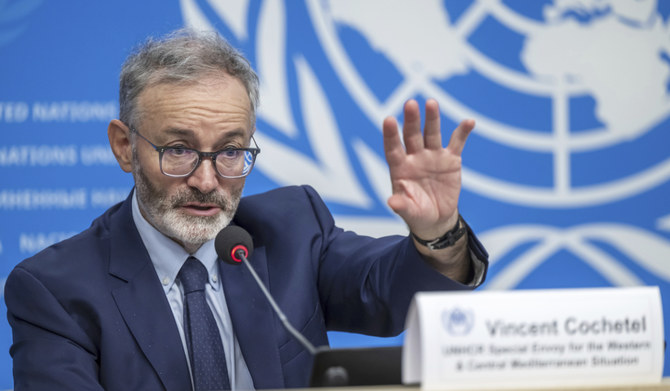
“For everyone crossing the Sahara, you get the testimony of bodies being seen, being dropped,” said Vincent Cochetel, UNHCR’s special envoy for the central and western Mediterranean.
“Everyone that has crossed the Sahara can tell you of people they know who died in the desert,” he told reporters.
Those on the move face torture, kidnapping for ransom, people trafficking, sexual violence, robbery, arbitrary detention, and collective expulsions, the report said.
Migrants crossing the desert often find themselves abandoned there by people smugglers, while those who get sick are sometimes tossed off pickup trucks.
With no adequate aid structures or proper search and rescue systems along the way, they are pretty much destined to die.
Despite the “unimaginable horrors people face in some countries along the route,” the report highlighted an increase in the number of people attempting the perilous land crossings.
This was in part due to deteriorating situations in their homelands, the report said, pointing to the eruption of conflicts across the Sahel region and in Sudan and new and long-running violence in the Horn of Africa and the east of the continent.
There was also the devastating impact of climate change and disasters, as well as xenophobia and racism spurring refugees and migrants to leave.
While no clear statistics exist for overall migration flows through Africa, UNHCR data shows a tripling of arrivals in Tunisia between 2020 and 2023.
The organizations stressed the urgent need for protection along the routes.
“This is not to facilitate the movement of people,” Cochetel insisted.
“It is to find protection solutions to address the abuse and the violations they suffer.”
He said most people on the move globally were not going to Europe.
The pollsters conducting the survey used for Friday’s report found nearly four out of 10 migrants had run the risk of physical violence during their journey.
Eighteen percent spoke of the danger of kidnappings, while 15 percent said there was a clear risk of sexual violence, and 14 percent said they risked death.
Cochetel also estimated that “hundreds” of people had fallen victim to organ traffickers in some countries.
People sometimes sell an organ out of desperation.
“But most of the time, people are drugged, and the organ is removed without their consent,” he said.
“They wake up and one kidney is missing.”


