

Army says ‘high-profile terrorist’ killed during operation in northwest Pakistan

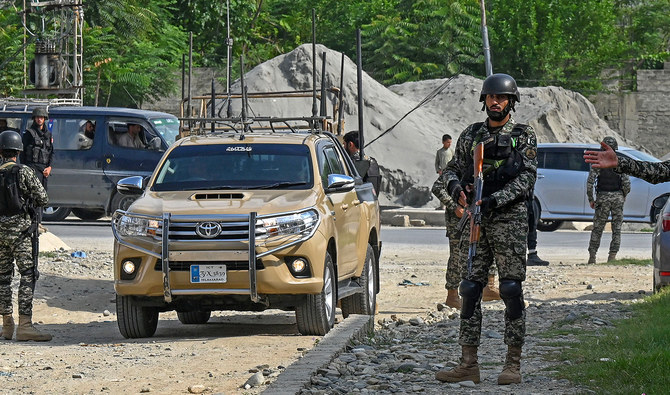
In this file photo, taken on July 31, 2023, security personnel stand guard at the site of a bomb blast in Bajaur district of Khyber-Pakhtunkhwa province. (AFP/File)
Short Url
Updated 04 July 2024
Follow

Army says ‘high-profile terrorist’ killed during operation in northwest Pakistan

  • Commander Irfan Ullah Adnan was involved in attacks on security forces, civilians, says army’s media wing
  • Development takes place hours after bomb blast in northwestern district killed five including former senator

ISLAMABAD: Pakistan’s security forces this week killed a “high-profile terrorist” in the country’s northwestern Khyber Pakhtunkhwa (KP) province who was involved in attacks on security forces and civilians, the army’s media wing said. 
Security forces conducted an intelligence-based operation in the country’s restive Bajaur tribal district on Wednesday after receiving reports of the militant’s presence in the area, the Inter-Services Public Relations (ISPR) said in a statement. 
The army said Commander Irfan Ullah Adnan was killed after a heavy exchange of fire between security forces and militants in Bajaur. 
“He was actively involved in numerous terrorist activities against security forces as well as extortion & target killings of innocent civilians, and was highly wanted by the law enforcement agencies,” the ISPR said. 
BLAST KILLS EX-SENATOR
The ISPR’s press release was issued hours after a blast in Bajaur killed five people, among them a former senator who was taking part in a campaign for an upcoming by-election in the district.
Hidayat Ullah Khan and four others were killed when his vehicle was targeted in a blast in Bajaur. Khan, who was an independent senator from 2018 to 2024, was the son of former National Assembly lawmaker Hajji Bismillah Khan and the younger brother of ex-KP governor Shaukat Ullah Khan.
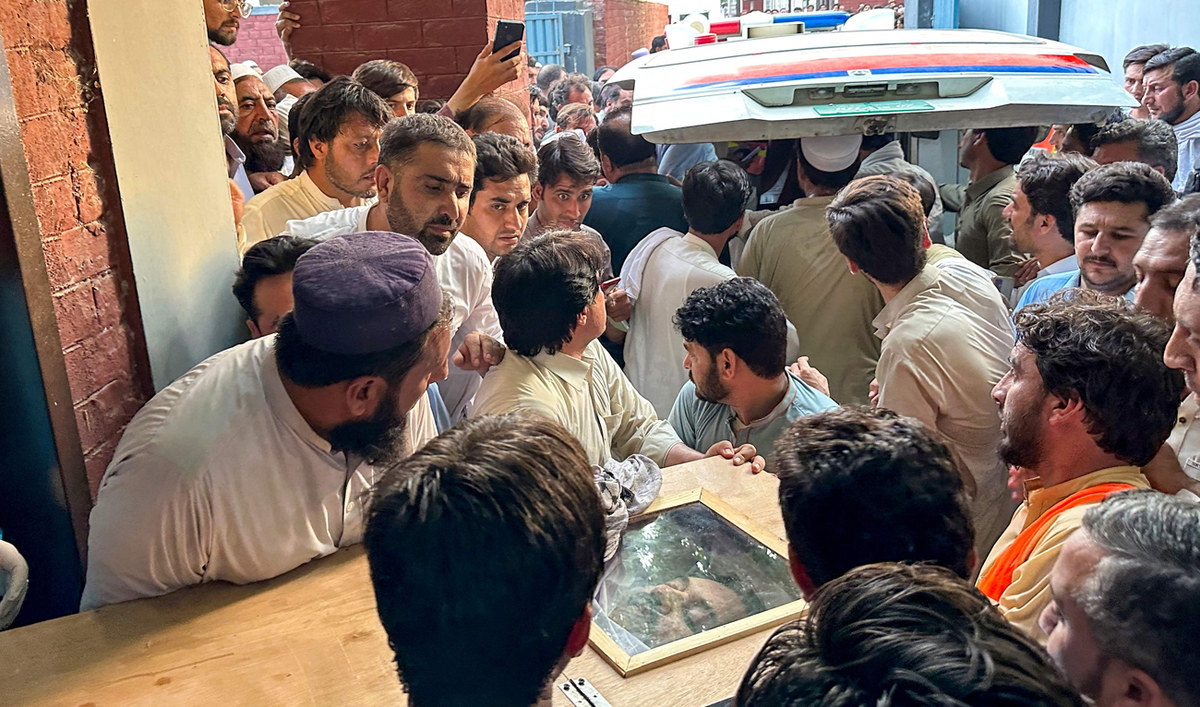


People carry the coffin of former senator Hidayatullah Khan to an ambulance after he was killed in a bomb explosion at Bajaur district of Pakistan's Khyber Pakhtunkhwa province on July 3, 2024. (AFP)

Pakistan’s tribal areas bordering Afghanistan have seen a surge in militant attacks since Nov. 2022 when a fragile truce between the Pakistani Taliban or the Tehreek-e-Taliban Pakistan (TTP) broke down.
Pakistan blames the TTP for the surge in violence, accusing it of targeting Pakistani security forces, politicians and civilians from Afghanistan in a bid to enforce its strict version of Islamic law in the country.
The TTP, however, did not take responsibility for the blast. In a statement released to the media, the banned outfit accused the Pakistan Army of killing the former senator to malign it.
“We would like to reiterate once again that we consider only the security forces and their personnel our targets,” the TTP said.


Pakistan urges pilgrims to complete Saudi biometrics as Hajj preparations gain pace

Updated 30 January 2026
Follow

Pakistan urges pilgrims to complete Saudi biometrics as Hajj preparations gain pace

  • Government warns pilgrims biometric verification is required for Hajj visas
  • Step follows tighter oversight after last year’s Hajj travel disruptions

ISLAMABAD: Pakistan’s government on Friday urged aspiring pilgrims to complete mandatory Saudi biometric verification for Hajj visas, as preparations for the 2026 pilgrimage gather pace following stricter oversight of the Hajj process.

The announcement comes only a day after Pakistan’s Religious Affairs Minister Sardar Muhammad Yousuf said regulations for private Hajj operators had been tightened, reducing their quota following widespread complaints last year, when tens of thousands of pilgrims were unable to travel under the private Hajj scheme.

“Saudi biometric verification is mandatory for the issuance of Hajj visas,” the Ministry of Religious Affairs said in a statement, urging pilgrims to complete the process promptly to avoid delays.

“Hajj pilgrims should complete their biometric verification at home using the ‘Saudi Visa Bio’ app as soon as possible,” it added.

The statement said the pilgrims who were unable to complete biometric verification through the mobile application should visit designated Saudi Tasheer centers before Feb. 8, adding that details of the centers were available on Pakistan’s official Hajj mobile application.

Pakistan has been steadily implementing digital and procedural requirements for pilgrims ahead of Hajj 2026, including mandatory training sessions, biometric checks and greater use of mobile applications, as part of efforts to reduce mismanagement.

Saudi Arabia has allocated Pakistan a quota of 179,210 pilgrims for Hajj 2026, with the majority of seats reserved under the government scheme and the remainder allocated to private tour operators.