

Head of Saudi aid agency KSrelief tours projects helping earthquake victims in Turkiye

1 / 4
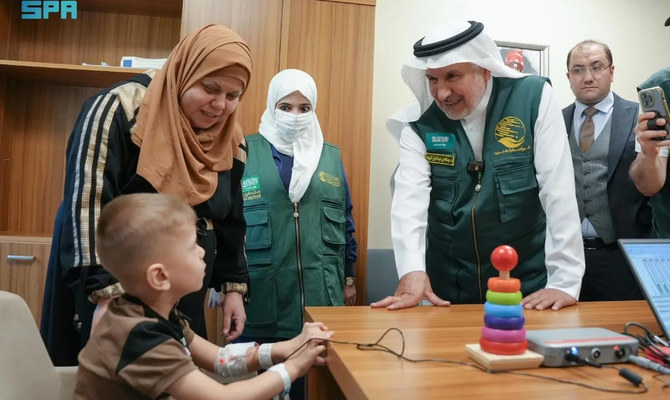
KSrelief chief Abdullah Al-Rabeeah, on Tuesday visited the cities of Reyhanli and Kirikhan in Turkiye’s Hatay Province to inspect the work of volunteers taking part in the agency’s programs to help people affected by the earthquakes that hit parts of Turkiye and Syria in February last year. (SPA)
2 / 4
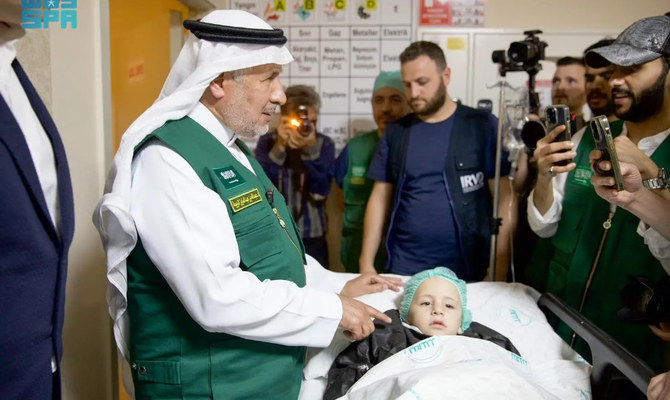
KSrelief chief Abdullah Al-Rabeeah, on Tuesday visited the cities of Reyhanli and Kirikhan in Turkiye’s Hatay Province to inspect the work of volunteers taking part in the agency’s programs to help people affected by the earthquakes that hit parts of Turkiye and Syria in February last year. (SPA)
3 / 4
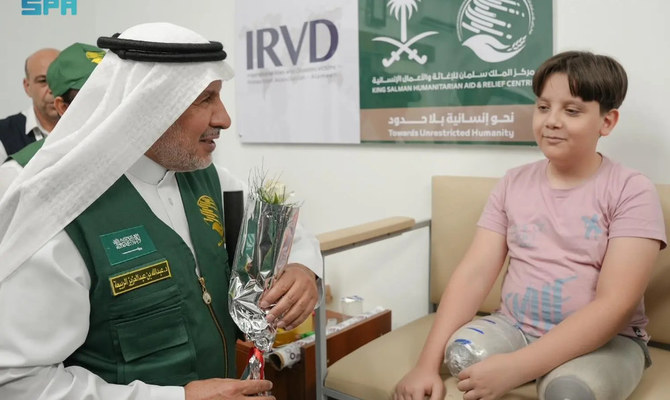
KSrelief chief Abdullah Al-Rabeeah, on Tuesday visited the cities of Reyhanli and Kirikhan in Turkiye’s Hatay Province to inspect the work of volunteers taking part in the agency’s programs to help people affected by the earthquakes that hit parts of Turkiye and Syria in February last year. (SPA)
4 / 4
KSrelief chief Abdullah Al-Rabeeah, on Tuesday visited the cities of Reyhanli and Kirikhan in Turkiye’s Hatay Province to inspect the work of volunteers taking part in the agency’s programs to help people affected by the earthquakes that hit parts of Turkiye and Syria in February last year. (SPA)
Short Url
Updated 04 July 2024
Follow

Head of Saudi aid agency KSrelief tours projects helping earthquake victims in Turkiye

  • Supervisor General Abdullah Al-Rabeeah meets volunteers providing healthcare, housing and skills training, and the beneficiaries of their work

RIYADH: The supervisor general of Saudi aid agency KSrelief, Abdullah Al-Rabeeah, on Tuesday visited the cities of Reyhanli and Kirikhan in Turkiye’s Hatay Province to inspect the work of volunteers taking part in the agency’s programs to help people affected by the earthquakes that hit parts of Turkiye and Syria in February last year.

Al-Rabeeah and his delegation reviewed the progress the Saudi voluntary Samaa Program for Auditory Rehabilitation and Cochlear Implants, at the MMT American Hospital in Reyhanli, the Saudi Press Agency reported on Wednesday. He spoke to volunteers and learned how the program is helping to alleviate suffering.

The aid agency chief praised “the distinguished performance of the Saudi crew” in implementing various volunteer programs to help those affected by the earthquakes, and said their “efforts came under the generous patronage and continuous support” of King Salman and Crown Prince Mohammed bin Salman. The Kingdom will continue to implement humanitarian projects that serve people in need worldwide, he added.

Al-Rabeeah also visited a vocational training center to review the support and assistance it provides to those affected by the earthquakes by helping them develop their skills and experience through courses in a variety of subjects, including mobile phone and tablet maintenance, sewing and embroidery, and graphic design.

During a tour of the headquarters of the Prosthetic Limbs and Rehabilitation Center in the state of Hatay, he was briefed on its work making and fitting prosthetic limbs, and the rehabilitation and basic health services it provides for earthquake victims. 

Al-Rabeeah was briefed on the work of the Saudi Volunteer Psychological Support Team and visited camps where it distributes food baskets, health supplies and gifts for children. He toured a specialist psychological clinic and learned about the integrated medical and health services system it provides.

He praised the healthcare providers for the services they are providing to support patients of all ages to help them overcome the shock and psychological effects caused by the earthquakes.

Beneficiaries of the services thanked the government and people of Saudi Arabia for the rapid responses to the earthquake by volunteer teams affiliated with KSrelief to help them through the provision of vital medical aid, food and shelter.

Al-Rabeeah met the governor of Gaziantep, Kemal Ceber, and thanked him for the facilities the governorate has provided to KSrelief to aid the implementation of its volunteer programs. Ceber praised the Kingdom for the humanitarian assistance it provides, through KSrelief, to the earthquake victims.

Al-Rabeeah also inspected a project to provide 364 houses for people in the Islahiyah area of Gaziantep. The recipients thanked the Kingdom for providing them with the shelter they so urgently needed after the earthquakes, and said the temporary housing was of high quality and modern design.

KSrelief has provided a total of 3,000 temporary housing units for earthquake victims in Syria and Turkiye, including 1,500 in the Islah and Nurdag regions of Gaziantep and the Adiyaman and Malatya governorates in Turkiye, and 1,500 in the Afrin region of Aleppo.

Each temporary housing unit has two rooms, equipped with basic furniture, and a bathroom. The agency has also built a school that can accommodate 756 children, a prayer room that can hold 700 worshipers, 20 caravans for administrative and commercial use, 15 play areas for children, and a well to provide water. KSrelief also provides solar energy equipment and infrastructure for the housing developments.

About 12,000 people have benefited so far from the housing, and work is underway to provide a further 1,000 temporary homes in three parts of Hatay Governorate, which are expected to benefit 5,000 people.


Experimental farm in Al-Lith looks into future of Saudi Arabian agriculture

Updated 02 February 2026
Follow

Experimental farm in Al-Lith looks into future of Saudi Arabian agriculture

  • Research initiative reflects strategic transformation

JEDDAH: An experimental farm in Saudi Arabia’s Al-Lith Governorate is one of the research initiatives reflecting the strategic transformation taking place in the Kingdom’s agricultural sector.

The farm uses highly efficient, sustainable production models that combine scientific research with commercial application, contributing to strengthening the country’s food security system and the sustainability of water resources.

Located in the Ghumaiqa Center on an area of about 10 hectares, the cutting-edge farm is a testing platform for modern agricultural technologies that tackle the challenge of water scarcity.

The farm includes developed open fields and modern greenhouses, supported by smart irrigation encompassing drip and sprinkler irrigation alongside surface and subsurface technologies.

All the systems operate via smart controls that enable the monitoring of water consumption and ensure improved efficiency, thereby achieving a balance between agricultural production and water conservation.

The farm also uses treated and diluted low-salinity seawater.

It aims to diversify agricultural water sources, reduce reliance on freshwater, and open new horizons for agriculture in coastal and semi-arid environments.

A view of the experimental farm in Al-Lith. (SPA)

The project represents a promising investment opportunity in the field of smart agriculture, enabling the development of commercially scalable production models, particularly for high-value vegetables and fruits, while reducing operational costs associated with water and energy, enhancing the economic feasibility of future agricultural projects.

In addition, the project contributes to transferring and localizing agricultural expertise, supporting local food supply chains, and creating an attractive environment for agricultural investment.

This aligns with Sustainable Development Goals and enhances the efficiency of the private sector in adopting innovative agricultural solutions.

Yahya bin Abdulrahman Al-Mahabi, the director of the Ministry of Environment, Water and Agriculture office in Al-Lith Governorate, told the Saudi Press Agency that the project represented the future of agriculture in the Kingdom.

He explained that the vision was based on investing in technology, enhancing the return on water per unit, and integrating scientific research with investment opportunities.

Al-Mahabi spoke of the experimental farm as a modern, scalable and replicable model applicable in several regions of the Kingdom, particularly in coastal environments.

Al-Mahabi highlighted the Ministry of Environment, Water and Agriculture’s commitment to supporting distinctive projects that contributed to achieving food security while developing rural areas and enhancing agricultural production efficiency, in line with the objectives of the Kingdom’s Vision 2030.