Lufthansa halts night flights to and from Beirut due to Middle East situation

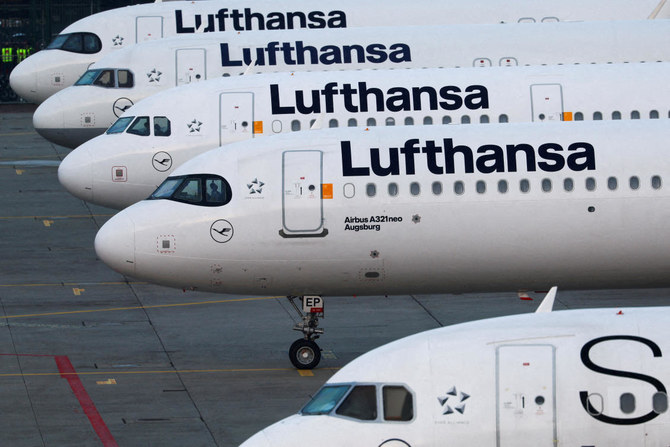
Lufthansa Group has halted night flights to and from Beirut until July 31 due to the situation in the Middle East. (File/Reuters)
Short Url
Updated 01 July 2024
Follow

Lufthansa halts night flights to and from Beirut due to Middle East situation

  • The spokesperson said the change had begun on June 29 and that daytime flights would operate as before
  • In March, the Lebanese government said it would file an urgent complaint with the UN Security Council over Israel’s alleged disruption of its navigation systems

BERLIN: Lufthansa Group has halted night flights to and from Beirut until July 31 due to the situation in the Middle East, a spokesperson said on Monday.
The spokesperson said the change had begun on June 29 and that daytime flights would operate as before.
Swiss International Air Lines, a Lufthansa Group subsidiary, also said it would move its Beirut night flights to the daytime until the end of July “due to the political developments at the border between Lebanon and Israel.”
The airlines did not give detailed information about the nature of the threat.
In March, the Lebanese government said it would file an urgent complaint with the UN Security Council over Israel’s alleged disruption of its navigation systems that it said affected the safety of civil aviation in the airspace of Beirut’s Rafic Hariri International Airport.
Swiss International Air Lines on Monday said the change in its schedule was not related to any potential GPS interference on its aircraft flying to Beirut.
“Our pilots are trained to handle any such situations and our aircraft have several other systems on board when one system is no longer to be trusted,” a spokesperson for Swiss said.
Previously its crews did not stay overnight in Lebanon after flying from Zurich, but instead stayed on board the aircraft when preparing for the return flight, the spokesperson added.


Tunisians revive protests in Gabes over pollution from state chemical plant

Updated 59 min 53 sec ago
Follow

Tunisians revive protests in Gabes over pollution from state chemical plant

  • People chanted mainly “Gabes wants to live“
  • The powerful UGTT union has called for a nationwide strike next month

TUNIS: Around 2,500 Tunisians marched through the coastal city of Gabes on Wednesday, reviving protests over pollution from a state-owned phosphate complex amid rising anger over perceived failures to protect public health.
People chanted mainly “Gabes wants to live,” on the 15th anniversary of the start of the 2011 pro-democracy uprising that sparked the Arab Spring movement against autocracy.
The protest added to the pressure on President Kais Saied’s government, which is grappling with a deep financial crisis and growing street unrest, protests by doctors, journalists, banks and public transport systems.


The powerful UGTT union has called for a nationwide strike next month, signalling great tension in the country. The recent protests are widely seen as one of the biggest challenges facing Saied since he began ruling by decree in 2021.
Protesters chanted slogans such as “We want to live” and “People want to dismantle polluting units,” as they marched toward Chatt Essalam, a coastal suburb north of the city where the Chemical Group’s industrial units are located.
“The chemical plant is a fully fledged crime... We refuse to pass on an environmental disaster to our children, and we are determined to stick to our demand,” said Safouan Kbibieh, a local environmental activist.
Residents say toxic emissions from the phosphate complex have led to higher rates of respiratory illnesses, osteoporosis and cancer, while industrial waste continues to be discharged into the sea, damaging marine life and livelihoods.
The protests in Gabes were reignited after hundreds of schoolchildren suffered breathing difficulties in recent months, allegedly caused by toxic fumes from a plant converting phosphates into phosphoric acid and fertilizers.
In October, Saied described the situation in Gabes as an “environmental assassination”, blaming policy choices made by previous governments, and has called for urgent maintenance to prevent toxic leaks.
The protesters reject the temporary measures and are demanding the permanent closure and relocation of the plant.