

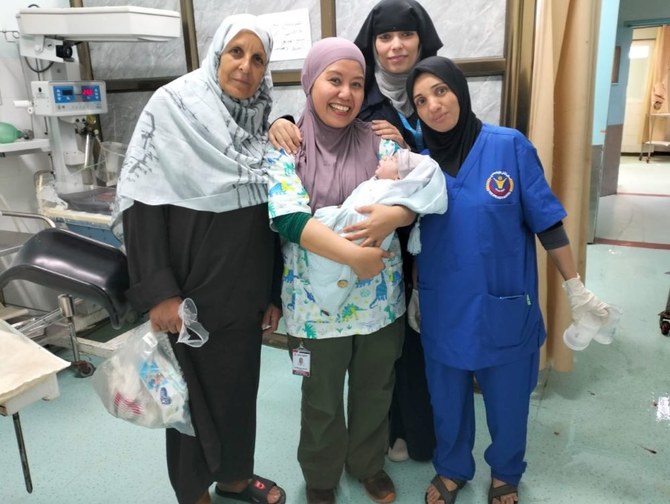

JAKARTA: When Ita Muswita arrived in Rafah in March to volunteer at Al-Halal Al-Emirati Maternity Hospital, she was overwhelmed by the scale of malnourishment among the newborn babies she was helping to deliver.
The hospital was one of the few that remained partly operational in Gaza and was providing medical care to thousands of pregnant women and new mothers, handling between 50 and 65 births each day with only five delivery beds.
Many of them were underweight.
“It is likely for them to become sick or die … It’s because the mothers are not meeting their (nutritional) needs,” Muswita told Arab News.
“Underweight babies are vulnerable to diseases, which means we need more hospital rooms for babies, which require equipment and medicines, and that was a problem … We often ran out of medicines … gauze, and suture instruments.”
The Indonesian midwife from Banten province was part of the first team of doctors and nurses from the Jakarta-based nongovernmental organization Medical Emergency Rescue Committee, which since March has been sending medical volunteers to the besieged enclave as part of a larger emergency medical deployment led by the World Health Organization.
While she was prepared to face the situation, knowing from UN estimates that most of the 50,000 pregnant women in Gaza had limited access to maternal healthcare, the situation she faced on the ground was worse than she imagined.
“This isn’t war, this is extermination, this is genocide, it’s true,” Muswita said.
Since October, Israeli airstrikes and ground offensives in Gaza have killed nearly 37,900 Palestinians and wounded more than 86,000 people, while thousands remain missing under the rubble.
Israel has also cut off the enclave from supplies of water, food, fuel and medical aid, as its forces destroyed most of its vital infrastructure.
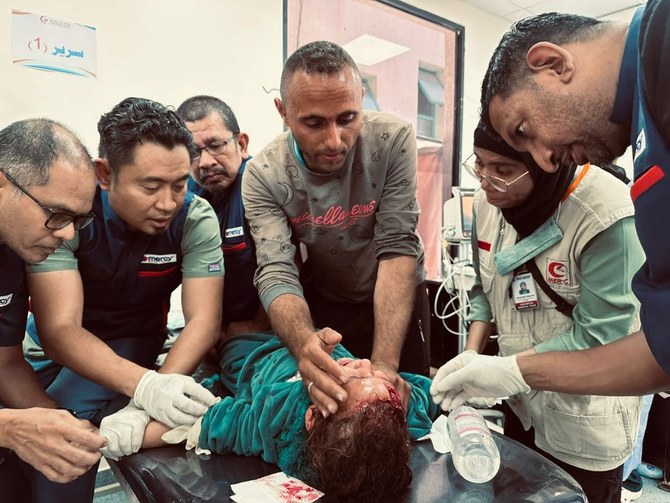
Nadia Rosi, a nurse who was a member of another MER-C team that arrived in Rafah on April 21, said she was shocked when she saw the healthcare situation in Gaza.
Even the possibility of disinfecting equipment was rare.
“Where do we look for gauze, equipment? We don’t know because there wasn’t any,” she said.
“I was also scared of course, because even when we were at the hospital, we could hear the bombs exploding, the loud sounds from shooting, and this goes on as the attacks continue for 24 hours.”
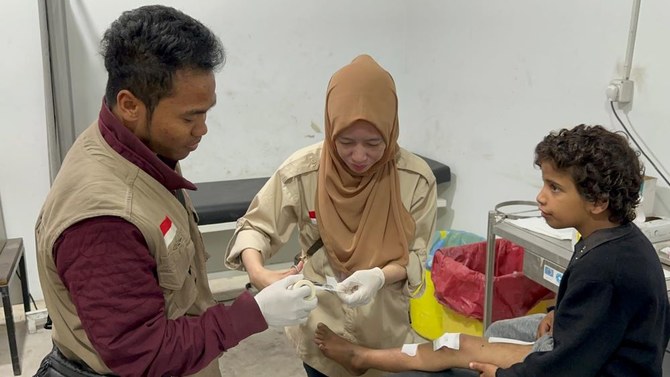
When she served at the Tal Al-Sultan health center, children made up the bulk of her patients. She recalled their screams when there were no painkillers or anesthesia available.
“I was working in wound care and most of the patients were children. Maybe out of 50 patients, around 35 were kids. We didn’t have anesthetic … I would give them candy to calm them down,” she said.
“I would also invite them to recite the Qur’an, starting together with them before letting them continue on their own, and they would almost immediately settle down … These children are bravely withholding the pain, can you imagine how deep the cuts usually get? We already feel such great pain with small wounds, and these are lacerations that require stitches.”
After weeks of witnessing Israeli violence against Palestinians, Indonesian medics refused to describe the situation in Gaza as war.
“This isn’t war … It’s mass murder, mass annihilation. What kind of crazy person comes with their tanks to tents, killing children, killing babies, killing the elderly, killing women?” Asrina Sari, another nurse who arrived in Rafah in April, told Arab News.
“This is truly genocide that the whole world must know about, how ruthless Zionists are.”
Following her return to Indonesia last month, she has joined other Indonesian volunteers in raising awareness about what is happening in Palestine.
“You only need to be human to defend Palestine,” she said. “Let’s continue to pray for Palestinian independence and always use social media to update the latest situation on Palestine, to share all matters related to Palestine so that people know.”


