

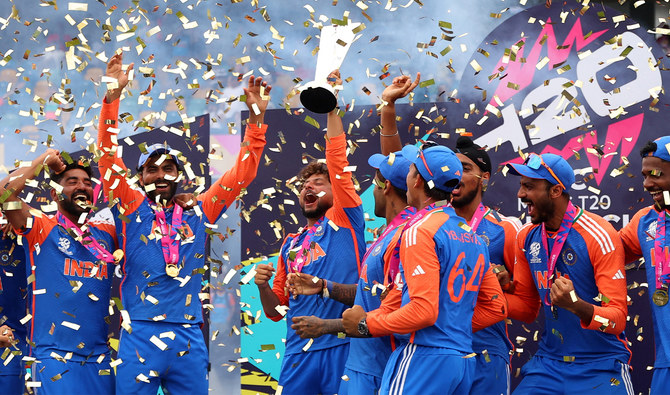

Bridgetown, Barbados: The T20 World Cup concluded with a classic thriller of a final, with India crowned champions on Saturday, but the tournament may also go down as a milestone for a game which is keen to expand its global footprint.
With the decision to increase the size of the tournament to 20 teams and to play part of the group stage in the USA, the International Cricket Council (ICC) saw this World Cup as a vehicle for expansion of the sport’s popularity.
More teams from emerging cricket nations were given a chance to perform on the global stage and Americans were offered the opportunity to engage with a sport far from their mainstream.
There were risks to such a strategy — the smaller associate nation teams needed to be competitive and not just cannon fodder and the very limited cricket facilities in the USA needed to be upgraded and in some cases created from scratch.
On both fronts, the tournament can be considered to have been a success, albeit a qualified one.
Certainly, the associate nations made their presence felt right from the opening game at Grand Prairie Stadium near Dallas where the USA beat Canada in a pulsating match.
It is hard to imagine any marketing and promotion campaign that could better the impact of the USA upsetting Pakistan, a result creating a completely new level of awareness of the sport in the country.
No-one who witnessed Nepal’s effervescent performances and their large and passionate fans could doubt they were a welcome presence on the big stage.
“I think it has had a huge impact on associate teams. We didn’t expect to see the USA in the Super Eights... that win over Pakistan... it showed they weren’t here just to make up numbers,” said former West Indies captain Chris Gayle, who was an ambassador for the tournament.
“You look at Nepal and Papua New Guinea and you see (a World Cup) can uplift a nation and help develop their cricket,” he added.
While Afghanistan have long left behind minnow-status, their run to the last four, including a memorable win over Australia, was a clear sign of where the pathway can lead for emerging teams.
Organizers made it clear before the tournament that they weren’t expecting to ‘break’ the US market and convert NFL fans into cricket lovers but had more modest and achievable goals.
The aim was simply to pique the curiosity in cricket among Americans and certainly the sport raised its profile while remaining very much a small niche sport in the bigger picture.
The ICC also wanted to engage directly with the South Asian immigrant communities who make up the active core of cricket lovers in the USA and offer them a rare chance to see the international game in person.
The sight of 35,000 packed into a temporary stadium near Long Island, New York, to watch rivals India and Pakistan, showed that was a worthwhile strategy.
But there were issues with playing elite cricket at such venues.
The wicket in New York, developed in Florida and ‘dropped in’ shortly before the tournament, received plenty of criticism for its uneven bounce and unpredictability which led to low-scoring games. Gayle called the transported surface “jet lagged.”
All but one game at Lauderhill was washed out by rain — not helped by drainage problems with part of the field while Ireland spent a week in South Florida without access to any practice facilities.
A tournament in the Caribbean is a logistical challenge in itself, with travel between the islands and nations difficult for fans, adding in three States in the USA and the idea of following team throughout the competition was prohibitively expensive for most supporters.
Gayle believes the tournament was a success overall but the co-hosting shouldn’t be repeated.
“I’d love it if the World Cup is going to be held in the Caribbean it should be the Caribbean only and if it is going to be in the USA it should be in the USA only,” he said.
For cricket in the USA the challenge is now to grow the seeds that have been planted and the hope is that the second season of the T20 franchise competition, Major League Cricket, can maintain the momentum.
The league gets under way on Friday with some new signings such as Australians Pat Cummins and Steve Smith joining South African captain Aiden Markram and batsman David Miller and Bangladesh all-rounder Shakib Al Hasan.


