ISLAMABAD: Federal Minister for Finance and Revenue Muhammad Aurangzeb expressed optimism on Sunday Pakistan would secure a “larger and longer” bailout agreement in its negotiations with the International Monetary Fund (IMF) in July, following the approval of the $67.76 billion federal budget.
Pakistan began discussions about a new loan with IMF officials soon after completing a $3 billion program that helped the country stave off a sovereign debt default last year.
The international lending agency sent its delegation to Pakistan in May to hold negotiations with the new government.
Prime Minister Shehbaz Sharif also confirmed during a speech at the National Assembly on Tuesday that his administration had prepared the budget in consultation with the IMF, after repeatedly emphasizing the importance of securing another bailout facility to keep macroeconomic reforms on track.
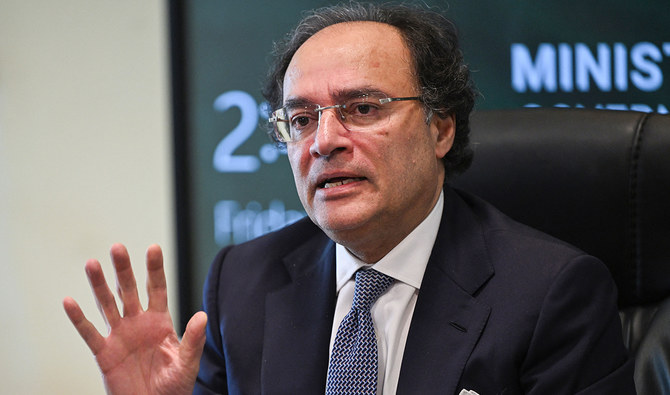
“I have already said we are moving in a positive way,” the finance minister said while discussing the fresh IMF program during a media interaction in the federal capital. “During July we should get into a good agreement.”
“I am very optimistic that we will be able to take it through the finish line for an extended fund program, larger and longer in nature,” he added.
Pakistan has sought IMF loans in recent years due to a combination of economic challenges, including significant fiscal and current account deficits, declining foreign exchange reserves and rising public debt.
These economic vulnerabilities have been exacerbated by external shocks like fluctuating commodity prices and internal challenges such as political instability and policy inconsistency.
The government has maintained the country’s economy is on the mend but considers the new bailout important to ensure a substantial financial cushion.
The finance minister reiterated that he viewed the program being funded and supported by the IMF as part of Pakistan’s own endeavor to strengthen itself economically.
“We need the IMF because not only these IFIs [international financial institutions] but even our firendly nations want a backstop which is the fund program,” he continued. “What we have to do in the next three years to make sure this is the last program.”
He mentioned he had already been in virtual discussions with the IMF to move toward a staff-level agreement.
Aurangzeb said the basic framework, including the prior actions, had been formulated while the IMF delegation was in Pakistan, saying that the structural benchmarks of the program had been the same for the last three or four years while Pakistan had not implemented.
“Now we have told them to trust us and we will get this done,” he added.


![]()

Pakistan finance minister says ‘optimistic’ for ‘larger and longer’ IMF bailout program in July
Short Url
https://arab.news/ws75s
Pakistan finance minister says ‘optimistic’ for ‘larger and longer’ IMF bailout program in July
- Muhammad Aurangzeb says virtual negotiations with the international lending agency are moving in a positive direction
- He also maintains Pakistan needs to work for the next three years to ensure that it never has to seek another IMF program
Latest updates


Recommended


© 2026 SAUDI RESEARCH & PUBLISHING COMPANY, All Rights Reserved And subject to Terms of Use Agreement.